
Every small business struggles for visibility in a crowded digital marketplace. Crafty Creations, a boutique online jewelry store, faced this exact challenge: their passion and products were lost amidst larger brands. They needed a smarter approach, which they found in the transformative power of a deep, data-driven SEO competitor analysis. This case study outlines how Crafty Creations moved from digital obscurity to a 350% increase in organic traffic, leveraging strategic competitive insights and automation for growth.
The Challenge of Digital Obscurity
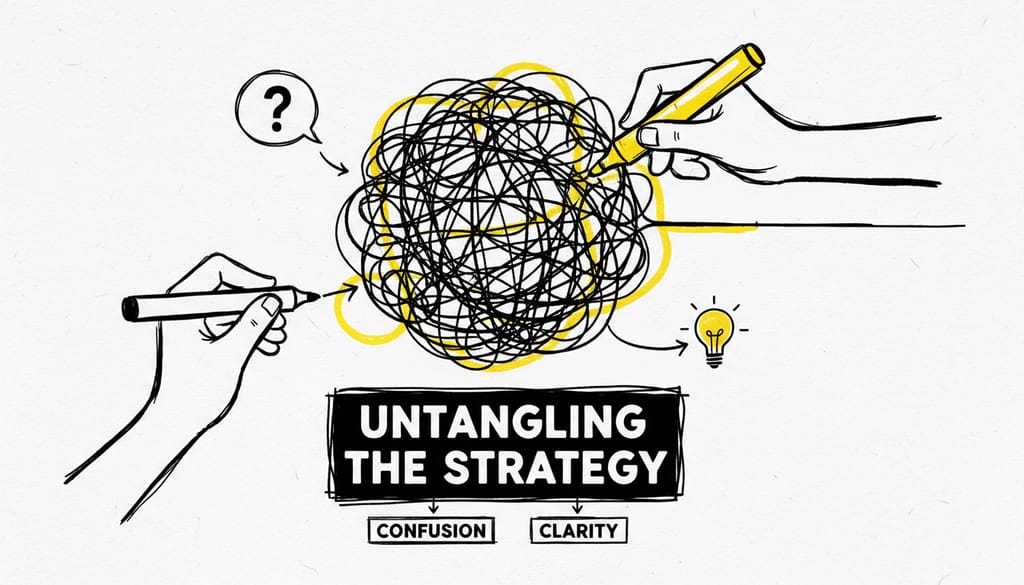
Crafty Creations, founded by Sarah, initially operated with minimal organic search presence for two years. Traffic came largely from social media and word-of-mouth, resulting in slow, manual growth. Sarah's SEO approach was well-intentioned but lacked data-driven direction.
She wrote blog posts about her creative process or product launches. However, these articles didn't target what potential customers were actually searching for, leading to stagnant organic traffic and unpredictable sales. Her key metrics painted a bleak picture, with an average of just 250 monthly organic visitors.
The site ranked for fewer than 50 non-branded keywords, none on Google's first page. Content was sporadic, lacking clear keyword targeting or user intent focus. Crafty Creations also had a weak backlink profile, making it difficult for Google to establish them as a trustworthy source. Sarah needed a clear, strategic path to compete with larger brands dominating the SERPs.
Core Issues Facing Crafty Creations
Crafty Creations' core problem stemmed from three interconnected issues in a highly competitive niche:
Lack of Direction (Content Blindness): Without formal competitive insights, their content strategy was a shot in the dark. No data informed topics, keywords, or content formats. This wasted time and resources on articles that never gained traction, resulting in a high Bounce Rate.
Resource Constraints: As a small business, Crafty Creations lacked the budget for a large marketing team or expensive agency retainers. Manually analyzing dozens of competitors, thousands of keywords, and hundreds of Backlinks was impractical. Many small businesses seek 7 Smart & Affordable SEO Services That Actually Work to address this resource gap.
Inability to Build Authority: In SEO, authority is paramount, largely influenced by a website's Domain Authority and quality backlinks. Crafty Creations' weak backlink profile hindered its perceived trustworthiness. They needed to understand competitor backlink sources to launch their own Link Building campaigns.
The overarching challenge was clear: how could a small e-commerce store systematically identify, analyze, and outperform its competitors with limited resources? They needed to transition from passive observation to active, strategic market play.
The Strategic Solution
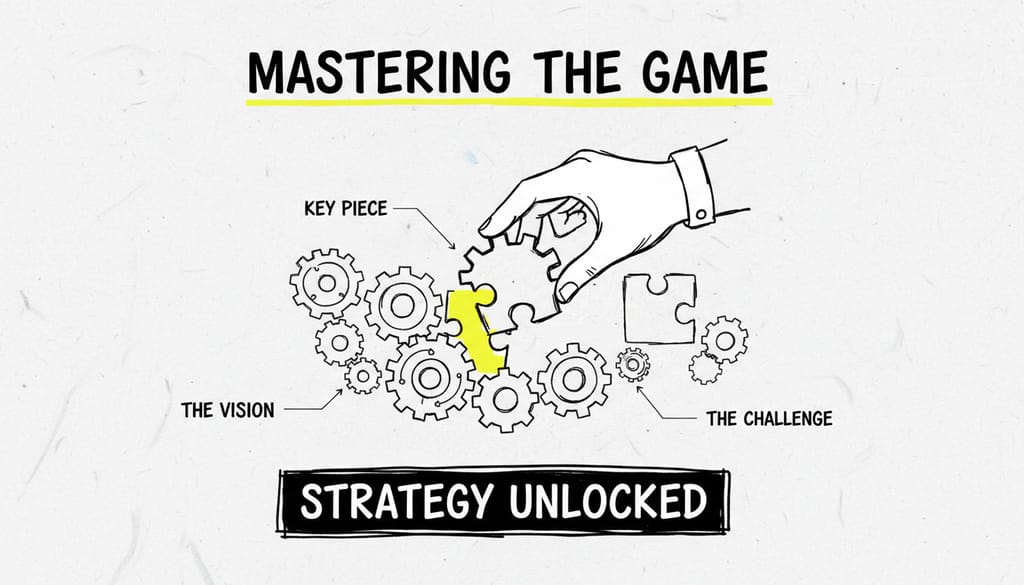
Recognizing an unsustainable approach, Crafty Creations adopted a methodical, multi-stage SEO competitor analysis process. This strategic shift moved them from assumption-based content to a data-driven content engine fueled by competitor insights. The solution focused on understanding the market battlefield to identify strategic openings, not just copying rivals.
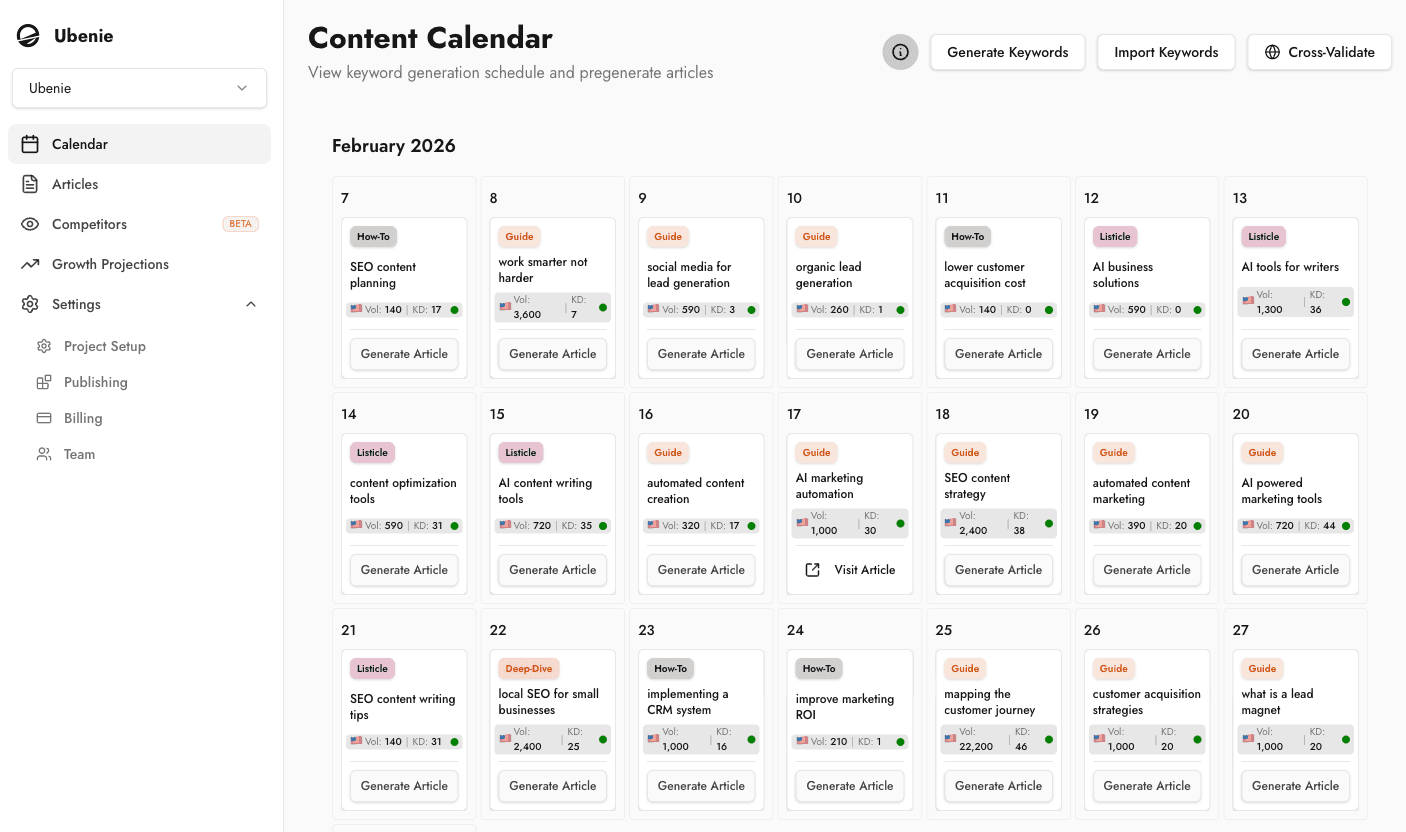
This is where a platform like Ubenie fundamentally changes the game. Ubenie automates this entire discovery and execution process, using AI to perform competitive analysis. It identifies high-potential keyword gaps and generates optimized content designed to rank, transforming complex manual tasks into an autopilot growth engine.
Phased Implementation for Growth
The solution was implemented through five core phases:
Phase 1: Identifying True SERP Competitors
Defining real competitors was the first step; these aren't always direct business rivals. An SEO competitor is any website ranking for desired keywords. Tools like Ahrefs and Semrush identified top domains for high-intent keywords such as "handmade silver rings" and "artisan jewelry gifts."
Competitors included other e-commerce stores, high-authority blogs, marketplaces like Etsy, and even Pinterest boards. This highlighted competition beyond just products, extending to content and information.
Phase 2: Conducting a Deep Content Gap Analysis
With SERP competitors identified, a Content Gap Analysis followed. This involved finding valuable keywords that rivals ranked for, but Crafty Creations did not. This proved to be a powerful strategy for uncovering proven content ideas.
Cross-referencing keyword profiles of top competitors against Crafty Creations' domain revealed hundreds of opportunities. Examples included long-tail keywords like "how to clean sterling silver jewelry at home" and "best jewelry for sensitive skin." These informational topics attracted top-of-funnel audiences that Crafty Creations had previously ignored, forming the backbone of their new content calendar.
Phase 3: Backlink Gap and Authority Analysis
Next, competitor backlink profiles were analyzed to understand how they built domain authority. We examined referring domains, link types (blog posts, resource pages), and anchor text. This analysis revealed top competitors secured links from fashion bloggers, gift guides, and jewelry care articles.
This provided a direct roadmap for Crafty Creations' link-building efforts. They could now reach out to similar sites with their high-quality content, pitching for guest posts or resource list inclusions.
Phase 4: On-Page and Technical SEO Benchmarking
Ranking depends on user experience and page health, not just keywords and links. Manual review of top-ranking pages for target keywords analyzed content depth, media use, and page structure. Elements like clear headings, bullet points, and internal linking were crucial.
Many competitors utilized Structured Data (e.g., FAQ or Product schema) to enhance SERP listings and win Featured Snippets. AI-powered tools can significantly accelerate this type of deep research, quickly identifying structural advantages. This benchmarking created a "best-in-class" article template for consistent content success.
Phase 5: Execution with an Automated Content Engine
Execution was the final step, transforming data into action. Manual content creation remained a bottleneck for a solopreneur. This is where leveraging Automated SEO Services: The Autopilot Solution for Business Growth becomes a game-changer. Ubenie's platform was used to turn keyword opportunities into fully optimized blog posts, allowing Crafty Creations to automate content creation.
Ubenie's AI handled the heavy lifting by writing engaging, human-like content based on identified keywords and competitor benchmarks. It optimized for SEO by naturally incorporating keywords, structuring content with proper headings, and crafting compelling meta descriptions. The AI also ensured user intent match, creating content that directly answered user queries. This enabled a consistent publishing schedule of 2-3 high-quality, data-driven articles per week, freeing Sarah to focus on her craft. For more, explore The 7 Best SEO Tools for Competitive Analysis (2024 Guide).
Breakthrough Growth Achieved
The shift to a data-driven competitive analysis model yielded dramatic, measurable results for Crafty Creations. By systematically identifying opportunities and executing with AI-powered content generation, the business transformed its digital presence in just over six months. The results validate the approach, showing a clear return on investment.
The impact was seen across all key performance indicators, moving the needle from stagnation to exponential growth.
Key Performance Metrics: Before vs. After
To appreciate the transformation, consider the metrics before strategy implementation compared to six months after.
| Metric | Before Strategy (Monthly Avg) | 6 Months After Strategy (Monthly Avg) | Percentage Increase |
|---|---|---|---|
| Organic Website Visitors | 250 | 1,125 | +350% |
| Total Keywords Ranked | < 50 | 840+ | +1580% |
| Keywords on Page 1 | 0 | 58 | N/A |
| Blog-Generated Leads | ~2-3 | 35 | +1067% |
| Average Bounce Rate | 85% | 62% | -27% |
Deeper Analysis of the Results
1. Explosive Organic Traffic Growth (+350%)
Targeting informational keywords from the Content Gap Analysis generated a surge in qualified organic traffic. Blog posts like "The Ultimate Guide to Birthstone Meanings" began ranking on Google's first and second pages. This drove a consistent stream of new, interested visitors to the site daily. This traffic comprised users actively interested in jewelry and related topics, not just vanity metrics.
2. Dominating Niche Keyword Rankings (+1580%)
Crafty Creations went from digital invisibility to ranking for over 800 relevant keywords. Crucially, they secured 58 first-page rankings for long-tail, high-intent terms. These keywords directly converted into sales; for example, ranking #4 for "best handmade jewelry for gifts" drove direct purchases. Ranking #6 for "how to care for gold-plated jewelry" also established trust and authority, encouraging product exploration.
3. A Funnel of Qualified Leads (+1067%)
The new content not only attracted visitors but also converted them. Each blog post included a soft Call to Action (CTA), such as links to related products or newsletter sign-ups with discounts. By offering genuine value through informational content, trust was built. This led to a massive increase in leads, as engaged visitors were far more likely to subscribe or purchase.
4. Improved User Engagement (-27% Bounce Rate)
A sharp decrease in bounce rate signaled content effectiveness. Visitors consumed content, clicked internal links, and explored product pages instead of immediately leaving. This improved engagement sent positive signals to Google, further boosting rankings and confirming content alignment with user intent.
These results confirm that thorough competitive analysis drives significant business growth. For Crafty Creations, it unlocked digital doors, enabling effective competition and market success.
Key Takeaways for SEO Strategy
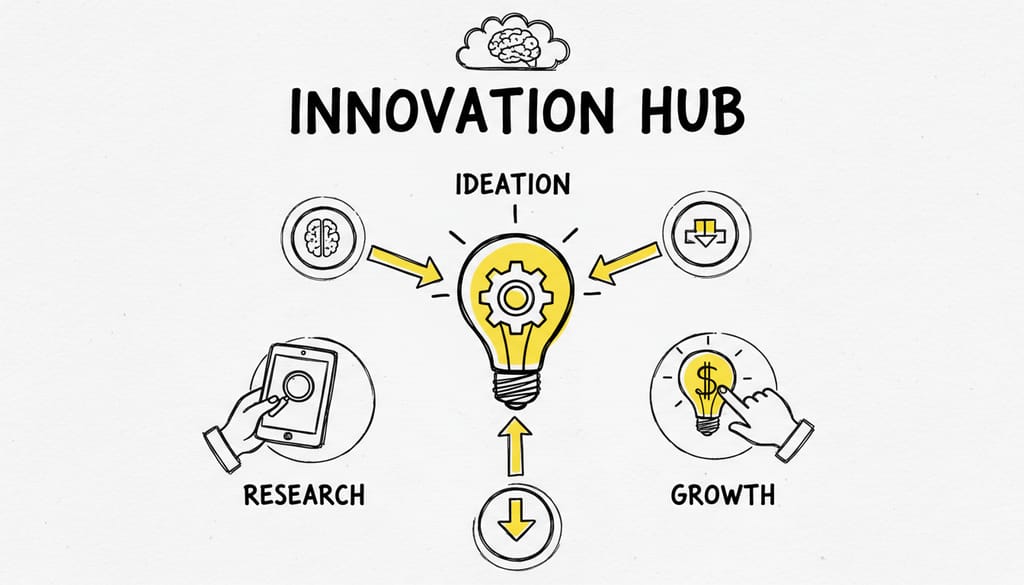
The journey of Crafty Creations from obscurity to organic growth offers powerful lessons for small businesses seeking SEO improvement. These takeaways highlight the core mindset required for success in modern digital marketing.
1. Competitors Offer Your Best Ideas
You don't need to reinvent the wheel. Your competitors have already invested in discovering what works. A systematic SEO competitor analysis provides a proven roadmap, identifying content topics, keywords, and backlink sources that are effective. The goal is to learn, improve, and innovate based on market-rewarded strategies, not merely to copy.
2. SEO is an Offensive Game
Before the analysis, Crafty Creations played defense, reacting to market whims. A competitor-focused strategy is inherently offensive, proactively identifying weaknesses in rival strategies. Every content gap or missed topic becomes an opportunity to build content or links, securing a win. Identify where competitors rank with weak content or have missed topics entirely.
3. Consistency and Quality Demand a System
Many small business owners struggle with consistent content creation due to time constraints. Crafty Creations' success relied on a robust system: analyze, identify, execute. This eliminated the daily "what to write about" dilemma. Automating content creation with Ubenie ensured a consistent output of high-quality, optimized articles, transforming SEO into a predictable growth channel.
4. Authority is Earned, Not Given
Building Domain Authority seemed abstract until the backlink gap analysis provided concrete targets. It demystified Link Building, turning it into a strategic outreach process. Authority in Google's eyes is earned through trust signals from other websites; competitive analysis shows precisely who to approach for that vote of confidence.
5. Competitive Analysis is Ongoing
The digital landscape is dynamic, with constant competitor content launches and algorithm updates. Competitive analysis is not a one-time project; it's a recurring process. Regular monitoring of SERPs and competitor movements allows strategy adaptation, ranking defense, and continuous identification of new growth opportunities.
Ultimately, Crafty Creations' story proves the power of strategy over guesswork. Investing upfront in understanding the competitive environment allowed them to direct efforts with precision, achieving previously impossible results. This transformation serves as a powerful blueprint for any small business overwhelmed by SEO.
The path from digital invisibility to thriving organic traffic is built on deliberate, strategic steps. By understanding your rivals, identifying their strategy gaps, and consistently executing with high-quality content, you can carve out your own space. Tools and automation like Ubenie level the playing field, enabling even the smallest businesses to implement sophisticated strategies and achieve remarkable growth.
Frequently Asked Questions
What's the difference between a business competitor and an SEO rival?
A business competitor sells similar products or services to the same target audience. An SEO rival is any website that ranks in search results for your target keywords, even if they don't sell the same products. For example, a jewelry review blog can be an SEO rival for an e-commerce jewelry store.
How often should I conduct competitive analysis for SEO?
A deep, comprehensive analysis is essential when first establishing your SEO strategy and should be revisited annually. However, lighter, ongoing monitoring on a quarterly or even monthly basis helps you stay ahead of new competitor content and shifts in search rankings.
What are the most important metrics to consider in competitive analysis?
Focus on key areas: top-ranking keywords (keyword gap), backlink profile (especially new links), top-performing content pages (traffic drivers), and use of Featured Snippets or other rich results. These metrics offer the most actionable insights for your own strategy.
Can I perform competitive SEO analysis for free?
Yes, basic analysis is possible for free. You can manually search Google for target keywords and use free tools like Google Keyword Planner. However, paid tools such as Semrush or Ahrefs provide significantly deeper, more efficient analysis, saving time and uncovering more opportunities.
How does AI transform competitive SEO analysis?
AI radically streamlines the process. AI-powered platforms like Ubenie can automate the most time-consuming parts of the SEO competitor analysis, such as identifying keyword gaps and analyzing the structure of top-ranking content. This goes further by automatically generating optimized content based on those insights, turning analysis into action almost instantly.
Tired of struggling with SEO and content marketing? Automate your traffic growth and focus on what you do best. Visit our website to discover how we can help you achieve higher search rankings and more leads.
Article created using Ubenie.