
Decoding Social Media for Lead Generation
Many businesses face a critical challenge with social media: converting engagement into tangible leads. Despite widespread adoption, transforming likes and shares into actual customer acquisitions often proves difficult. This disconnect fuels frustration, leading many to question the efficacy of social media for lead generation.
The problem rarely lies with the platforms themselves; instead, it stems from outdated strategies and pervasive myths. Businesses frequently misdirect efforts, prioritizing follower counts over lead quality or posting frequency over content value. This guide deconstructs the eight most common misconceptions about social media lead generation. It replaces them with modern, actionable strategies designed to drive measurable results.
Myth 1: Being Everywhere Guarantees Success
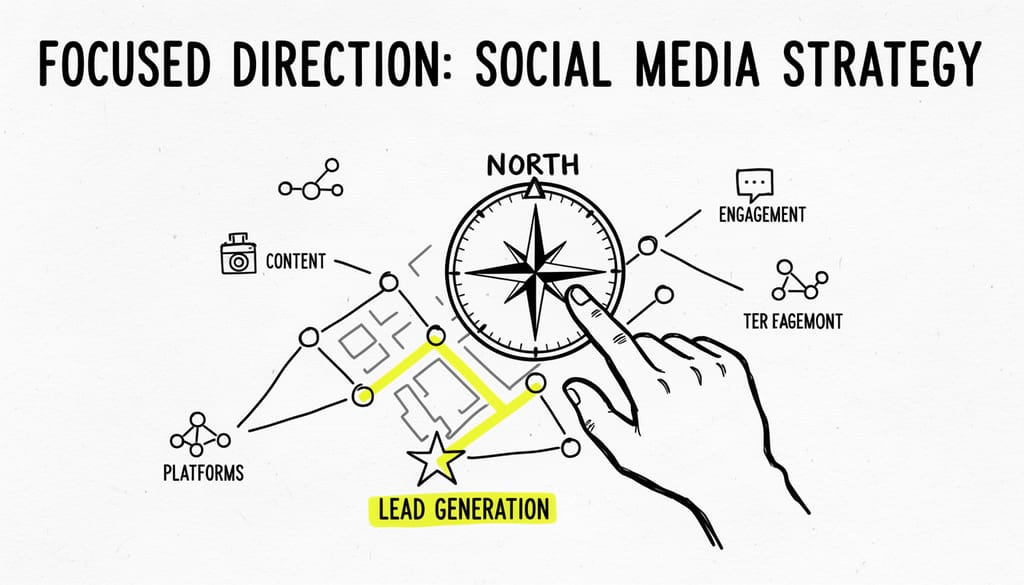
One prevalent myth paralyzes many businesses: the belief that success demands a presence on every single social platform. This includes Facebook, Instagram, X (formerly Twitter), LinkedIn, TikTok, and Pinterest, alongside emerging new platforms. Such a 'spray and pray' approach often leads to resource dilution and content mediocrity.
Teams end up stretching resources too thin, creating generic content that lacks resonance with any specific audience. This strategy ultimately fails to gain significant traction anywhere. It often results in burnout and underperformance.
The Truth: Strategic Focus Drives Audience Engagement
The secret to effective social engagement for lead generation is not ubiquitous presence, but purposeful placement. Success emerges from identifying the one or two platforms where your ideal customers are most active and engaged. Dedicate your efforts to mastering these specific channels.
Understanding User Intent is critical. Consider why individuals use a particular platform. A professional networking on LinkedIn operates with a different mindset than someone seeking visual inspiration on Pinterest. This behavioral insight informs platform choice.
To identify your audience's preferred platforms, begin with your existing customer base. Conduct surveys and analyze website analytics to pinpoint social traffic sources. Examine competitor strategies to see where they achieve maximum engagement. The objective is to make data-driven decisions, avoiding reactions based solely on FOMO (Fear Of Missing Out).
For instance, a B2B software company will likely discover more qualified prospects on LinkedIn than on TikTok. Conversely, a direct-to-consumer brand selling artisanal jewelry may thrive on visually-rich platforms like Instagram and Pinterest. The relevant question is not "Which social media platform is best for lead generation?" but "Which platform offers the best opportunity for generating leads for my specific business?" This strategic targeting ensures efforts yield higher returns.
To aid in platform selection, here is a breakdown of major platforms' strengths for lead generation:
| Platform | Best For | Primary Audience & Content | Lead Gen Tactics |
|---|---|---|---|
| B2B Businesses, Professional Services | Professionals, Decision-Makers. Industry insights, company news, case studies. | Lead Gen Forms, InMail, Content Syndication, Group Engagement | |
| B2C, Local Businesses, Community-based | Broad Demographics. Videos, community posts, user-generated content. | Facebook Lead Ads, Messenger Bots, Event Promotion, Targeted Ads | |
| E-commerce, Visual Brands (Fashion, Food, Travel) | Millennials & Gen Z. High-quality images, Reels, Stories. | Shoppable Posts, Link in Bio, Story Stickers (e.g., polls, quizzes), Influencer Marketing | |
| E-commerce, DIY, Home & Garden, Food | Predominantly Female, Planners. Infographics, tutorials, product photos. | Product Pins, Rich Pins, Driving traffic to blog posts with lead magnets | |
| TikTok | Brands Targeting Gen Z & Young Millennials | Younger demographics. Short-form, entertaining, educational videos. | Link in Bio, TikTok Lead Generation Ads, Viral Challenges |
Choosing wisely enables focused energy, tailored content, and the cultivation of a meaningful presence. This approach attracts high-quality leads, rather than merely accumulating empty follower numbers.
Myth 2: High Follower Counts Equal More Leads

The follower count is often seen as the ultimate vanity metric. Businesses frequently chase high numbers, sometimes even purchasing followers, believing it’s a shortcut to credibility and increased sales. This assumption links a larger audience directly to more leads.
The Truth: Engagement and Quality Outperform Quantity
A large, passive audience holds little value for lead generation. A smaller, highly engaged community of genuine fans and potential customers, however, is significantly more valuable. Ten thousand followers who never interact with content will generate zero leads.
Conversely, one thousand followers who trust your brand, comment on posts, and share content represent a goldmine. According to marketing statistics from HubSpot[^1], engagement serves as a key indicator of both content performance and audience health. High engagement signals to platform algorithms that your content is valuable, boosting organic reach. More importantly, it demonstrates a community that genuinely listens.
These engaged individuals are more likely to download lead magnets, register for webinars, and ultimately convert into customers. Instead of focusing on follower numbers, shift attention to these critical metrics:
- Engagement Rate: Calculate as (Likes + Comments + Shares) / Followers. This reveals the percentage of your audience actively interacting with content.
- Website Clicks: Measure how many users navigate from the social platform to your website. This is a direct indicator of interest.
- Story Replies & DMs: These direct lines of communication are strong indicators of potential leads. They signify direct interest and intent.
- Shares & Saves: These actions demonstrate content value. Users save content for future reference or share it with others, expanding organic reach and showing relevance.
Building an engaged community necessitates a shift from broadcasting to active conversation. Ask questions in captions, run polls in stories, respond to every comment, and create problem-solving content that invites discussion. This approach attracts followers who are genuine potential leads, not merely numbers on a screen.
Success: A small business with 1,500 engaged followers who trust their expertise will generate more qualified leads than a business with 50,000 unengaged followers acquired through giveaways or paid services. This illustrates the power of quality over quantity.
Myth 3: Social Media Is Only for Top-of-Funnel Brand Awareness

Many marketers confine social media's role to a single, broad objective: brand awareness. They view it as a channel solely for company updates and aesthetic posts, hoping it might eventually lead to recall during a purchase decision. They often dismiss its potential as a direct lead generation channel.
These marketers believe serious lead capture can only occur on a dedicated website or through email campaigns. By limiting social media's function, they overlook its most powerful features and significant revenue potential.
The Truth: Social Media Powers the Full Lead Generation Funnel
While social media excels at building brand awareness, its capabilities extend far beyond this initial stage. Modern platforms now offer sophisticated tools specifically designed for direct lead capture within the app environment. Treating social media as a passive billboard ignores these powerful features.
So, how effectively does social media drive direct lead generation? Consider these proven strategies:
- Lead Magnets and Gated Content: Develop valuable resources such as an ebook, checklist, or webinar. Promote these on your social channels with clear calls-to-action (CTAs). Direct users to a landing page where they exchange contact information for the free resource. This classic Content Marketing strategy performs exceptionally well on social media.
- Native Lead Generation Forms: Platforms like LinkedIn and Facebook provide Lead Gen Form Ads. When users click these ads, a pre-populated form appears, often with their profile information (name, email). This frictionless experience dramatically boosts conversion rates, as users submit information in a few taps without leaving the platform.
- Direct Message (DM) Conversations: Do not underestimate the impact of one-on-one dialogue. A user initiating a DM conversation is a warm lead. Leverage these interactions to understand their needs, offer value, and, when appropriate, guide them toward a solution. This approach is particularly effective on platforms like Instagram and LinkedIn.
- Interactive Content: Utilize features like Instagram Story polls, quizzes, and question stickers to engage your audience. User participation signals interest, providing opportunities for direct follow-ups in DMs. For instance, a poll asking, "Are you struggling with SEO?" identifies a ready list of potential leads.
- Running Contests and Giveaways: When executed strategically, contests can be powerful lead generation tools. Require an email address for entry, rather than just a like or follow. Ensure the prize directly relates to your business to attract qualified participants, not just those seeking freebies.
By implementing these direct-response tactics, you transform social media profiles from passive brand channels into active, lead-generating machines.
Myth 4: Constant Posting and Rigid Rules Are Essential
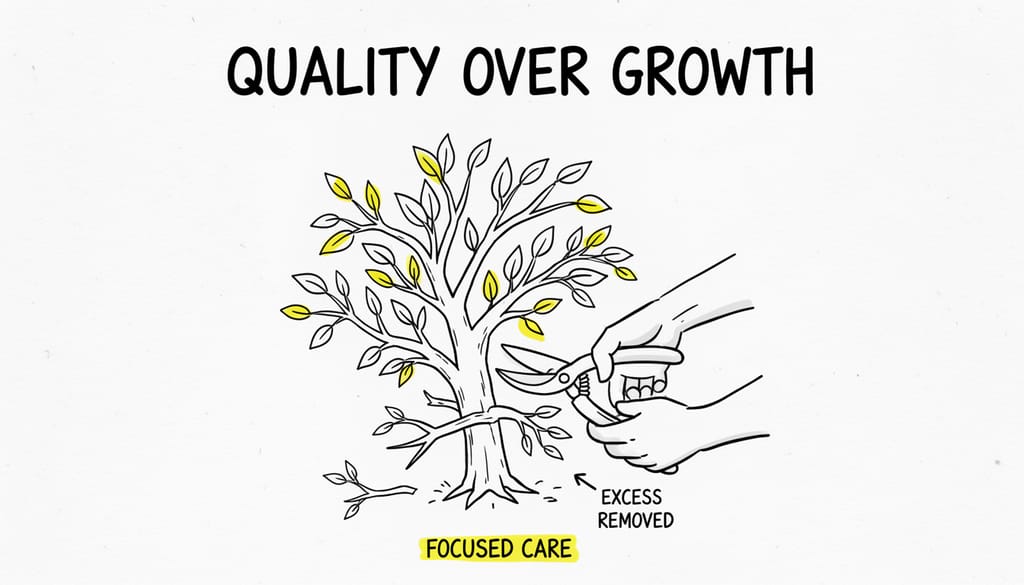
Many marketers adhere to rigid content formulas, such as the "5-3-2 rule" (5 pieces of curated content, 3 pieces of created content, 2 personal updates). Other variations, like the 5-5-5, 3-3-3, 30-30-30, or 70/20/10 rules, also promise optimal content mixes. This emphasis often prioritizes quantity over quality, leading to a focus on meeting daily post quotas rather than delivering genuine audience value.
The Truth: Consistent Value Outweighs Posting Frequency
While consistency is vital, its essence lies in being consistently valuable, not merely consistently present. Bombarding your audience with mediocre daily content risks unfollows, not leads. Your audience requires meaningful content when you post, not just frequent posts.
Rules like the 5-3-2 rule offer useful starting points for novices but are not universal laws. The ideal posting frequency and content mix depend entirely on your industry, audience, and chosen platform. A B2B audience on LinkedIn might appreciate one daily, high-quality, in-depth post. A younger audience on TikTok, conversely, may expect several short, entertaining videos throughout the day.
The key is to analyze your data and listen to your audience. Use platform analytics to determine peak activity times and identify content that garners the most engagement. If long-form video tutorials yield high saves and shares, produce more of them, even if it means less frequent posting. If quick tips generate the most comments, lean into that format.
Focus on creating pillar content—significant, valuable pieces like blog posts, guides, or videos. Then, repurpose this content across your social channels. A single in-depth blog post can transform into a dozen social media assets: a carousel post with key takeaways, a short video summary, an infographic, a series of text-based tips, and a poll. This approach, a core tenet of effective A Complete Guide to Content Marketing for Small Business, ensures consistent value delivery without daily reinvention.
Myth 5: Automation Is Impersonal and Ineffective

Concerns often arise about automation leading to impersonal interactions. Some marketers even question whether AI tools, such as ChatGPT, can genuinely contribute to lead generation without compromising authenticity. This perspective suggests manual effort is always superior for building genuine connections. The word "automation" often conjures images of spammy DMs or generic comments. Many believe every social media action must be manual for authenticity, fearing tools alienate audiences.
The Truth: Smart Automation Facilitates Meaningful Engagement
There is a critical distinction between automating engagement and automating tasks. Never automate comments, DMs, or any form of direct interaction; authenticity is built through human connection. However, automating the logistical and repetitive tasks of social media management is not only effective but essential for scaling any business.
Smart automation prioritizes efficiency. Tools like Buffer or Hootsuite enable advanced content scheduling. This does not diminish content personalization; it merely allows you to batch-create posts and plan your content calendar in advance. This frees you from the daily pressure of on-the-fly content creation. The reclaimed time and mental energy can then be directed towards real-time audience engagement, which truly matters.
Here’s how smart automation enhances lead generation:
- Consistency: Scheduling tools ensure a consistent online presence, even during busy periods. This maintains brand visibility and audience expectation.
- Time Savings: Automating scheduling and reporting frees up valuable hours weekly. These hours can then be reallocated to high-value activities like lead nurturing and crucial sales conversations.
- Content Curation: Certain tools assist in finding relevant third-party articles to share. This helps provide consistent value to your audience without solely relying on newly created content.
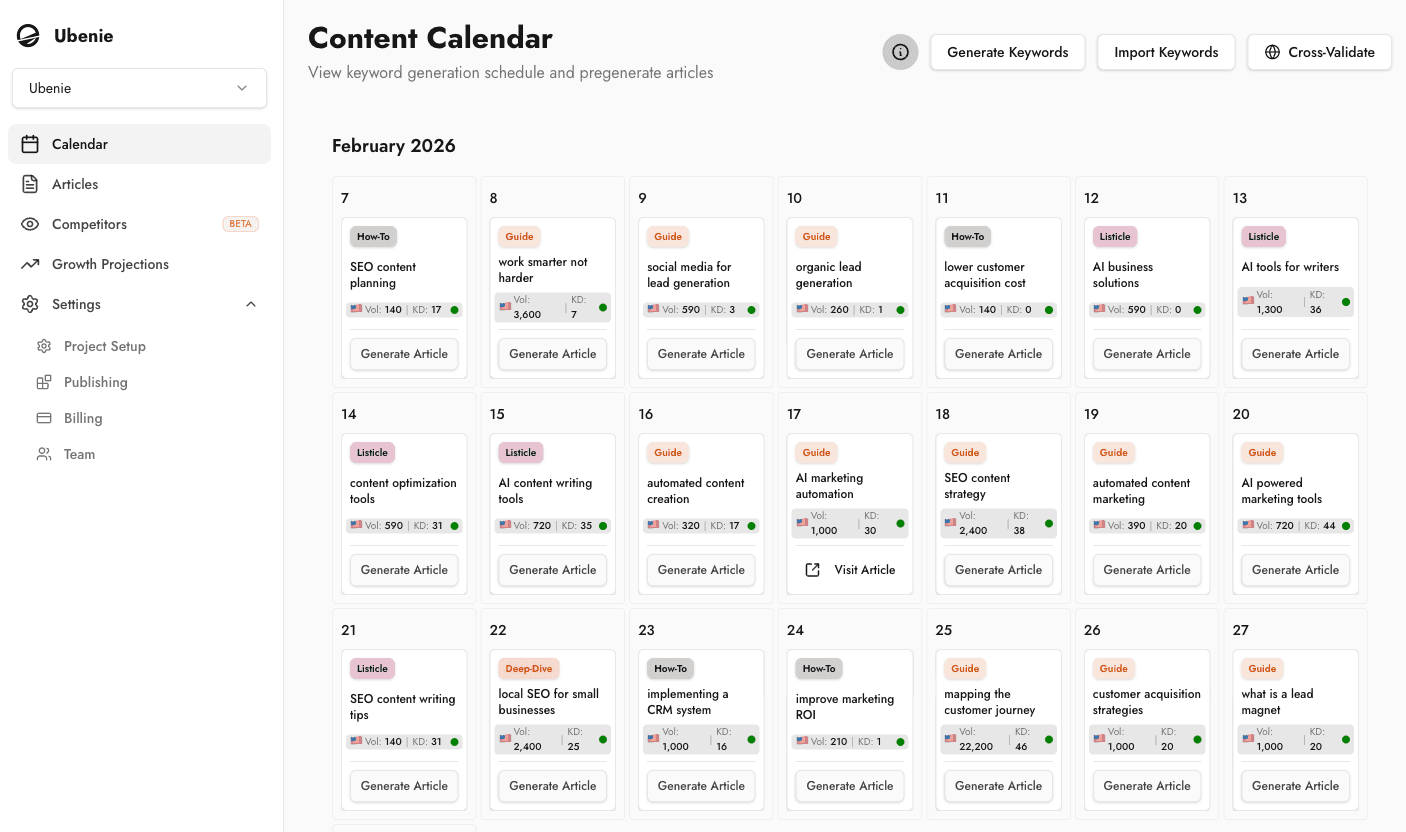
This principle extends directly to content creation itself. Solutions focused on AI Content Generation, like Ubenie, automate the intensive research and writing processes. They provide a steady stream of high-quality blog posts, acting as a powerful fuel for your social media strategy. You can then manually craft engaging social posts to promote these articles, combining AI efficiency with your authentic personal touch. This exemplifies Affordable SEO for Small Business: DIY vs. Agency vs. AI in action, showcasing how technology empowers personalized marketing efforts.
Myth 6: Direct Selling Is the Best Approach
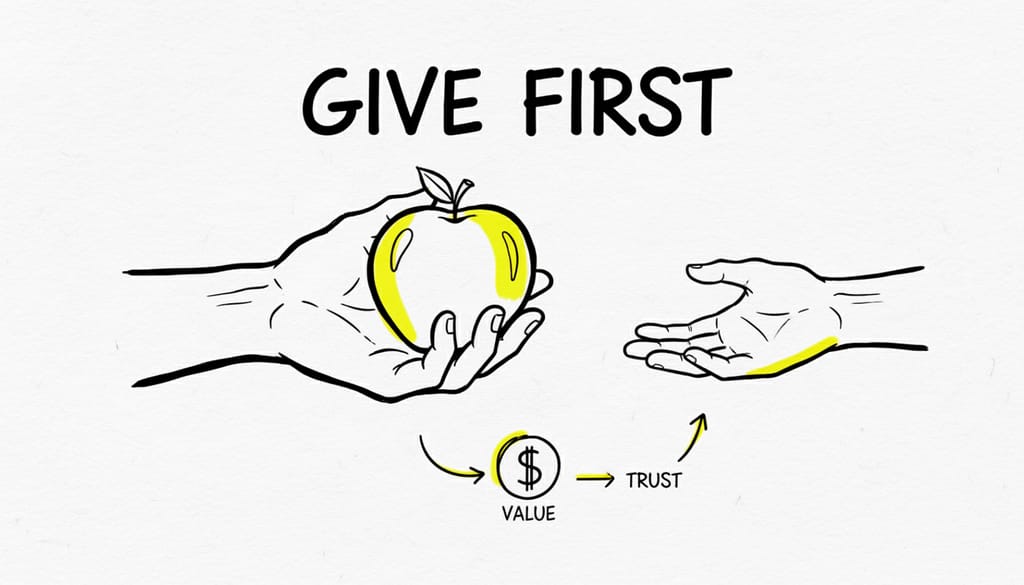
Many businesses treat social media feeds as digital billboards or classified sections. Nearly every post becomes a direct sales pitch: "Buy our product!" "Sign up now!" "Limited time offer!" They operate under the assumption that constant direct asks are the only path to lead acquisition. This aggressive approach often backfires, alienating potential customers and leading to low engagement and high unfollow rates.
The Truth: Value-First Content Marketing Builds Trust and Attracts Leads
People engage with social media for entertainment, education, and connection, not primarily to be sold to. The most successful brands understand this dynamic, adopting a value-first approach. They adhere to the principle of "give, give, give, ask." This means the vast majority of their content focuses on helping the audience, solving problems, and providing value without an immediate expectation of return.
This strategy forms the core of modern content marketing. By consistently sharing expertise and assisting your audience, you build trust, establish authority, and position your brand as the go-to resource in your niche. Once this foundation of trust is established, your audience becomes significantly more receptive when you eventually make an offer. A widely accepted guideline is the 80/20 rule: 80% of your content should be valuable and non-promotional, while only 20% should be directly related to sales.
What constitutes valuable content?
- Educational: This includes how-to guides, tutorials, practical tips and tricks, and relevant industry insights. Such content establishes your expertise.
- Entertaining: Share humorous videos, provide behind-the-scenes glimpses, or create relatable memes. Entertainment fosters connection and brand personality.
- Inspirational: Feature customer success stories, share motivational quotes, or present compelling case studies. This content resonates emotionally and builds aspiration.
This strategy represents a long-term investment, but it consistently generates higher-quality, more loyal leads. Instead of pursuing quick sales, you cultivate genuine relationships. Leads generated through this method are already pre-qualified; they know your brand, trust your expertise, and are more likely to perceive your product or service as the ideal solution. For deeper insights, consult The Ultimate Trend Analysis of Content Marketing for Lead Generation.
Myth 7: Organic Reach Is Dead, So You Have to Pay to Play
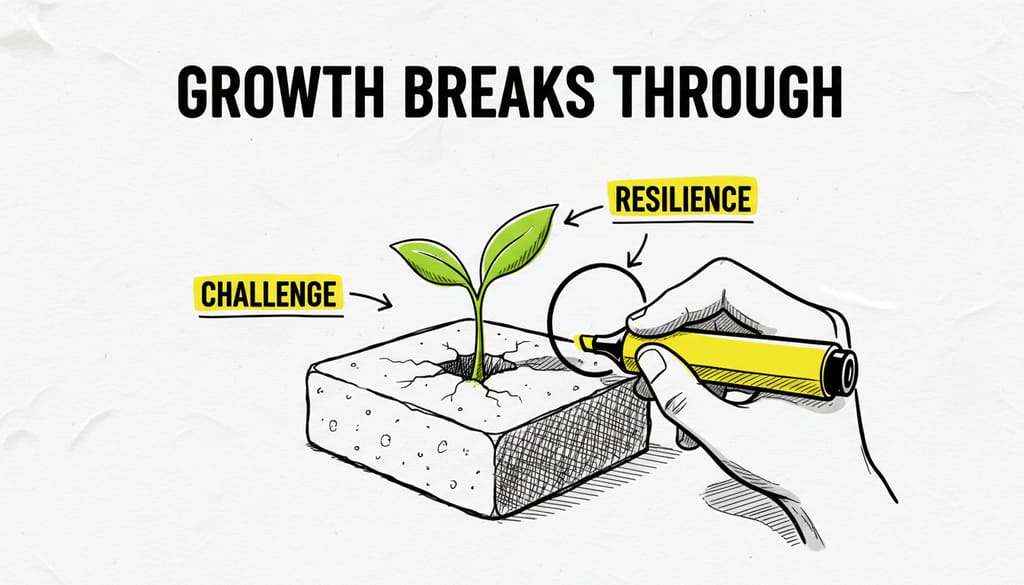
It is undeniable that organic reach on platforms like Facebook and Instagram has steadily declined over recent years. This trend has convinced many that investing heavily in social media ads is the only way to gain visibility and generate leads. Consequently, they often view organic social media efforts as futile, either abandoning them or committing to unsustainable ad budgets.
The Truth: A Strong Organic Strategy Underpins Paid Success
While paid ads offer a powerful means to accelerate lead generation, organic reach is far from obsolete; it is merely more competitive. Strategic, exceptional, and highly shareable content can still achieve remarkable organic performance. In fact, a robust organic presence significantly enhances the effectiveness of your paid campaigns.
Consider a user encountering your ad. Their immediate action is often to visit your profile to learn more. If they find an empty or low-quality feed, trust immediately erodes, and they will likely navigate away. However, if they discover a profile rich with valuable content, positive customer interactions, and compelling social proof, their likelihood of conversion dramatically increases. Your organic presence acts as the foundational support for all your paid marketing efforts.
Furthermore, you can apply principles of Search Engine Optimization (SEO) to your social media profiles to boost organic visibility. Platforms such as LinkedIn, Pinterest, and even Instagram increasingly function as their own search engines. Users actively search for keywords and hashtags to find solutions and products. By optimizing your bio, posts, and content with relevant keywords, you can attract organic traffic from users actively seeking your offerings.
Here are several tips to enhance organic reach:
- Create Shareable Content: Infographics, data-backed posts, and relatable stories are more likely to be shared. This broadens your reach to new audiences and expands brand exposure.
- Leverage Video: Video content, particularly short-form formats like Reels and TikToks, consistently receives prioritization from platform algorithms. This boosts visibility and engagement.
- Engage with Others: Avoid merely posting and disengaging. Actively interact with other accounts in your niche, comment on follower posts, and participate as an active community member. This fosters relationships and visibility.
Organic social media is a marathon, not a sprint. It cultivates a sustainable, long-term asset for your business. This, in turn, makes every other marketing effort, including paid advertising, significantly more effective.
Myth 8: Measuring Social Media ROI Is Impossible
This objection frequently arises, particularly from traditional business owners. They often perceive social media as a time-consuming endeavor with intangible results. Their argument states that if a direct link cannot be established between a Facebook post and a sale, then the investment of time or money is unwarranted. This perspective often leads to either complete neglect of social media or half-hearted engagement without a clear strategy.
The Truth: Social ROI Is Highly Measurable with the Right Tools and Strategy
While quantifying certain social media benefits, like brand loyalty, can be challenging, the lead generation aspect is absolutely measurable. The key lies in implementing proper tracking mechanisms. The notion that social media ROI remains a mystery is an outdated myth, originating from the early days of these platforms.
Here’s how you can track and measure your social media lead generation ROI:
- UTM Parameters: This tool is paramount. A UTM code is a text snippet appended to a URL to track your website traffic's origin. By creating unique UTM parameters for each social media campaign, you can utilize Google Analytics to precisely identify how many visitors, leads, and even customers originated from a specific post or profile link. This granular data clarifies campaign effectiveness.
- Platform-Specific Analytics: Every major social media platform provides a robust, built-in analytics dashboard. These tools offer data on reach, engagement, website clicks, and follower demographics. For lead-specific campaigns, such as Facebook Lead Ads, they provide exact lead numbers and the cost per lead, enabling direct performance assessment.
- Dedicated Landing Pages: Create unique landing pages for offers promoted on social media. This simplifies tracking immensely. If a lead registers through the "Social Media Ebook" landing page, its origin is immediately clear, streamlining attribution.
- CRM Integration: Tools like HubSpot allow for seamless integration of your social media and customer relationship management (CRM) systems. This provides a closed-loop view, tracking a lead from their initial social media click through to becoming a paying customer. This integration delivers precise ROI figures, demonstrating the direct financial impact of social efforts.
By diligently tracking these metrics, you transition from guesswork to data-driven certainty. You gain insights into which platforms drive the most valuable leads, which content types convert best, and where to intensify your efforts. Social media is not a black box; it is a rich data environment that, when measured correctly, consistently proves its significant value.
The Real Truth: An Integrated Strategy for Social Media Lead Generation
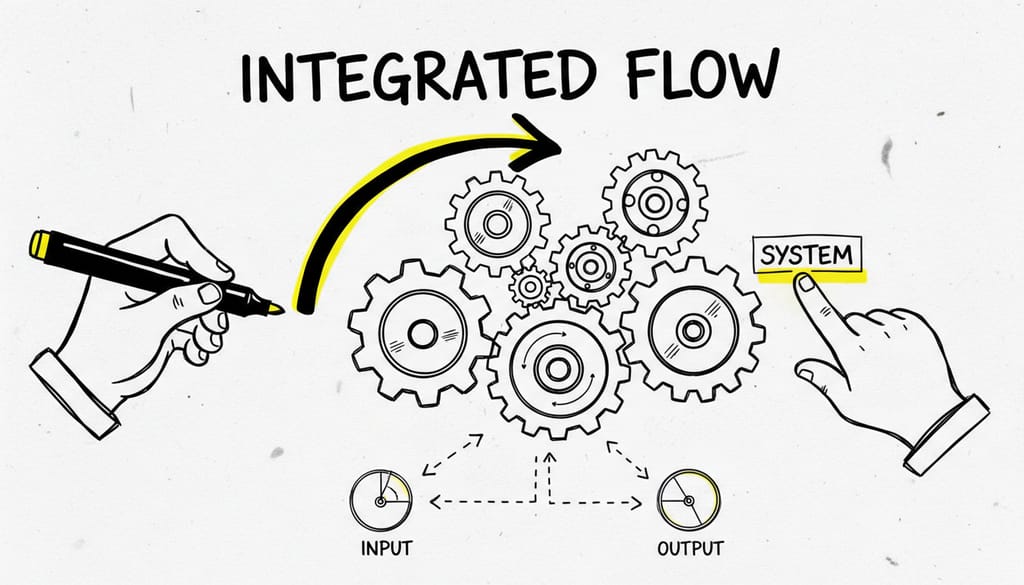
After dissecting these common myths, a clear framework emerges. Successful social media for lead generation transcends individual tricks or secret formulas. It is not about platform omnipresence, chasing follower counts, or constant daily posting. The genuine truth lies in constructing an integrated, audience-centric system.
This robust system is built upon a foundation of high-quality, valuable content. It demands a deep understanding of your ideal customer, leading you to engage on the platforms where they actively spend their time. The strategy involves delivering immense value through educational, entertaining, and inspirational content. This approach cultivates genuine trust and establishes undisputed authority.
It also incorporates smart automation to manage repetitive tasks, freeing you to concentrate on authentic, human-to-human engagement. Crucially, it involves meticulously tracking results to inform data-driven decisions for continuous optimization and improvement. This holistic approach ensures every effort contributes to a measurable outcome.
This is precisely where a tool like Ubenie becomes a game-changer. The most significant bottleneck for any content-driven social media strategy remains content creation itself. Business owners often lack the time for extensive Keyword Research and writing required to produce a steady stream of high-quality blog posts. These posts form the bedrock of a value-first strategy. Ubenie leverages AI Content Generation to automate this entire process. It identifies exactly what your customers are searching for and creates optimized, authoritative blog content. You can then readily share and repurpose this content across all your social media channels.
With Ubenie efficiently handling content creation, you are liberated to focus on the inherently human aspects of social media: building relationships, engaging in meaningful conversations, and nurturing leads. This represents the perfect synergy of AI-powered efficiency and human-driven authenticity. You gain the essential pillar content needed to fuel your social media machine, all without the massive time investment. This empowers you to execute a sophisticated, effective lead generation strategy that truly delivers results.
Key Takeaways
- Focus, Don't Scatter: Select 1-2 primary platforms where your target audience is most active and commit to mastering them.
- Quality over Quantity: An engaged community of 1,000 true advocates delivers more qualified leads than 100,000 passive followers.
- Be a Full-Funnel Tool: Leverage social media for direct lead capture using lead magnets and native forms, extending beyond mere brand awareness.
- Value over Volume: Prioritize consistent provision of value to your audience above the sheer frequency of your posts.
- Automate Tasks, Not Relationships: Utilize smart tools to efficiently schedule content, thereby freeing resources for genuine human engagement.
- Give Before You Ask: Build trust and authority by consistently providing value, adhering to an 80/20 rule (80% value, 20% promotion).
- Organic and Paid Work Together: A robust organic presence forms the essential foundation that enhances the credibility and effectiveness of your paid advertising campaigns.
- Measure Everything: Employ UTM parameters, platform analytics, and dedicated landing pages to track ROI. This proves the tangible value of your social media efforts.
Frequently Asked Questions
Which social media platform is best for lead generation?
There is no universally "best" platform. The ideal choice depends entirely on your specific business and target audience. LinkedIn is typically most effective for B2B companies, while visually-driven platforms like Instagram and Pinterest excel for B2C product brands. The critical step is researching where your specific customers spend their online time and concentrating your efforts there.
How can I generate leads on social media without a big budget?
Focus on strategic organic initiatives. Develop high-value, shareable content such as tutorials, practical tips, and behind-the-scenes insights into your business. Engage deeply with your community by promptly responding to comments and direct messages. Utilize free lead generation tactics, like promoting a downloadable checklist via your bio link or running interactive polls in your stories to identify interested followers.
What kind of content works best for lead generation on social media?
Content that actively solves a problem or consistently provides significant value performs best. This encompasses educational posts (e.g., how-to guides, expert tips), compelling lead magnets (e.g., ebooks, webinars, checklists), interactive content (e.g., quizzes, polls), and persuasive customer testimonials or case studies. The overarching goal is to cultivate trust and demonstrate your expertise, which naturally drives inquiries and lead conversions.
How long does it take to see results from social media lead generation?
Results vary, and it is not an instant process. Building an engaged audience and establishing trust through organic, value-driven content typically takes 3-6 months to yield consistent results. Paid advertising campaigns can generate leads much faster, often within days, but they perform most effectively when supported by a strong and credible organic presence.
Tired of struggling with SEO and content marketing? Automate your traffic growth and focus on what you do best. Visit our website to discover how we can help you achieve higher search rankings and more leads.
Article created using Ubenie.