
Why Small Businesses Struggle to Scale
Industry data shows 61% of small businesses struggle with consistent content creation. They often cite lack of time and budget as primary obstacles. This prevents them from leveraging the full power of content marketing for small business growth. The digital landscape demands consistent, high-quality content.
For many small operations, meeting this demand feels impossible. Larger companies deploy dedicated teams and massive budgets. This creates a significant pain point: a feeling of being perpetually behind. The dream of robust organic growth often clashes with limited resources.
The Overwhelming Grind: The Small Business Content Marketing Pain Point
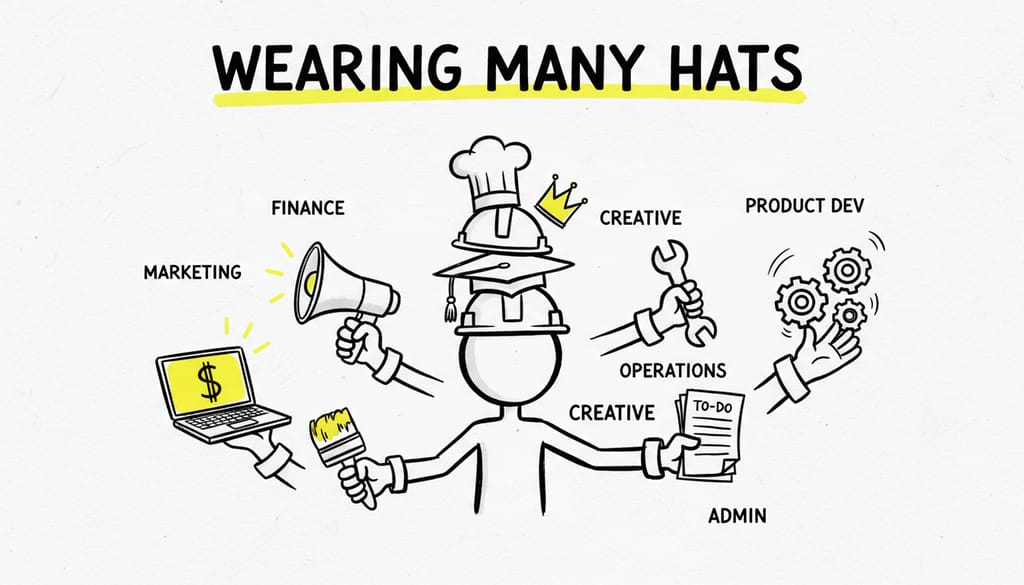
Small business ownership is a masterclass in prioritization. Every hour is precious, and every dollar scrutinized. When it comes to marketing, the challenge is not a lack of desire.
It's a profound lack of resources. The term content marketing for small business often sounds less like an opportunity and more like an exhaustive, unpaid internship. You are told to:
Blog consistently
Create engaging videos
Post on social media
Build an email list
Run targeted ads
All this happens while managing core business operations.
The result is a familiar cycle of frustration. You might get a burst of inspiration, perhaps spending a weekend writing a fantastic blog post. You publish it, share it once or twice, then face... crickets.
Immediate business demands take over. Your blog then sits dormant for another two months. This sporadic effort, however well-intentioned, fails to build momentum. It struggles to rank on Google and attract a consistent flow of visitors. The content calendar becomes a source of guilt, and initial excitement fades into overwhelming defeat.
This is the core pain point: the gap between knowing what to do and having the capacity to do it effectively and consistently. Consider a small e-commerce store selling handmade leather goods. They know they need articles on 'how to care for a leather wallet' or 'the best types of leather for bags'.
The process involves hours of competitor research and keyword identification. It also means writing an in-depth article, sourcing images, and optimizing everything. That's easily a 5-8 hour commitment for a single post. When you also manage inventory, shipping, and customer service, that time simply doesn't exist. This is where automation becomes a game-changer.
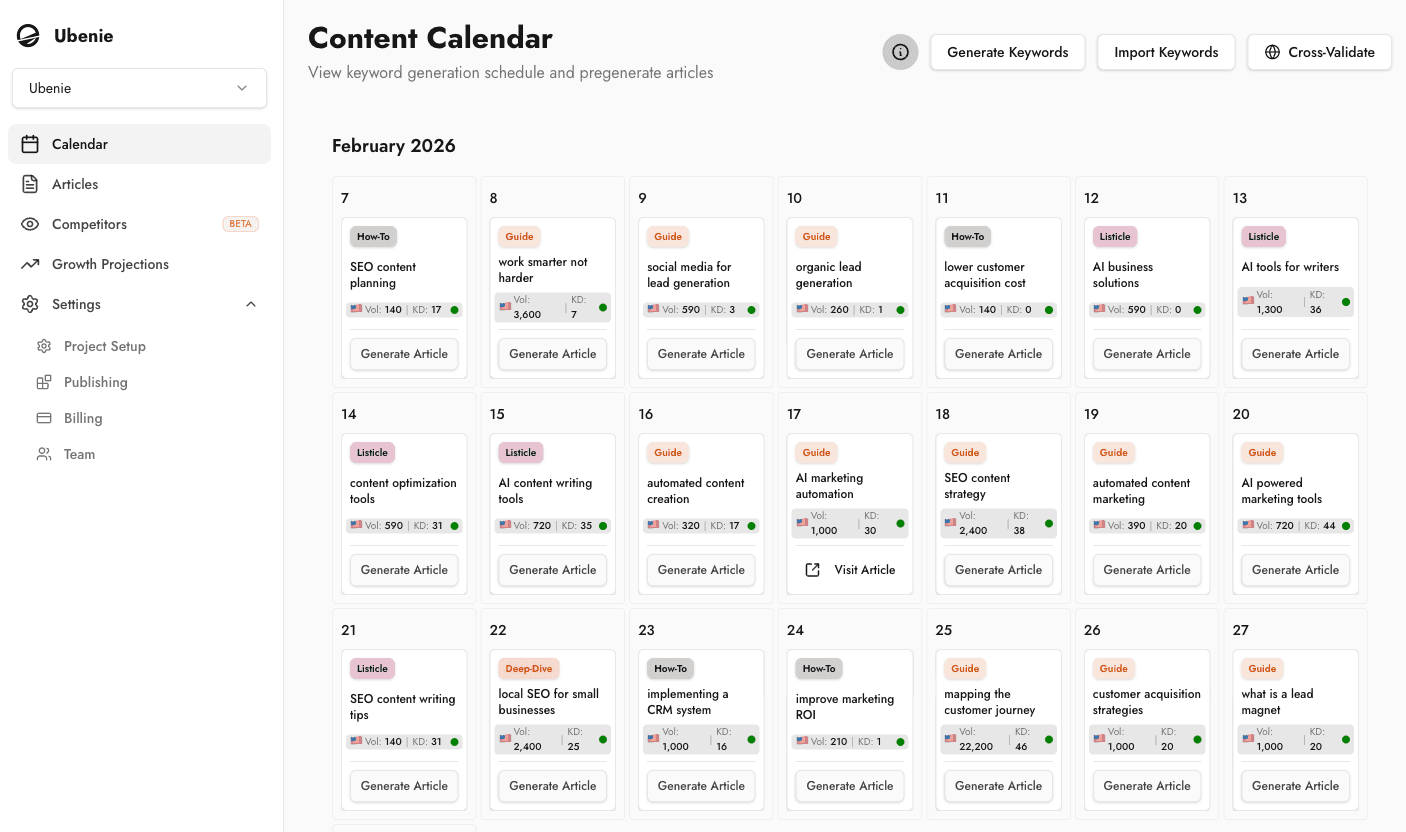
Imagine a platform handling the most time-consuming parts. An AI-powered tool like Ubenie is designed for this scenario. A business owner describes their business and target audience. The AI then conducts keyword research, analyzes top-ranking content, and generates a complete, SEO-optimized blog post.
What once took an entire day can now be accomplished in minutes. This transforms content marketing from an insurmountable chore into a manageable, automated growth engine. Consistency is crucial for content marketing success. Search engines like Google reward websites that regularly publish fresh, relevant content. Sporadic posting makes building topical authority and maintaining search rankings incredibly difficult.
The Core Problem: Why Most Content Marketing Efforts Fizzle Out
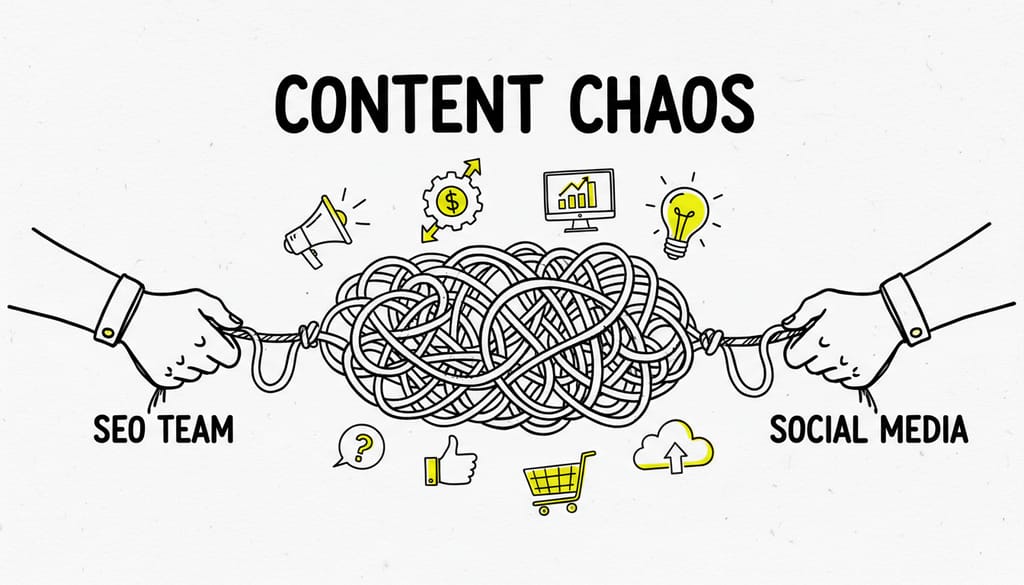
Many small business owners start content marketing for small business with enthusiasm. Often, their efforts yield little to no return. The problem isn't usually a lack of effort. It's a lack of a cohesive, data-driven strategy.
Without a clear plan, content creation becomes random acts of marketing. These fail to build upon each other, leading to wasted time and stagnant growth. The core issue is multifaceted. It stems from technical knowledge gaps, resource constraints, and a misunderstanding of how search engines and users interact with content.
Problem Context: The Vicious Cycle of Inconsistent and Unfocused Content
Effective content marketing is both an art and a science. The 'art' is creating engaging, valuable content that resonates with your audience. The 'science' is the SEO component. This ensures content is discoverable by search engines and positioned to rank. Small businesses often excel at the art but struggle immensely with the science.
This leads to several critical breakdowns:
No Time for Consistency: This is the biggest hurdle. Without a steady stream of content, you cannot build authority or consistently attract traffic. A blog with its last post dated six months ago signals to both users and Google that the site isn't actively maintained.
Lack of SEO Expertise: Effective SEO is complex. It involves in-depth keyword research to find terms with sufficient search volume but manageable competition. It requires on-page optimization, crafting compelling titles, and meta descriptions. Content must be structured with proper headings (H1, H2, H3). Internal linking and optimizing images are also crucial. Most business owners lack the time to learn tools like Ahrefs or Semrush.
Creating Content for No One: A common mistake is writing about what the business wants to discuss, ignoring what the customer needs to know. Content must be created with clear user intent. Are they looking for information, comparing products, or ready to purchase? Content not aligned with active searches guarantees zero traffic.
Budget Limitations: Traditional solutions involve hiring a freelance writer or a marketing agency. Quality freelancers can be expensive, and managing them still requires time. Agencies offer comprehensive services but often come with retainers of several thousand dollars per month, out of reach for most small businesses. Understanding your options, from DIY to AI, is vital, as detailed in Affordable SEO for Small Business: DIY vs. Agency vs. AI.
Difficulty Measuring ROI: Without proper tracking, knowing what works is impossible. Many small businesses lack correctly set up Google Analytics or cannot interpret data. They cannot tell which posts drive traffic, generate leads, or contribute to sales. This makes justifying time and money spent hard, leading them to abandon the strategy.
This combination creates a vicious cycle. Lack of time and expertise leads to inconsistent, unoptimized content. This content fails to generate traffic or leads, making ROI impossible to prove. Without a clear return, the business owner cannot justify more resources. The content marketing for small business effort withers. Platforms like Ubenie are built to break this cycle.
By automating SEO research and content generation, Ubenie handles the 'science' of the equation. This ensures every article is strategically targeted and optimized for search from the start. It allows the business owner to focus on their expertise. They can review and approve content that reflects their brand voice, without getting bogged down in technical details.
Why Traditional Approaches Fail Small Businesses
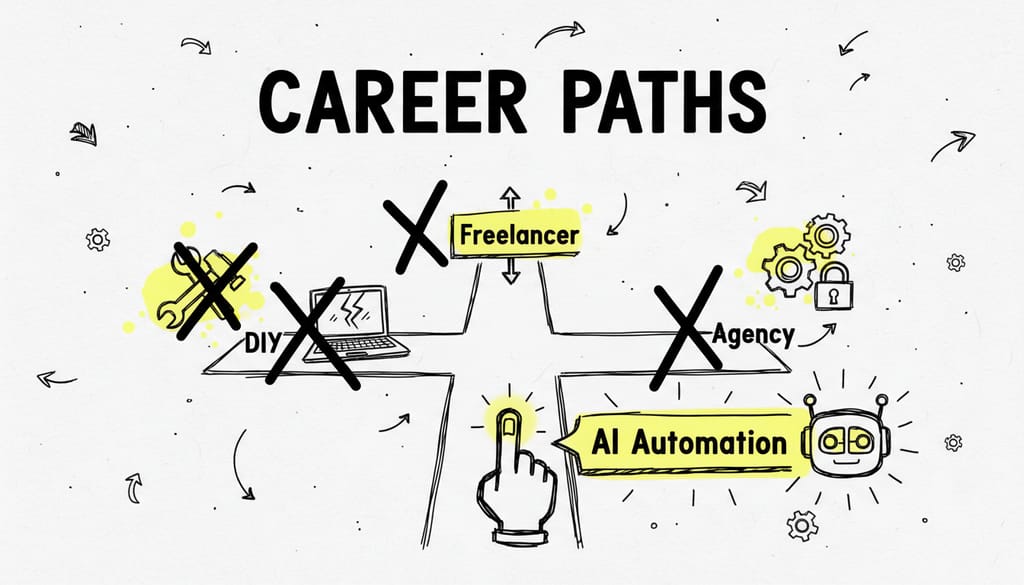
When tackling the content marketing for small business challenge, you typically explore three paths. These are the do-it-yourself (DIY) route, hiring freelancers, or partnering with a digital marketing agency. While each has merits, they often present significant drawbacks. These make them impractical or unsustainable for small operations. Understanding these failure points is crucial for finding a more effective and scalable solution.
The DIY Black Hole
The DIY approach is often the default starting point. Driven by a desire to save money, business owners decide to learn and execute content marketing themselves. The problem is that content marketing is not a single skill. It is a collection of disciplines.
To do it effectively, you need to be a strategist, researcher, writer, editor, SEO specialist, and social media manager. The learning curve is incredibly steep. You will spend weeks, if not months, learning keyword research, user intent, on-page SEO, and link building. You might invest in expensive SEO tools only to be overwhelmed by the sheer volume of data.
A critical mistake many DIYers make is Keyword Cannibalization. They unknowingly create multiple articles targeting the same keyword. This confuses Google and splits their ranking potential. This is a perfect example of how a lack of deep expertise can actively harm your SEO efforts. Ultimately, time spent learning marketing is time taken away from running the business. Burnout is almost inevitable, and consistency is the first casualty.
The Freelancer Gamble
Realizing the DIY time commitment is too great, the next logical step is often to hire a freelance writer. This can be a great option if you find the right person, but it's a significant gamble. The freelance marketplace is vast, and quality varies dramatically.
You might hire a great writer who knows nothing about SEO. This results in beautifully written articles that nobody ever finds. Conversely, an SEO expert might produce dry, keyword-stuffed content that fails to engage readers. Even with a skilled freelancer, management overhead remains. You still need to provide detailed briefs, review drafts, and manage invoices.
Finding a writer who truly understands your niche and brand voice can take months of trial and error. Costs can also add up quickly. A single, well-researched, 1500-word blog post can cost anywhere from $150 to $500 or more. For a small business needing to publish consistently, this becomes a substantial monthly expense without guaranteed return.
The Agency Overkill
For businesses with a larger budget, a marketing agency seems like the perfect, hands-off solution. Agencies bring a team of experts to the table, capable of managing your entire strategy. However, their services come at a premium. A typical agency retainer for content marketing and SEO can start at $2,000-$5,000 per month. It often goes significantly higher. This price point immediately disqualifies most small businesses.
Furthermore, agency models are often built for larger clients. Your small business might be a low priority. You could receive a cookie-cutter strategy not tailored to your unique audience or goals. It's also important to distinguish between different types of marketing. An agency might excel at running ads but have a weaker content team. Understanding the nuances between Content Marketing vs Digital Marketing: What's the Difference? is key.
This ensures you invest in the right strategy for long-term organic growth. For many, the high cost and potentially impersonal approach make agencies an ill-fitting solution.
Approach | Cost | Time Investment (Owner) | Expertise Required (Owner) | Scalability |
|---|---|---|---|---|
DIY | Low (Tools) | Very High | Very High | Low |
Freelancers | Medium | Medium | Medium | Medium |
Agency | Very High | Low | Low | High |
AI Automation (Ubenie) | Low (Subscription) | Very Low | Low | Very High |
As the table shows, traditional models force a trade-off between time, money, and control. AI-powered platforms like Ubenie disrupt this. They offer a scalable, expert-level solution at a fraction of the cost. This makes effective content marketing for small business finally accessible.
The Solution: An Automated, SEO-Driven Content Engine
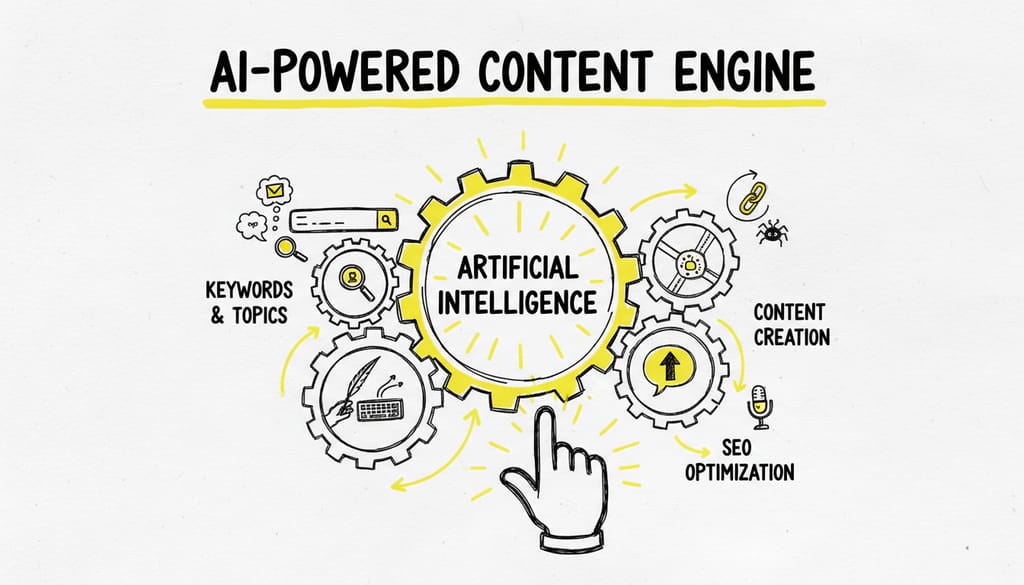
The solution to the small business content marketing dilemma isn't to work harder or spend money you don't have. It's to work smarter. This means building a system—an engine—that automates the most laborious parts of the process.
This system ensures every piece of content aligns strategically with your growth goals. This engine is built on the principles of SEO, consistency, and efficiency. It transforms your website into a predictable lead-generation machine, not a source of stress.
An automated, SEO-driven content engine uses technology to handle repetitive, data-heavy tasks. These typically consume 80% of content marketing effort. This frees you, the business owner, to focus on the 20% requiring your unique expertise. This includes refining the message, sharing your brand's story, and engaging with attracted customers.
Instead of manually digging for keywords, guessing at topics, and struggling with optimized copy, you rely on a system that does it for you. This happens consistently and at scale.
Solution Benefits: Building a Predictable Growth Machine
Adopting this model transforms content marketing for small business from disjointed campaigns into a cohesive, long-term asset. This asset appreciates over time. The benefits are profound. They directly address the pain points causing most small businesses to fail at content.
Unbreakable Consistency: An automated system never tires, loses motivation, or gets sidetracked. It generates a steady stream of content ideas and drafts. This allows you to maintain a regular publishing schedule with minimal effort. This consistency is a powerful ranking signal to Google and keeps your audience engaged.
Data-Driven Relevance: The engine's foundation is data, not guesswork. It identifies low-competition, high-intent keywords your real customers search for. This ensures every article serves a specific purpose and has a built-in audience. You stop creating content nobody looks for, and start creating resources that directly answer customer questions.
Building Genuine Authority: Consistently publishing high-quality, helpful content on specific topics builds topical authority. This signals to search engines that you are an expert in your field. Over time, this authority boosts your entire website's Domain Authority, making it easier for all your pages to rank. High-quality content also earns natural Backlinks from other sites, a powerful SEO ranking factor.
Massive Time and Cost Savings: This is the most immediate and tangible benefit. Automating content creation can save dozens of hours each month. According to data compiled by The CMO, 75% of marketers report that automation saves them time[^1]. This time can be reinvested into other critical business functions. The cost savings are equally significant. An affordable subscription to an AI platform can replace thousands of dollars in agency fees or freelancer costs, offering a much higher ROI.
This is precisely the problem Ubenie was designed to solve. Ubenie's platform embodies this content engine solution. It automates the entire Content Workflow. This ranges from initial keyword discovery and Competitive Analysis to generating a complete, Google-optimized blog post. The AI analyzes top competitors, structures articles with ranking elements (optimized headlines, structured data, 'People Also Ask' answers). Your role shifts from writer to editor. You simply review the AI draft, add your personal touch, and schedule it. This streamlined process makes it possible for any small business to execute a sophisticated content marketing strategy without a dedicated marketing team.
Step-by-Step Implementation: Building Your Content Engine
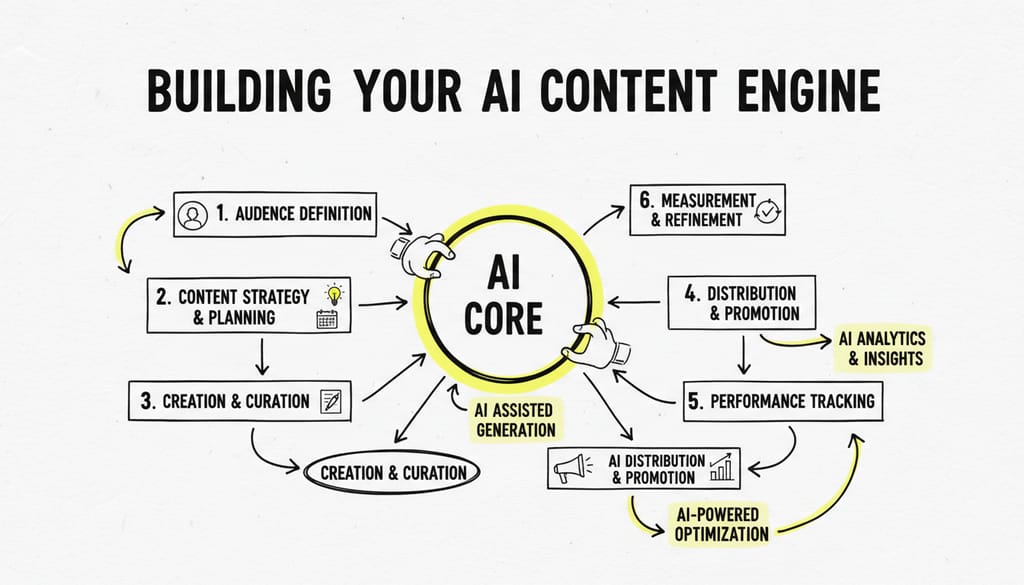
Transitioning to an automated content engine is a strategic shift. It can be broken into clear, manageable steps. While a tool like Ubenie automates much of this, understanding the underlying principles maximizes results. This plan guides you through setting up your content machine, whether using AI or building a more manual system.
Step 1: Laying the Foundation (Audience and Goals)
Before creating a single piece of content, know your audience and what you want to achieve. This strategic foundation guides every subsequent step.
Define Your Ideal Customer: Create a simple customer persona. What are their biggest challenges? What questions do they have about your industry? What are their goals? Your content should bridge their problems and your solutions.
Set Clear Content Goals: What is the primary purpose of your content? Is it to generate leads, drive e-commerce sales, build brand awareness, or educate users? Your goal influences the content type and calls-to-action (CTAs) you use.
Step 2: Keyword Discovery and Content Planning
This is where the 'SEO-driven' part of the engine comes alive. Create a backlog of content ideas based on what your audience actively searches for.
Brainstorm Core Topics: Start with broad categories related to your business. For a financial advisor, these might be 'retirement planning,' 'investing for beginners,' and 'tax strategies.'
Identify Long-Tail Keywords: Within each core topic, find specific, longer phrases (long-tail keywords) with lower competition. Instead of 'investing,' target 'best investment strategies for young adults.' These are less competitive and attract a more qualified audience.
Perform a Content Gap Analysis: A Content Gap Analysis involves looking at keywords your competitors rank for that you don't. This is a goldmine for new content ideas. Tools like Ahrefs are great, but the process can be complex.
Create a Content Calendar: Organize your keyword ideas into a simple publishing schedule. A content calendar helps you stay consistent and plan content themes in advance.
Step 3: Content Creation and Optimization
This is the most time-consuming phase, where automation offers the biggest advantage. Create content that satisfies both user intent and search engine algorithms.
Structure for Success: Every article should have a clear structure. This includes a compelling introduction, a body broken by descriptive subheadings (H2s and H3s), and a concluding summary. This improves readability and helps Google understand content hierarchy.
On-Page SEO Checklist:
Include the primary keyword in your title, meta description, and first paragraph.
Use relevant secondary keywords naturally throughout the text.
Add internal links to other relevant articles on your site.
Optimize image file names and alt text.
Aim for comprehensive content that fully answers the user's query.
Focus on Quality and Value: Your content must be genuinely helpful. Use examples, data, and stories to make it engaging. This quality encourages Link Building, where other websites link back to your content.
Step 4: Publishing and Promotion
Creating great content is only half the battle. Ensure it gets seen.
Publish Consistently: Stick to your content calendar. Consistency is key, whether once a week or twice a month.
Promote Across Channels: Share new articles on social media, in your email newsletter, and in relevant online communities. Provide context and explain its value, don't just post links.
Step 5: Measuring and Refining
Your content engine needs fuel: data. Regularly review performance to see what's working.
Track Key Metrics: Use Google Search Console to monitor clicks, impressions, and keyword rankings. Use Google Analytics for page views, time on page, and conversion rates.
Identify Top Performers: Find your most successful articles and analyze why they performed well. Can you replicate that success?
Update and Refresh Old Content: SEO isn't 'set it and forget it.' Periodically update older posts with new information to keep them fresh and maintain rankings.
For a small business, this process can seem daunting. This is where a platform like Ubenie streamlines everything, effectively automating Steps 2 and 3. You tell it about your business (Step 1). It then generates high-potential keywords and fully optimized drafts. Your job is reduced to reviewing, adding unique insights, and hitting 'publish' (Step 4). Meanwhile, the platform provides data to help you refine your strategy (Step 5). This approach makes it feasible to tap into one of the 7 Affordable SEO Services for Small Business Growth—automated content creation.
Conclusion: Your Path to Sustainable Growth
For years, small business owners have been caught in a frustrating cycle. They know they need content to grow. However, they lack the time, budget, and technical expertise to execute effectively. The DIY route leads to burnout, freelancers are a gamble, and agencies are often too expensive. This has left many feeling like sustainable organic growth is out of reach for their content marketing for small business efforts.
The world of content marketing can feel rigged for big businesses with deep pockets and large teams. However, the solution lies not in outspending or outworking the competition. It's in outsmarting them with a better system. By building an automated, SEO-driven content engine, you systematically solve consistency, relevance, and efficiency problems.
This strategic shift transforms content marketing for small business from a resource-draining chore into a predictable, scalable asset. It works for you 24/7. It attracts qualified leads and builds your brand authority even while you focus on running your business. Technology, particularly AI, has leveled the playing field.
Platforms like Ubenie now make it possible for any small business to implement a sophisticated content strategy. This was once the exclusive domain of large corporations. By automating the heavy lifting of keyword research, competitive analysis, and content creation, you can finally build the momentum needed to rank on Google and achieve sustainable, long-term growth. The path forward is clear: embrace automation, focus on strategy, and turn your website into your most powerful marketing tool.
Frequently Asked Questions
How long does content marketing take to show results for a small business?
Content marketing for small business is a long-term strategy, not a quick fix. It typically takes 6 to 9 months of consistent effort to see significant results in organic traffic and search rankings. Early indicators, like increased keyword rankings for specific posts, can often be seen within 3 to 4 months.
How many blog posts should a small business publish per month?
Consistency is more important than frequency for effective content marketing for small business. For most small businesses, publishing 2 to 4 high-quality, well-optimized blog posts per month is a great target. This is frequent enough to signal to Google that your site is active and allows you to build topical authority steadily.
Can I do content marketing with a zero-dollar budget?
Yes, it is possible to implement content marketing for small business with a zero-dollar budget. However, it requires a significant investment of your time. The DIY approach involves learning SEO, conducting manual keyword research, writing, editing, and promoting all content yourself. While it costs no money, the time cost is substantial and often a major barrier for busy entrepreneurs.
What is more important: content quality or quantity for small business SEO?
Quality is always more important than quantity in content marketing for small business. Publishing one excellent, comprehensive, and well-optimized article is far more valuable than publishing five short, generic, and unhelpful posts. High-quality content earns rankings, attracts backlinks, and builds trust with your audience.
How does AI help with content marketing for small businesses?
AI tools like Ubenie help by automating the most time-consuming and technical parts of the content creation process. They can perform keyword research, analyze competitor content, generate structured and SEO-optimized drafts, and streamline the entire content workflow. This allows small business owners to produce high-quality content at scale without needing deep SEO expertise or a large budget.
Tired of struggling with SEO and content marketing? Automate your traffic growth and focus on what you do best. Visit our website to discover how we can help you achieve higher search rankings and more leads.
Article created using Ubenie.