
The Paradox of Perpetual Busyness
According to recent industry analysis, a significant percentage of marketing teams report feeling overwhelmed by manual tasks, with only a fraction seeing their extensive efforts translate directly into scalable growth. This is the paradox of modern work: being perpetually busy without being productive. You're working hard, but is all that effort translating into meaningful growth? This is where the adage, "work smarter not harder," becomes a critical business strategy.
Working smarter isn't about shortcuts; it's about directing energy toward activities that yield the greatest results. It involves leveraging systems, tools, and strategies to multiply your impact. Historically, Allen F. Morgenstern, an industrial engineer, popularized this concept in the 1930s to improve productivity through systematic thinking. Today, this framework embraces technology, automation, and a fundamental shift in how we approach tasks, especially in digital marketing.
The Grind Culture Trap: When "Hard Work" Isn't Enough
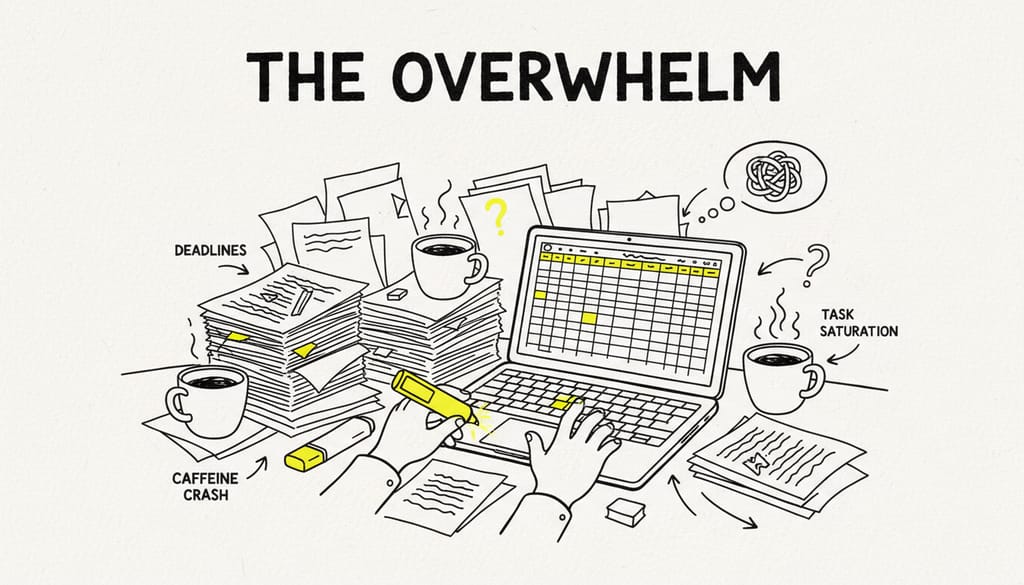
Society often glorifies "the grind," equating relentless pace with success. While a strong work ethic is valuable, more hours often lead to diminishing returns and burnout, not breakthroughs. For small business owners acting as CEO, marketer, and salesperson, the temptation to simply work more hours is immense.
This approach often leads to burnout, not breakthrough. You may spend hours manually creating content, hoping to improve Website Traffic, only to see it languish on low search results pages. You've worked hard, but the strategic component—focusing on the outcome of ranking and driving traffic rather than just the activity—was missing.
Consider an e-commerce owner selling handmade soaps. She might spend 15 hours a week writing blog posts about soap-making techniques. A smarter approach identifies low-competition keywords like "best organic soap for sensitive skin" or "handmade lavender soap gift set," shifting content creation to attract buyers. Hard work without strategic direction is inefficient; your effort drains away without real impact, leaving you busy but not growing.
Note: Burnout signals an unsustainable system. Recognizing this is crucial for building a smarter, more effective workflow.
Inefficient Workflows: The Real Barrier to Growth
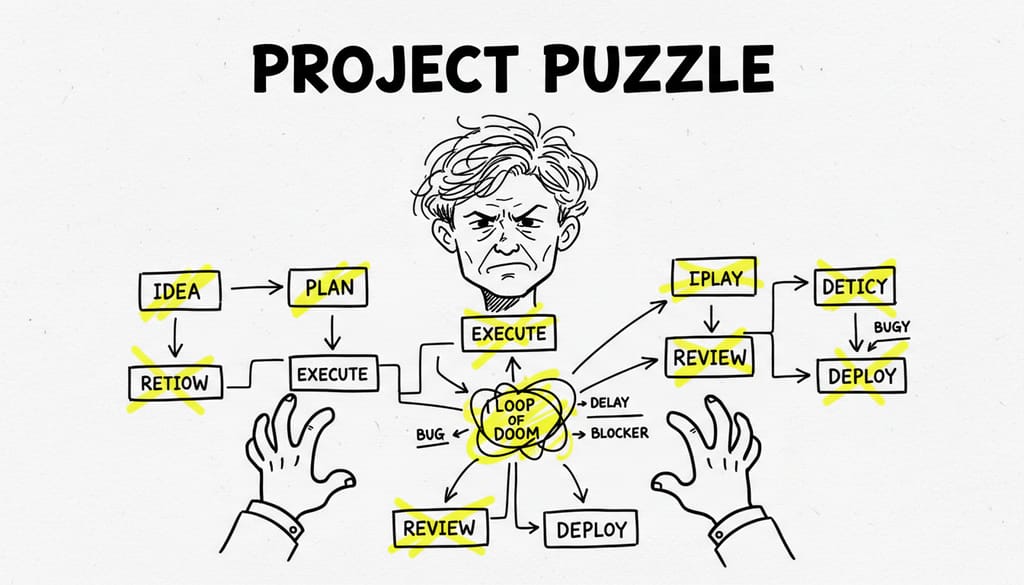
If effort isn't the problem, inefficient systems and misplaced effort are. This is particularly true in digital marketing, especially with Search Engine Optimization (SEO). SEO is a powerful growth driver, yet it's complex, time-consuming, and constantly evolving, often feeling like a black hole for time and energy for businesses without dedicated marketing teams.
Manual SEO exemplifies inefficient hard work. It involves a long chain of demanding tasks, each requiring specific skills you might not possess. This often leads to well-intentioned but ineffective efforts that fail to improve Search Rankings.
The Vicious Cycle of Manual SEO
Let's examine common inefficiencies in a manual SEO content workflow:
Keyword Research: You spend hours sifting through tool data like Ahrefs or Semrush, trying to find keywords with decent volume and low competition. This often involves guessing customer intent without clear, data-backed strategy.
Content Creation: Writing an article means researching, outlining, drafting thousands of words, finding statistics, and ensuring brand tone. This can consume a full day or more per post.
Optimization: After writing, you must optimize: crafting title tags, meta descriptions, adding internal/external links, compressing images, ensuring proper heading structure (H1, H2, H3), and checking keyword density. This tedious checklist is easy to mismanage.
Publishing & Monitoring: Post-publication, monitoring performance with Google Analytics is essential. The feedback loop is slow; by the time an article's underperformance is clear, many hours are already invested.
This entire manual process is a massive, unscalable time commitment for any marketing manager or solopreneur. You cannot produce the volume of high-quality, optimized content needed to compete while managing other business aspects. This signifies working hard on a broken system; the solution is fixing the system, not working more hours.
Why Traditional Productivity Hacks Fall Short
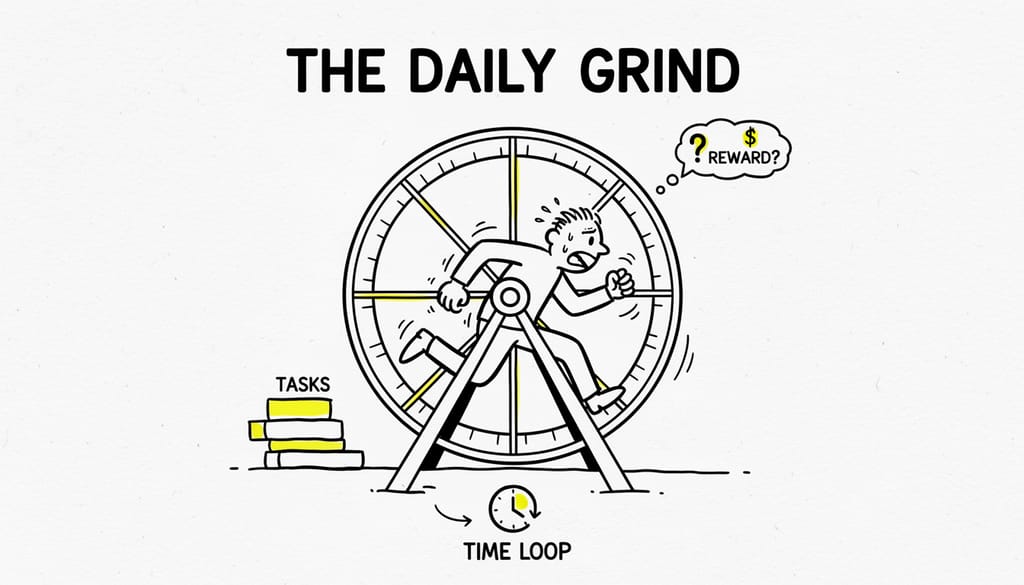
Facing overwhelming workloads, many turn to productivity hacks and time management techniques. While useful for individual focus, these methods often miss larger, systemic business workflow issues. They help you run faster on the hamster wheel but don't offer a way off.
These techniques often focus on personal time. For instance, the 3-3-3 rule for working (three hours deep work, three recurring tasks, three maintenance activities) organizes your day. However, it fails if your "deep work" is an inefficient, low-return activity like manual SEO.
Similarly, the 7-8-9 rule of time management (7 hours sleep, 8 hours work, 9 hours personal time) is a life balance principle. While noble, it pressures you to maximize those 8 work hours. If half are spent on inefficient tasks, progress stalls.
Even Mark Twain's advice to "Eat a live frog first thing in the morning" (tackle your most dreaded task) can be misapplied. What if that "frog" is a task you shouldn't be doing at all—something automatable or delegatable? Eating the frog is smart only if the frog is worth eating.
Such hacks treat symptoms, not the underlying flawed processes. You can employ every time management trick, but fundamentally inefficient core processes, like content marketing, will keep you spinning your wheels. The table below highlights the contrast between manual "hard work" and automated "smart work" in SEO content creation.
| Task | Manual "Hard Work" Approach | "Work Smarter" Automated Approach |
|---|---|---|
| Keyword Research | Hours sifting through data, guessing user intent, and analyzing competitors manually. | AI performs Auto Keyword Research to identify low-competition, high-potential keywords in minutes. |
| Content Creation | Days spent writing, editing, formatting, and sourcing information for a single article. | AI performs Auto Research and generates a complete, SEO-optimized draft in minutes. |
| SEO Optimization | Manually running through a checklist for on-page SEO, meta tags, and internal linking. | Content is created from the ground up with SEO best practices and ranking elements built-in. |
| Publishing | Manually uploading each post, formatting it in your CMS, and scheduling it to go live. | An integrated Scheduling System allows for one-click review, approval, and publishing. |
The issue isn't personal productivity; it's your tools and systems. To truly work smarter, an entire workflow upgrade is essential.
The Solution: Leveraging Automation and AI for Growth
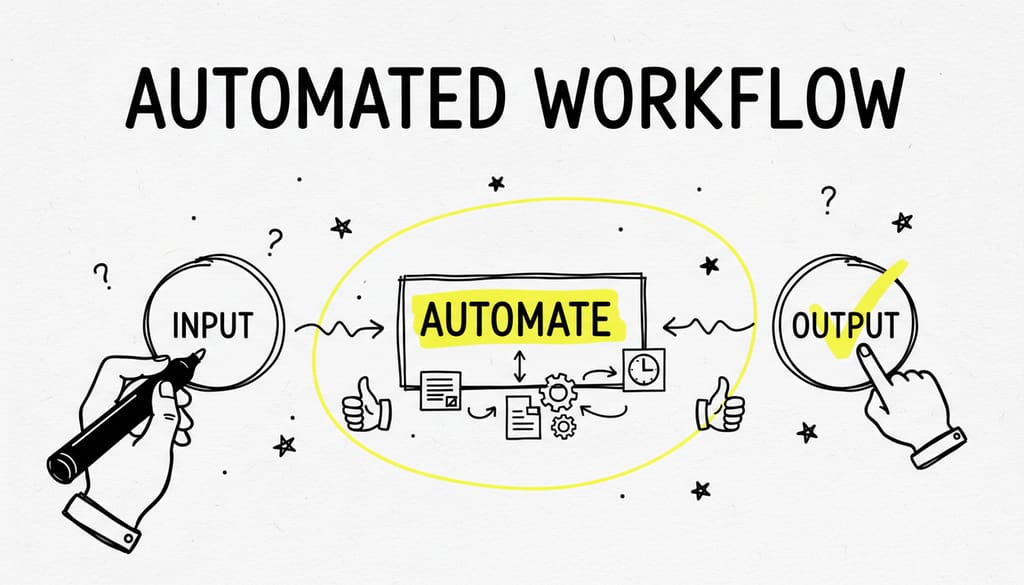
Strategic automation is the solution to manual process inefficiencies, especially in content marketing and SEO. SEO Automation uses software and AI to streamline or fully manage tasks improving search engine visibility. It empowers humans to focus on strategy and creativity by offloading repetitive, data-heavy work to machines.
This is where a platform like Ubenie excels. It functions as an AI-powered traffic builder, automating the entire content lifecycle. Instead of 20 hours monthly on manual SEO, Ubenie handles it. It identifies high-potential keyword opportunities, turning them into Google-optimized blog posts designed to outperform competitors. This creates a consistent stream of high-quality content that appears, publishes, and ranks, freeing you to focus on running your business.
The Benefits of an Automated Content Engine
Adopting an AI-driven approach to content and SEO leads to smarter work and faster growth:
- Unmatched Consistency: An automated system ensures a steady stream of optimized content, a key Google ranking signal.
- Built-in Expertise: You gain instant SEO expertise. AI incorporates the latest best practices for on-page optimization, user intent targeting, and structured ranking elements directly.
- Effortless Scalability: Scaling content from two articles to ten monthly, which is difficult manually, becomes simple with Ubenie. Adjusting your plan scales marketing efforts without increasing workload.
- Data-Driven Strategy: AI analyzes vast data, from competitor strategies to search trends, making informed content decisions. This dramatically increases ranking potential and generates Leads and Sales.
- Reclaimed Time: This significant benefit allows reinvestment into higher-value activities: customer engagement, product development, or strategic partnerships.
Automating your content engine implements a more effective, reliable, and scalable growth strategy. Explore how to write content that truly performs in our guide on How to Write Website Content That Drives Traffic & Converts (A 5-Step Guide).
Implement the "Work Smarter" Mindset with Ubenie
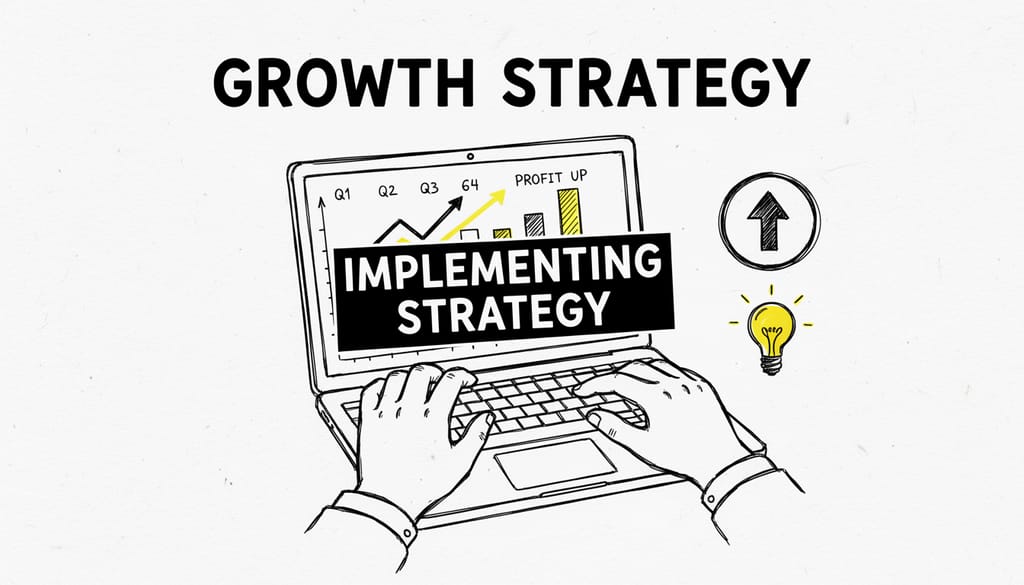
Adopting a "work smarter not harder" mindset requires conscious effort to analyze processes and implement strategic changes. Here’s a practical guide using content marketing as an example:
Step 1: Audit Your Time and Effort
Measure to optimize. Meticulously track your time for one week using a spreadsheet or tools like Toggl or RescueTime. Categorize activities: low-value administrative tasks versus high-value strategic work, and manual marketing efforts.
Step 2: Identify High-Effort, Low-Impact Tasks
Analyze your time audit for bottlenecks. Which activities consume most hours but yield fewest results? For many, this includes manual social media posting, inexperienced graphic design, and manual SEO content. These are prime candidates for elimination or automation.
Step 3: Apply the 80/20 Rule (The Pareto Principle)
Identify the 20% of activities generating 80% of your revenue and growth. Your goal is to free time for these high-impact areas, such as product development or customer relationships.
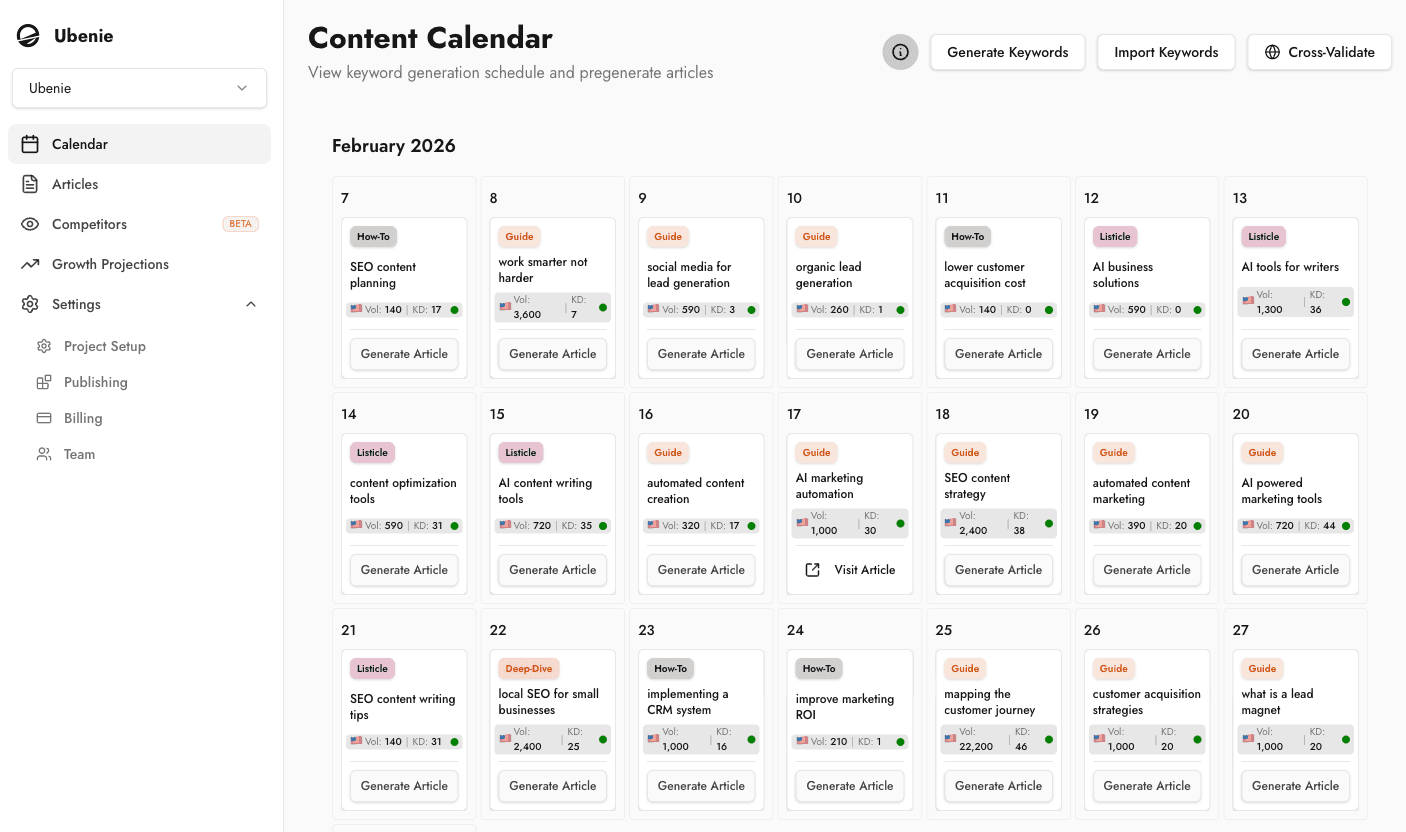
Step 4: Embrace Strategic Automation with Ubenie
For high-effort, low-impact tasks, find automation solutions. For SEO and content, Ubenie is clear. Onboard in under an hour by describing your business, and AI generates ready-to-publish, SEO-optimized articles. Your role shifts from writer/SEO technician to strategic reviewer, spending 30 minutes weekly reviewing and scheduling content. This transformation is significant. Compare Affordable SEO for Small Business: DIY vs. Agency vs. AI to see automation's value.
Industry data highlights AI's role: 64% of marketers believe AI is the most important technological development in SEO, crucial for efficient, effective strategies. Read more on Semrush.
- Track your time for one full work week to establish a baseline.
- List your top 3 most time-consuming, low-return marketing tasks.
- Research automation tools specifically designed to solve those tasks.
- Commit to automating at least one major task this month.
- Create a plan for how you will reinvest the time you save into high-impact activities.
The Ripple Effect: Transforming Your Business with Smarter Work
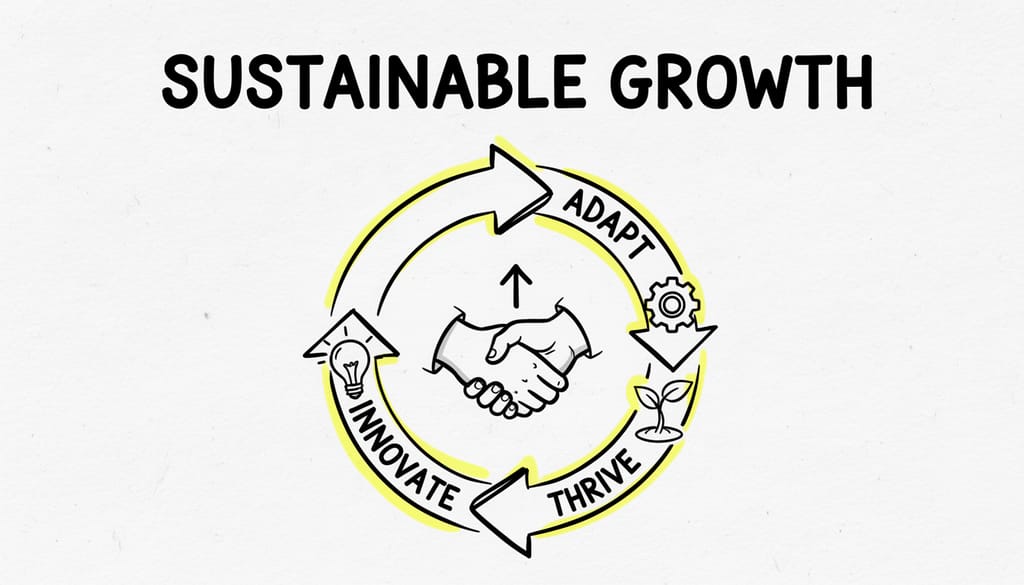
Working smarter through automation offers benefits beyond time savings, creating a positive ripple effect throughout your business.
First, you achieve sustainable growth. Manual marketing leads to inconsistent, "spiky" results. An automated content system works tirelessly, providing a steady, predictable engine for organic traffic. This consistency is rewarded by search engines, leading to stable rankings.
Second, it enhances your E-commerce Visibility or online presence. A consistent flow of high-quality, targeted content dramatically increases your website's keyword rankings. More potential customers find you, akin to having multiple digital storefronts.
Third, you make better strategic decisions. Free from execution details, you gain mental space for the bigger picture. Analyze automated campaign data, identify new market opportunities, and focus on long-term strategy. AI provides data-driven content; you provide human vision.
Finally, and critically, it improves your personal well-being. The stress of constant overwhelm takes a toll. Building smart systems and leveraging automation restores control over your time and business. This fosters better work-life balance, reduced stress, and renewed passion. This approach is among the most powerful and 7 Affordable SEO Services for Small Business Growth you can invest in.
Working smarter means achieving more with focused, intelligent effort. It's about building a business that serves you, not consumes you.
In conclusion, the principle of "work smarter not harder" is more relevant than ever. In today's competitive digital landscape, sheer effort doesn't guarantee success. Manual tasks, especially in SEO and content marketing, lead to burnout and mediocre results. Sustainable growth comes from shifting focus from manual execution to strategic oversight.
By auditing your time, identifying inefficiencies, and embracing automation, you can transform productivity. Tools like Ubenie are strategic partners, providing the expertise, consistency, and scalability small businesses need to compete. Letting AI handle content creation frees you to be the visionary leader your business requires. It’s time to step off the hamster wheel and build a smarter, more effective engine for growth.
Frequently Asked Questions
What's the difference between working smart and being lazy?
Working smart maximizes results with minimal wasted effort, focusing on efficiency and high-impact tasks. Laziness, conversely, avoids work, leading to poor outcomes. The aim of working smarter is to achieve more, not less.
Can AI really replace a human SEO expert?
AI excels at data analysis, pattern recognition, and scalable task execution for keyword research and content generation. However, it thrives with human strategic guidance and creativity. Platforms like Ubenie automate 90% of the work, allowing humans to provide strategic oversight, brand alignment, and final approval.
How long does it take to see results from working smarter on SEO?
SEO is a long-term strategy. However, smart work with automation accelerates results. By consistently producing high volumes of optimized content, you can see positive movement in search rankings and traffic within 3 to 6 months. This often outperforms the 6 to 12 months manual, inconsistent efforts might take.
Is it expensive to start automating my marketing?
While some enterprise platforms are costly, many affordable solutions exist for small businesses. When calculating saved hours against your time's worth, automation tools like Ubenie often provide a significant return on investment. This makes them far more cost-effective than hiring an agency or full-time employee.
What's the first step I should take to work smarter, not harder?
The initial step is to conduct a time audit. Track every task for one week. This simple exercise objectively reveals where your time goes, immediately highlighting inefficient processes ripe for automation.
Tired of struggling with SEO and content marketing? Automate your traffic growth and focus on what you do best. Visit our website to discover how we can help you achieve higher search rankings and more leads.
Article created using Ubenie.