
The Power of Strategic Content
You've invested in a website, but are visitors engaging? Many businesses face the challenge of an online presence that fails to attract or convert. The missing element is often high-quality, strategic website content. This isn't just about filling pages; it's about a unique blend of creativity and data-driven strategy.
Writing for the web combines understanding audience needs with search engine mechanics. It involves creating content that informs and engages human readers while signaling authority to algorithms. This guide offers a clear framework for how to write website content that attracts ideal customers, builds trust, and fosters business growth. These principles help turn any website into a powerful, traffic-generating engine.
Why Great Website Content is Non-Negotiable
Effective website content is the foundation of your online presence and the primary driver of Organic Traffic. These visitors find your site via search engines like Google, without paid ads. This traffic is highly valuable, being targeted, consistent, and crucial for long-term brand equity.
Powerful content achieves several key objectives:
Builds Authority and Trust: Consistent, helpful content positions your brand as an industry expert. Customers are more likely to engage with businesses they trust and see as credible. This establishes a strong foundation for customer relationships.
Improves SEO and Visibility: Search engines prioritize content that offers relevant answers. High-quality, optimized content signals this relevance to Google, leading to a higher Ranking on the Search Engine Results Page (SERP). This directly improves visibility to potential customers.
Engages and Nurtures Leads: Content provides valuable material for social media, email newsletters, and other marketing channels. It keeps your brand top-of-mind and guides potential customers through their buying journey. This includes stages from initial awareness to final purchase.
Drives Conversions: Whether generating leads, selling products, or securing sign-ups, content is the vehicle. Compelling product descriptions, persuasive landing pages, and informative articles all guide visitors toward desired actions. For example, Ubenie's AI can identify terms like "eco-friendly cleaning hacks" for a sustainable home goods business, then generate optimized articles. This attracts interested homeowners and guides them to relevant products.
Step 1: Define Your Audience and Set Clear Goals
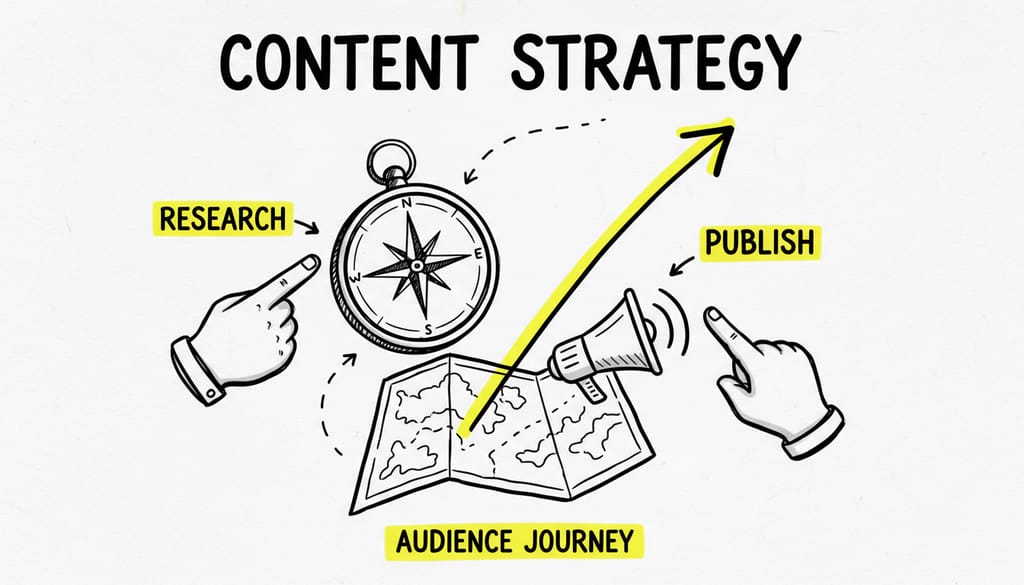
Writing without a clear plan is inefficient; effective content begins with understanding your audience and objectives. This ensures your content resonates and achieves its purpose.
Understand Your Target Audience
Effective content requires knowing who you're addressing. Move beyond demographics to create detailed user personas. A user persona is a semi-fictional representation of your ideal customer, built on market research and existing customer data.
Consider these questions for your persona:
Who are they (age, location, job, income)?
What are their biggest challenges and pain points? What problems do they seek to solve?
What are their goals and motivations?
Where do they engage online?
What language do they use (formal, casual, industry-specific)?
Answering these tailors your tone, style, and topics to deeply connect with your target audience. You shift from writing at your audience to conversing with them.
Set SMART Content Goals
After defining your audience, clarify content objectives. Every piece should have a purpose, and goals should be SMART:
Specific: Aim for "increase organic blog traffic by 20%" rather than "increase traffic."
Measurable: Use tools like Google Analytics to track progress. Metrics include page views, time on page, bounce rate, or conversion rate.
Achievable: Set realistic goals based on resources and timelines.
Relevant: Ensure content goals align with broader business objectives.
Time-bound: Set a deadline, such as "within the next quarter."
For a startup, building brand awareness might mean focusing on top-of-funnel topics addressing broad industry questions. An e-commerce site might prioritize bottom-of-funnel content like product comparisons to drive sales. Ubenie streamlines this by focusing on keywords with high purchase intent, aligning content creation with lead and sales generation goals.
Step 2: Conduct Strategic Keyword Research
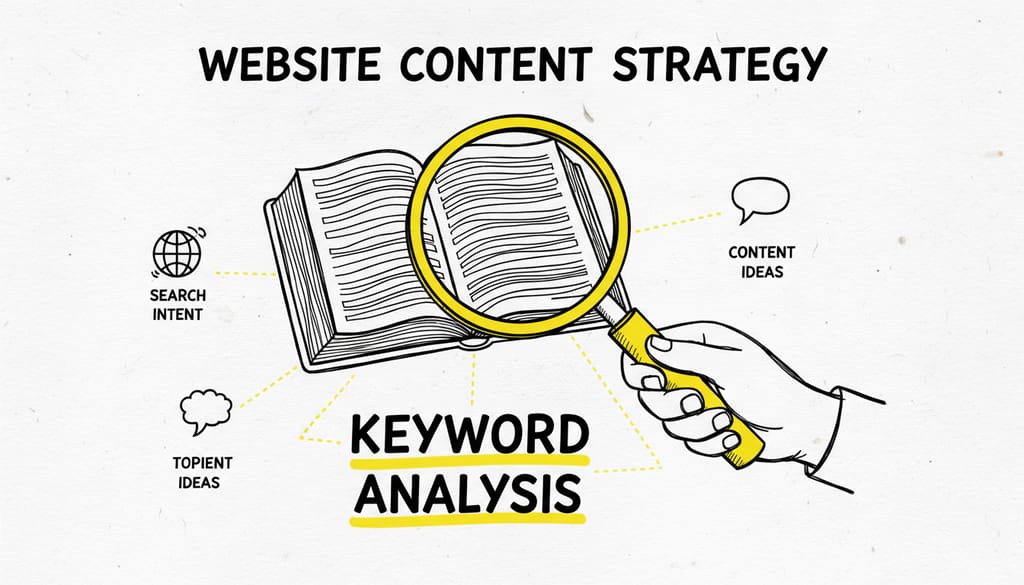
With audience and goals established, the next step is uncovering the exact words your audience uses online. Keyword Research is fundamental for connecting audience searches with your solutions.
The Importance of User Intent
High search volume alone isn't enough; understanding User Intent—the why behind a query—is crucial. Intent typically falls into four categories:
Informational: The user seeks information (e.g., "how to write website content").
Navigational: The user aims for a specific website (e.g., "Ubenie login").
Transactional: The user is ready to buy (e.g., "buy SEO software").
Commercial Investigation: The user is comparing products before purchase (e.g., "Ubenie vs. SurferSEO").
Your content must match the intent of your target keyword. A search for "how to fix a leaky faucet" demands a guide, not a sales page. Matching intent is critical for ranking and visitor satisfaction.
Finding the Right Keywords
Your keyword strategy should combine broad (head) terms and specific (long-tail) keywords.
Head Terms: Short, high-volume keywords like "content marketing." These are competitive with often vague intent.
Long-Tail Keywords: Longer, specific phrases like "content marketing for small e-commerce businesses." They have lower volume but less competition and clearer intent, leading to higher conversion rates.
Tools like Ahrefs and Semrush are industry standards, but Google's "People Also Ask" and "Related searches" also offer ideas.
Here’s a guide for keyword research:
Brainstorm core topics relevant to your business.
Use a keyword research tool to expand these topics.
Analyze search volume, difficulty, and CPC for potential keywords.
Prioritize long-tail keywords with clear user intent and manageable competition.
Analyze top-ranking content to understand Google's quality standards.
Map each keyword to a specific content piece.
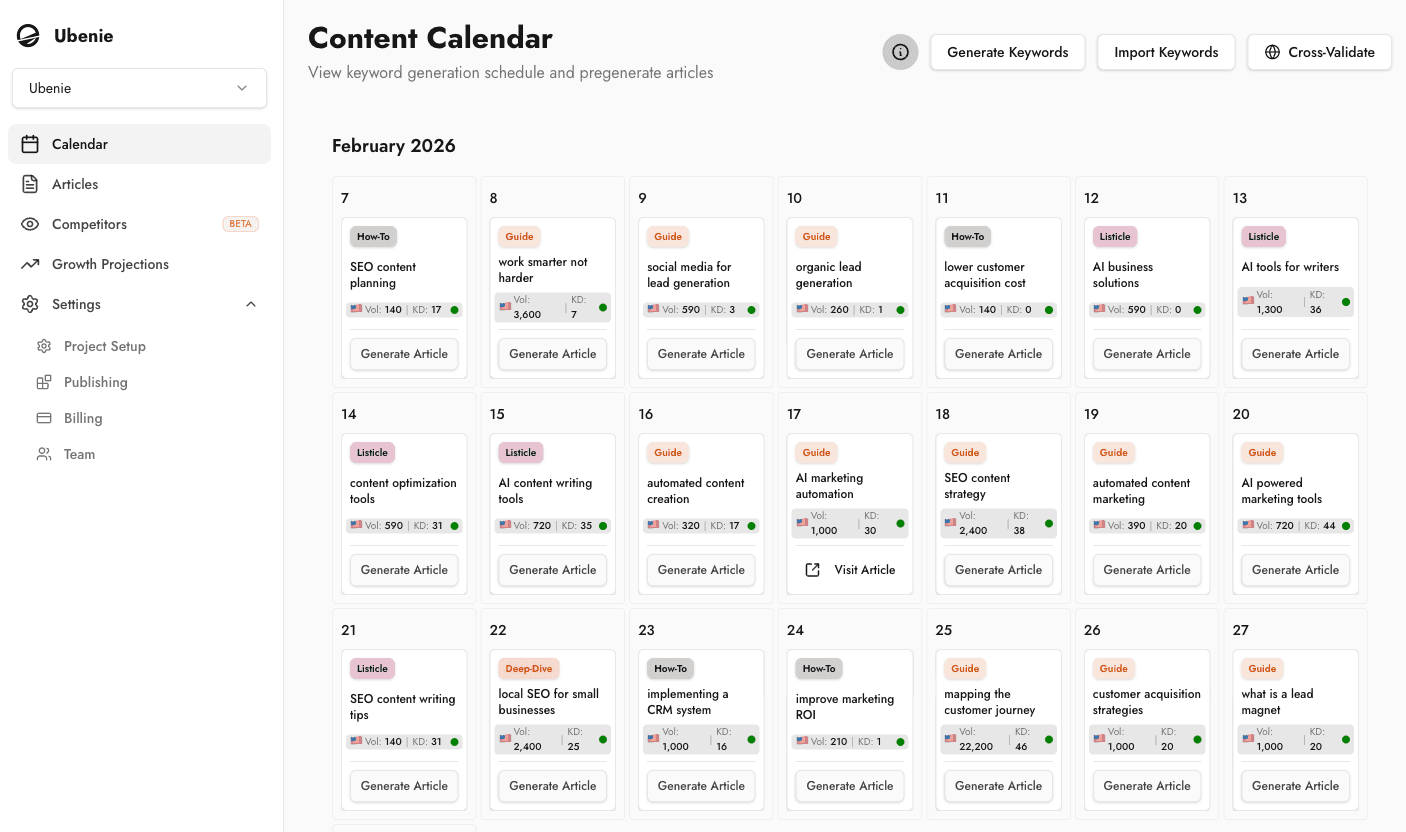
This process is time-consuming. Platforms like Ubenie offer significant value by automating this discovery phase. Ubenie uses AI to identify low-competition, high-potential keywords tailored to your business, ensuring content efforts drive traffic and results.
Step 3: Structure and Outline Your Content for Readability
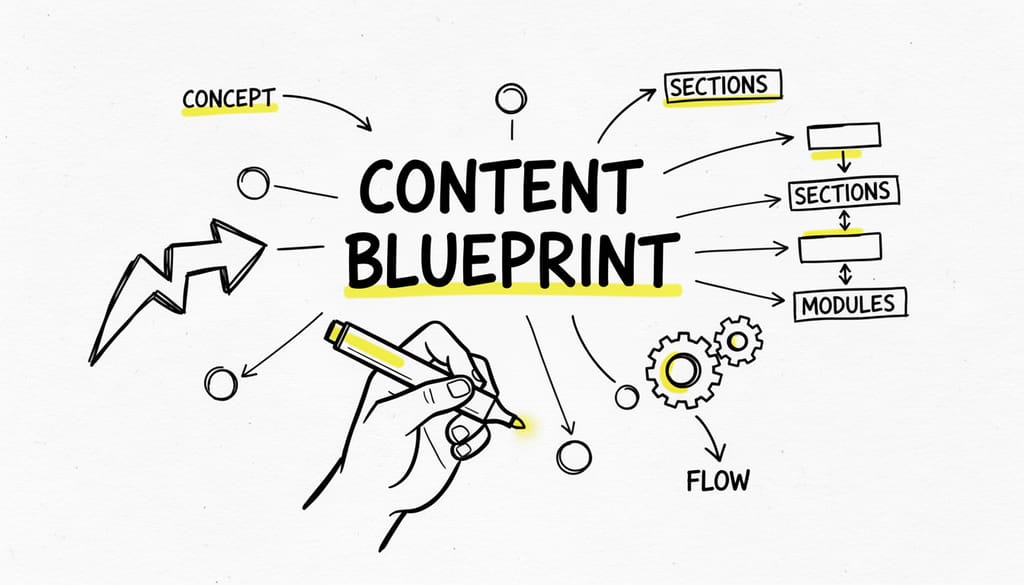
With your target keyword and user intent defined, create a blueprint for your content. A strong structure guides your writing and makes the final piece easy for users and search engines to consume.
Web users scan, looking for headings, bullet points, and bolded text. A well-structured article caters to this behavior, enhancing user experience and improving time on page—a positive signal to Google.
Create a Logical Outline
Map out your article before writing. Your outline should include:
An H1 Tag: Your main title, including your primary keyword, compelling enough to secure clicks.
H2 Subheadings: Major sections, like chapters, addressing key aspects of the main topic.
H3 Subheadings: Further break down H2 sections into specific points, adding organization and scannability.
Key Talking Points: Main ideas, data, or examples for each heading, forming the foundation of your paragraphs.
The Inverted Pyramid Model
For most web content, especially informational articles, the inverted pyramid model is highly effective. This journalistic principle places the most important information at the top, followed by progressively more specific details.
The Lead: The first paragraph summarizes critical information and answers the user's primary question directly.
The Body: Subsequent paragraphs provide more detail, context, evidence, and examples.
The Tail: The end can contain related but less critical information, background details, or links to further resources.
This structure ensures users grasp the main takeaway quickly, even if they only read the introduction. It respects their time and encourages further engagement.
Step 4: Write Compelling, SEO-Friendly Copy
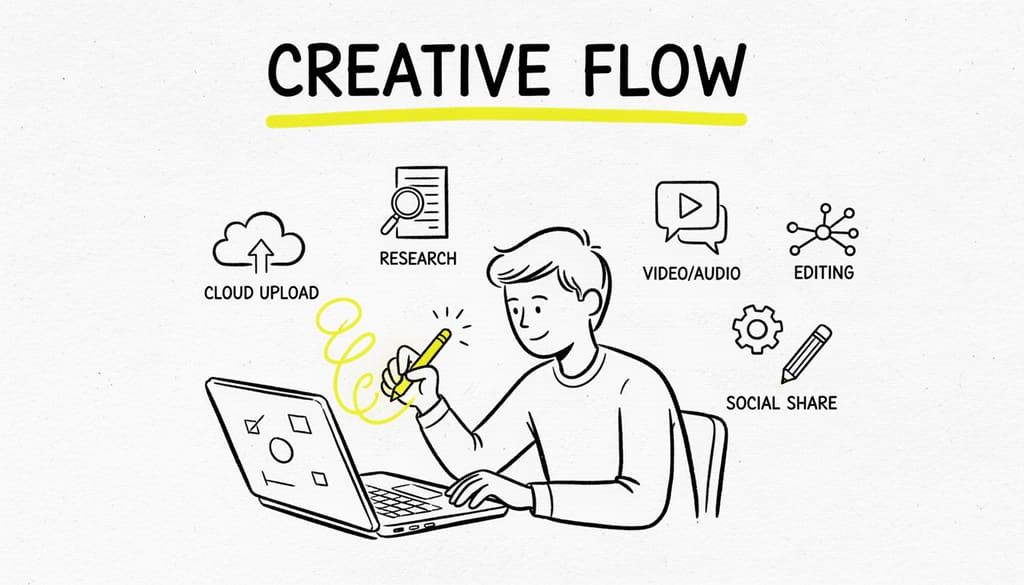
Now, expand your outline into cohesive, persuasive content. The goal is to write for humans first, and search engines second.
Craft an Irresistible Headline (H1)
Your headline is your content's most crucial element. It appears in search results, social media, and email inboxes, designed to prompt clicks. A great headline is:
Specific and Benefit-Driven: Clearly states content value and reader gain.
Includes the Keyword: Ideally, near the beginning.
Sparks Curiosity: Uses numbers, questions, or intriguing language.
Example: Instead of "Website Content Guide," try "A 5-Step Guide to Writing Website Content That Converts."
Hook Them with a Strong Introduction
Grab your reader's attention within seconds. A strong introduction accomplishes three things:
Empathize: Acknowledge their pain point or question.
Promise: Clearly state how your article solves their problem.
Preview: Briefly outline what they will learn.
Write Clear and Concise Body Copy
This is the core of your article. Keep these principles in mind:
Use Short Sentences and Paragraphs: Break up long text blocks. Aim for paragraphs of 1-3 sentences.
Write in an Active Voice: Active voice is more direct and engaging (e.g., "You can write great content").
Use Simple Language: Avoid jargon unless your audience is highly technical. Write as if explaining to a friend. Tools like the Hemingway App help simplify prose.
Incorporate Keywords Naturally: Include your primary keyword in your H1, the first 100 words, a few H2s, and throughout the body. Sprinkle in related (LSI) keywords for context.
This entire process is Content Marketing—a strategic approach to create and distribute valuable, relevant content. A report from Typeface states 73% of companies now use AI to assist in content marketing efforts, signaling a shift towards efficient, scalable content creation.
Step 5: Edit, Optimize, and Publish
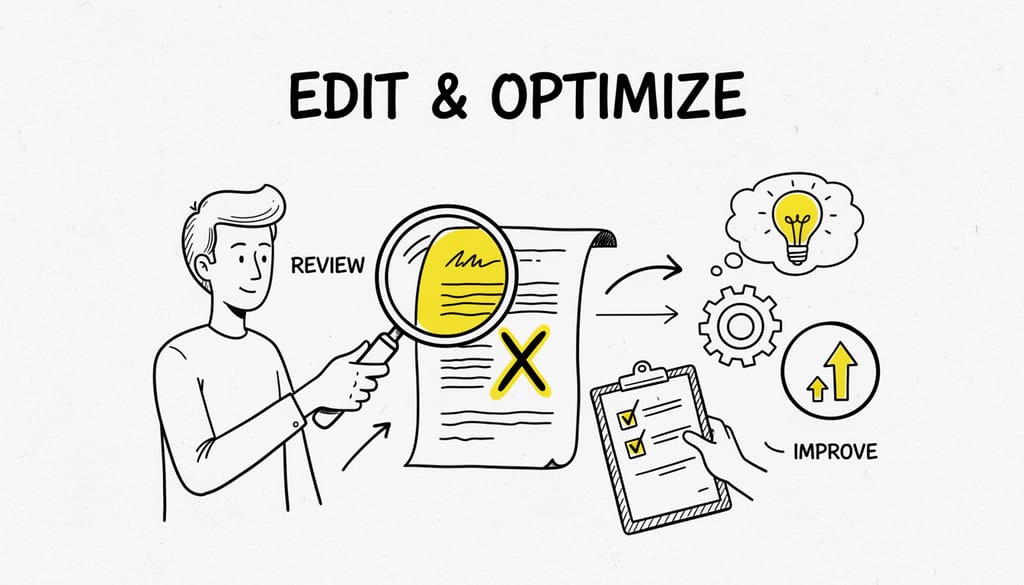
Writing is only half the battle; rigorous editing and optimization elevate a draft to a publish-ready piece that ranks.
Proofread and Edit Rigorously
Typos and grammatical errors instantly erode credibility. Do not rely solely on spell checkers. Read content aloud to catch awkward phrasing and ensure flow. Stepping away for a break provides fresh eyes. Better yet, have a colleague review it. Ensure the content is clear, concise, and error-free.
On-Page SEO Optimization
Optimize page elements to improve search engine ranking. Here’s a final checklist:
Meta Title: The browser tab and SERP title. Keep it under 60 characters and include your primary keyword.
Meta Description: The short blurb (under 160 characters) on the SERP. While not a direct ranking factor, a compelling description boosts click-through rates.
URL Slug: Keep it short, descriptive, and keyword-rich (e.g.,
yourwebsite.com/how-to-write-website-content).Image Alt Text: Add descriptive alt text to all images for accessibility and search engine context.
Internal and External Links: Include 2-3 internal links to relevant pages for user and search engine navigation. Link to authoritative external sources to support claims and add value.
For small businesses, managing these SEO elements can be demanding. Understanding options for Affordable SEO for Small Business: DIY vs. Agency vs. AI is crucial, as AI-powered solutions can automate many optimization tasks.
After publishing, monitor performance with Google Analytics and Google Search Console. Analyze traffic, rankings, and engagement to identify successes and areas for improvement.
Tips for Creating Next-Level Website Content
Mastering the core steps positions you ahead of competitors. To dominate your niche, elevate your content further.
Incorporate a Variety of Media
Text is foundational, but modern web content thrives on diverse formats. Integrating other media types significantly boosts engagement and time on page.
Images: Use high-quality, relevant images, infographics, and charts to break text and illustrate points.
Videos: Embedded videos can quickly explain complex topics and increase visitor duration.
Checklists and Templates: Offer downloadable resources for tangible value and lead generation.
Leverage the Power of AI
AI Content Generation has transformed content approaches, augmenting human capabilities rather than replacing them. AI tools assist with:
Brainstorm Ideas: Generate hundreds of topic ideas from a single keyword.
Create Outlines: Structure articles in seconds.
Write First Drafts: Overcome writer's block with AI-generated drafts, refined with your expertise and brand voice.
Platforms like Ubenie provide a complete, automated content engine. Ubenie handles keyword research, competitive analysis, and generation of search-optimized Blog Content, transforming a weeks-long manual process into minutes. This frees business owners to focus on core operations while content marketing runs on autopilot. This makes it one of the most effective 7 Affordable SEO Services for Small Business Growth.
Update and Refresh Old Content
Your website is dynamic; information becomes outdated, and past rankings can decline. Regularly audit existing content. Identify pages with declining traffic or outdated information and refresh them. Updating old posts with new data, stats, and examples is a quick way to boost rankings and traffic.
Conclusion
Learning how to write website content is invaluable for your business. It powers your SEO, builds audience relationships, and drives sustainable growth. While initially daunting, breaking it into a repeatable process—from audience understanding and keyword research to writing, optimizing, and publishing—makes it manageable and highly effective.
Consistency is key. A continuous stream of high-quality, valuable content builds momentum and delivers lasting results. Whether you write yourself, hire a team, or leverage powerful AI automation tools like Ubenie, investing in your website's content is an investment in your business's future.
Frequently Asked Questions
How long should a piece of website content be?
There's no single ideal length; it depends on the topic, format, and user intent. However, informational blog posts aiming to rank on Google generally perform better with longer-form content, typically 1,500-2,500 words. The priority is to be comprehensive and fully address the user's query.
How often should I publish new content?
Consistency is more important than frequency for content. For most small businesses, publishing one to two high-quality, well-researched articles per week is an excellent goal. It is more effective to publish one excellent piece weekly than several mediocre ones.
What's the difference between website content and a blog post?
Website content is a broad term encompassing all text on your site, including homepage copy, service pages, and your about page. A blog post is a specific type of content, an article published within your website's blog section. Blog posts are typically used for content marketing to attract organic traffic and engage an audience over time.
Can I write my own website content without being an SEO expert?
Absolutely. While technical SEO can be complex, the core principles of good content SEO are straightforward: understand your audience, target the right keywords, create helpful and high-quality content, and structure it for readability. Tools and platforms can bridge the technical gap, allowing you to focus on creating great content.
Tired of struggling with SEO and content marketing? Automate your traffic growth and focus on what you do best. Visit our website to discover how we can help you achieve higher search rankings and more leads.
Article created using Ubenie. Yes, we create our own blogs!