
The Foundation of Organic Growth
Effective SEO content planning is fundamental for digital marketing success. According to eMarketer research, 91% of marketers plan to increase content output, yet less than half say their processes are scalable. A clear content planning framework acts as your strategic roadmap, ensuring every piece of content aligns with business objectives and attracts your ideal audience.
This detailed blueprint guides your content creation. It optimizes articles, blog posts, and landing pages to rank on search engines like Google. This approach prioritizes intentional, goal-oriented content over simply increasing output.
This guide provides a step-by-step process. It helps you build a robust content plan that drives sustainable growth. This plan attracts qualified traffic and transforms your website into a lead-generation engine.
Why Strategic Content Planning is a Game-Changer for Growth
An effective SEO strategy relies on four pillars: technical SEO, on-page SEO, off-page SEO, and content. While all are crucial, content directly communicates with your audience. Without a solid plan, your content pillar remains weak. Content planning transforms efforts from random acts of content into a cohesive, goal-oriented strategy.
Here’s why it’s critical:
- Aligns Content with Business Goals: A plan ensures every piece of content serves a purpose. This includes building brand awareness, generating leads, or driving sales. It connects your content directly to measurable business outcomes.
- Targets the Right Audience: Focusing on specific keywords your audience searches for attracts qualified visitors. These visitors are genuinely interested in your offerings. This approach is more effective than casting a wide, generic net.
- Builds Topical Authority: Search engines reward websites demonstrating deep expertise. A content plan enables you to build topic clusters—interlinked content groups around a central theme. This signals to Google you are an authority.
- Maximizes Resources: For businesses with limited resources, a plan prevents wasted effort on underperforming content. You can focus time and budget on topics with the highest return on investment.
- Ensures Consistency: Consistency is key in SEO. A content plan helps you publish high-quality content regularly. This keeps your audience engaged and signals to search engines that your site is active and relevant.
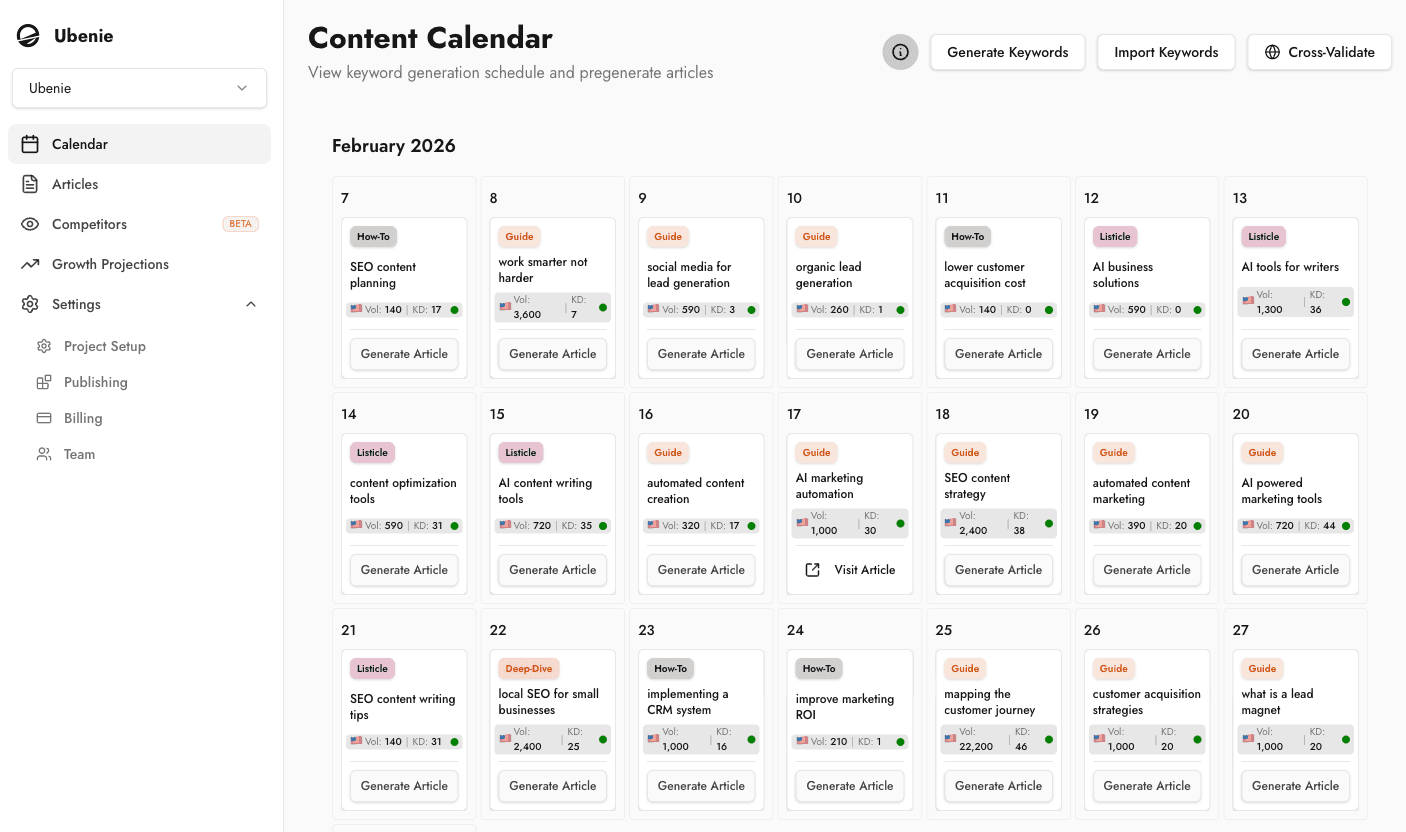
Many business owners find this planning overwhelming. Automation offers a solution. Ubenie handles the heavy lifting of SEO content planning, using AI to identify high-potential, low-competition keywords. This builds your plan's foundation. It allows you to maintain a powerful content strategy without getting bogged down in research and analysis.
Step 1: Define Your Goals and Understand Your Audience

Before writing, define why you are creating content and who it's for. This foundational step ensures your entire plan points in the right direction. Without clear goals, success remains unmeasurable. Without audience understanding, your content won't resonate.
Start by setting SMART goals for your content. Instead of vague aspirations like "get more traffic," aim for specific objectives. For example: "Increase organic traffic to our blog by 20% in the next six months by ranking for 10 new long-tail keywords related to our core service."
Once goals are set, focus on your audience. Create detailed buyer personas that go beyond demographics. What are their pain points? What questions do they ask Google? What are their career goals and daily challenges? Deeper understanding enables content that provides genuine value.
Getting Granular with Audience Intent
Understanding user intent is crucial for content effectiveness. Every search query has a motive. It typically falls into one of four categories:
- Informational: Users seek knowledge (e.g., "how to create a content plan").
- Navigational: Users want to find a specific website (e.g., "Ubenie login").
- Commercial: Users research before a purchase (e.g., "Ubenie vs. competitors").
- Transactional: Users are ready to buy (e.g., "Ubenie pricing").
Your content development roadmap should include topics addressing each intent. This guides potential customers through their entire journey. A robust plan balances top-of-funnel informational content with bottom-of-funnel commercial and transactional content.
AI-powered tools provide a significant advantage here. Ubenie's Onboarding Process involves you describing your business, target audience, and goals. The AI then generates keyword ideas and content briefs pre-aligned with user intent. This ensures your articles meet your audience precisely where they are in their decision-making process.
Step 2: Comprehensive Keyword Research and Topic Clustering
Keyword research forms the core of an effective content strategy. It identifies the words and phrases your target audience uses to find information, products, or services. Tools like Ahrefs and Semrush are industry standards, though Google Keyword Planner offers valuable free insights.
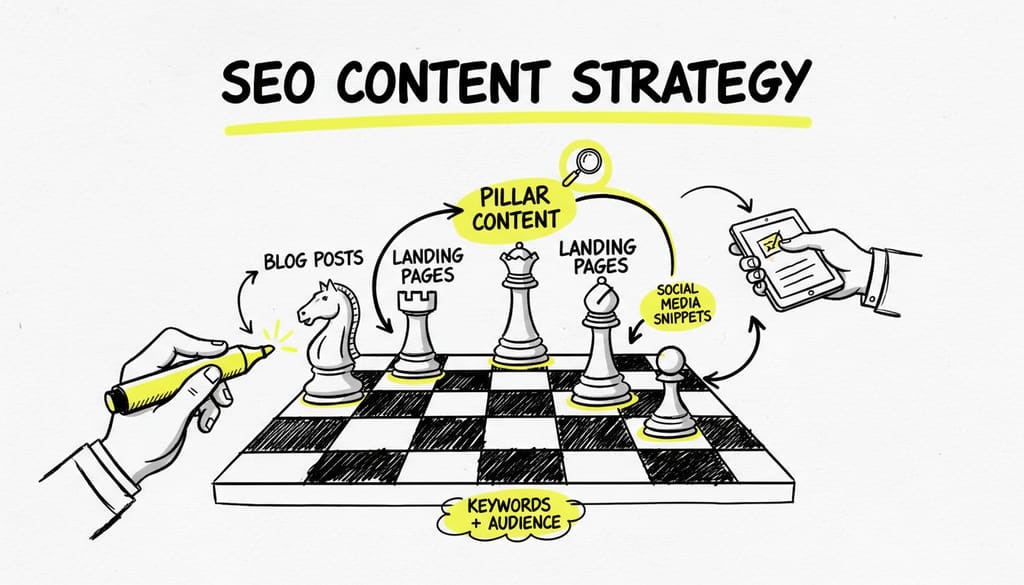
The goal extends beyond individual keywords. It involves grouping them into logical topic clusters. A cluster comprises a main "pillar page" covering a broad topic and several "cluster pages" delving into specific subtopics. For instance, "A Guide to Small Business Accounting" could be a pillar page. It would be supported by "Best Accounting Software for Freelancers" and "How to Read a Balance Sheet" as cluster pages.
This structure significantly boosts SEO by demonstrating expertise. It clarifies site organization for search engines. Effective Internal Linking connects these clusters, passing authority between pillar and cluster pages. This strategy supports the "3 C's of SEO": Content (the articles), Code (site technical health), and Credibility (built authority). Topic clusters directly enhance credibility.
Building Your Content Pillars
Creating topic clusters involves organizing keyword research into cohesive themes. Look for keyword groups sharing common intent that can be logically linked. This approach transforms a disjointed keyword list into a structured, strategic content map. It also improves user experience by guiding visitors to related content.
Follow this checklist for keyword research and clustering:
- Brainstorm broad topics relevant to your business.
- Use keyword research tools to find specific long-tail keywords for each topic.
- Analyze search volume, keyword difficulty, and user intent for each keyword.
- Group related keywords into logical clusters around a central pillar topic.
- Map out your pillar pages and corresponding cluster content for each group.
- Prioritize clusters based on business goals and potential traffic.
Note: Focus beyond high-volume keywords. Long-tail keywords (three or more words) often have lower competition and higher conversion rates. They are more specific, targeting users further along in their buying journey.
Step 3: Analyzing the Competition and Finding Your Angle
With target topics and keywords, it's time to analyze the competition. This isn't about imitation; it's about understanding existing successes and finding opportunities for improvement. This process is key to the research stage, one of the four stages of SEO: Research, On-page Optimization, Off-page Optimization, and Analysis.
For each target keyword, perform a SERP (Search Engine Results Page) analysis. Using an incognito browser, search your keyword and analyze the top 10 results. Ask yourself:
- Content Type: What content ranks (blog posts, videos, product pages, listicles)?
- Search Intent: What user need does Google determine for this term?
- Format & Structure: Are articles long-form guides or quick-answer posts? Do they use images, tables, or videos?
- Key Points: Identify common themes and subtopics in top-ranking pages.
- Content Gaps: What questions remain unanswered? What could be explained with more detail or a fresh perspective?
Your goal is a unique angle that makes your content stand out. Achieve this by:
- Going More In-Depth: Create a more comprehensive resource than what currently exists (the "skyscraper technique").
- Providing a Unique Perspective: Offer a contrarian viewpoint or share a personal case study.
- Presenting Information Better: Use custom graphics, videos, or interactive elements for engagement.
- Using Fresh Data: Include up-to-date statistics and research for currency and authority. According to recent content marketing statistics, marketers who use original data report being 49% more successful in achieving their goals.
This analysis ensures your content is strategically positioned. It helps outperform competitors by providing superior value to the reader.
Step 4: Creating a Content Calendar and Workflow
A content planning strategy without a calendar remains a list of ideas. A content calendar transforms your strategy into an actionable plan. It details publishing schedules and responsibilities. This can range from a simple Google Sheet to advanced project management tools like Trello or Asana.
Your content calendar should include at minimum:
- Publish Date
- Content Title / Topic
- Target Keyword(s)
- Content Format (e.g., blog post, video, case study)
- Author/Person Responsible
- Current Status (e.g., Idea, Drafting, Editing, Published)
- Target Persona
- Call-to-Action (CTA)
A well-structured calendar maintains publishing consistency. It aids seasonal content planning and ensures a balanced topic mix. It provides a clear overview of your content operation.
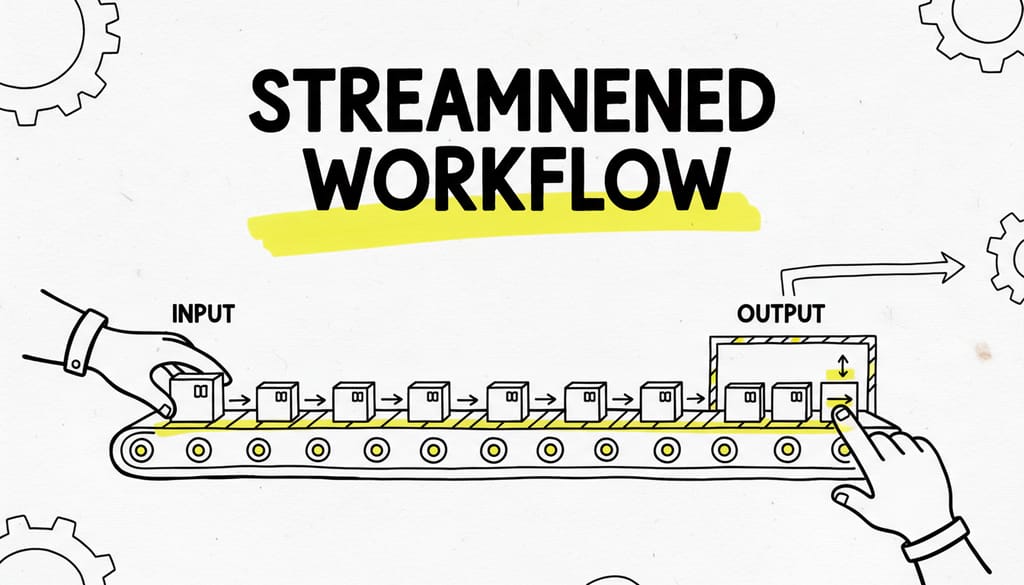
Beyond the calendar, a defined Content Workflow is essential. This outlines the sequence of steps from idea to publication and promotion. A typical workflow includes: Ideation -> Keyword Research -> Brief Creation -> Drafting -> Editing -> Design -> Publishing -> Promotion. Defining this process eliminates bottlenecks and clarifies roles.
Successful marketers often follow the 80/20 rule for SEO. They spend 20% of their time creating content and 80% promoting it. Your workflow should account for this. Include dedicated steps for social media sharing, newsletters, and outreach.
Success: A streamlined content workflow, powered by a clear calendar, drives a successful SEO content strategy. It transforms your plan into a predictable, repeatable process for generating traffic and leads.
Step 5: Writing, Optimizing, and Publishing Your Content
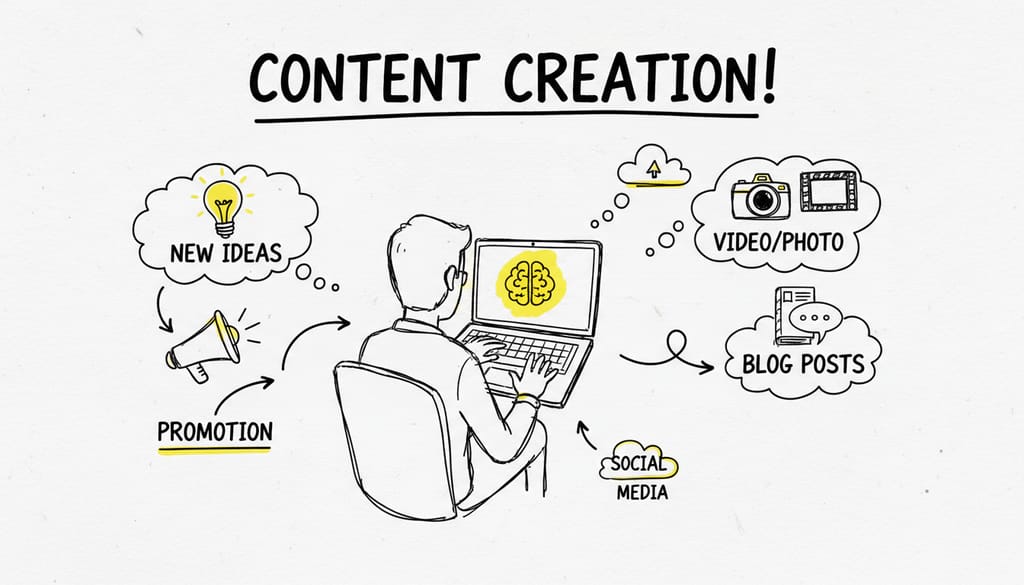
This is where your planning efforts culminate. With a clear brief derived from keyword research and competitive analysis, the writing process becomes focused and efficient. The goal is creating high-quality, Human-like Content that engages readers and is optimized for search engines.
During the Blog Content Generation phase, prioritize genuine value. Thoroughly and clearly answer the user's query. Employ a conversational tone, break text with short paragraphs and subheadings, and integrate visuals for engagement. This is a crucial element, as explored in this Content Marketing vs SEO: A Case Study on Driving Real Growth.
As you write, integrate on-page SEO best practices:
- Headline Optimization: Craft a compelling, keyword-rich title tag that captures attention in SERPs.
- Meta Descriptions: Write a concise, persuasive summary of the page's content. While not a direct ranking factor, strong Meta Descriptions significantly improve click-through rates.
- Header Tags: Use a logical H1, H2, and H3 structure to organize content. This aids search engine understanding of hierarchy.
- Keyword Usage: Naturally include your primary keyword in your title, first paragraph, and a few subheadings. Sprinkle related secondary keywords throughout the text.
- Structured Ranking Elements: Incorporate bulleted lists, numbered lists, and tables. These enhance scannability for users. They can also help secure featured snippets in Google search results.
- Image Optimization: Use descriptive file names and alt text for all images.
Once content is written and optimized, the final steps are proofreading, publishing, and submitting the URL to Google Search Console for faster indexing. For a complete walkthrough, see Your Ultimate Content Marketing Plan Template (Step-by-Step Guide).
Pro Tips for Scaling Your Content Strategy
Creating a content plan is one achievement; consistently executing and scaling it is another. As your business grows, your content efforts must scale with it. Here are tips to manage and expand your content production effectively.
- Repurpose Your Content: Maximize content value by transforming comprehensive blog posts into social media updates, infographics, short videos, or podcast episodes. Don't let content be a one-hit wonder.
- Update and Refresh Old Content: SEO is not a "set it and forget it" strategy. Regularly review older posts. Update them with new information, add internal links, or optimize for new keywords. A content refresh significantly boosts ranking potential.
- Embrace Automation: Manual processes become bottlenecks as you scale. AI-powered platforms like Ubenie are invaluable. Ubenie automates time-consuming parts of content planning and creation—from identifying keyword opportunities to generating fully optimized, human-like articles. This allows you to scale your Blog Content Generation exponentially, freeing you to focus on high-level strategy and business growth. The results can be transformative, as seen in this Case Study: How SEO Content Creation Services Drove 312% Growth.
- Track Everything: Use tools like Google Analytics and Google Search Console to monitor performance. Track organic traffic, keyword rankings, click-through rates, and conversions. This data is essential for understanding what works and where adjustments are needed in your plan.
By implementing these strategies, you can build a scalable and sustainable content engine that consistently delivers results.
Conclusion
Effective SEO content planning dictates whether content disappears or consistently attracts, engages, and converts your target audience. It's a strategic process requiring thoughtful goal-setting, deep audience understanding, meticulous research, and organized execution.
Following this guide's steps—defining goals, researching keywords and topics, analyzing competition, creating a calendar, and optimizing content—builds a powerful roadmap for your content marketing efforts. While demanding an upfront investment of time and strategy, the long-term payoff is immense: increased visibility, higher-quality traffic, stronger brand authority, and sustainable business growth.
Don't leave your content's success to chance. Start building your content development strategy today and take control of your organic growth.
Frequently Asked Questions
How often should I update my SEO content plan?
Your SEO content plan should be a dynamic document. A good practice is to review and adjust it quarterly. This allows you to respond to performance data, new keyword opportunities, and market changes. However, your content calendar requires more frequent management, typically on a monthly or weekly basis.
What's the difference between a content plan and a content calendar?
A content plan is the high-level strategy outlining your goals, target audience, and main topics. A content calendar is the tactical tool that schedules specific content pieces—detailing titles, keywords, and publish dates—to execute that plan. They work in tandem, with the calendar bringing the plan to life.
Can I do SEO content planning without expensive tools?
Yes, absolutely. While premium tools offer deep insights, you can build a solid foundation using free tools. Google Keyword Planner, Google Trends, and Google Search Console provide extensive data for keyword research and performance tracking. The strategic process is key, not solely the tools used.
How long does it take to see results from an SEO content plan?
SEO is a long-term strategy. While some initial movement may occur within weeks, significant, consistent results from a new SEO content plan typically take 4-6 months. The exact timeline depends on industry competitiveness, your website's authority, and execution consistency.
Is it better to focus on a few big articles or many small ones?
Quality almost always outweighs quantity in SEO. It is generally more effective to focus on creating comprehensive, high-value pillar pages and in-depth cluster content. One well-researched, 2,500-word guide typically outperforms ten 300-word blog posts in long-term ranking and authority.
Tired of struggling with SEO and content marketing? Automate your traffic growth and focus on what you do best. Visit our website to discover how we can help you achieve higher search rankings and more leads.
Article created using Ubenie.