
Transform Your Content Strategy
Creating content without a plan often leads to wasted effort. You publish articles and updates, yet struggle to see meaningful business growth. Random acts of content rarely achieve strategic goals.
What you need is a structured, intentional strategy: a content marketing plan template. This blueprint ensures every piece of content serves a purpose, targets the right audience, and directly contributes to your business objectives. It transforms content into a powerful growth engine.
This guide will walk you through building a comprehensive plan. It provides the clarity and direction needed to turn your content into a predictable source of traffic, leads, and sales. For a foundational overview, see A Complete Guide to Content Marketing for Small Business.
Why a Content Marketing Plan is Essential for Business Growth
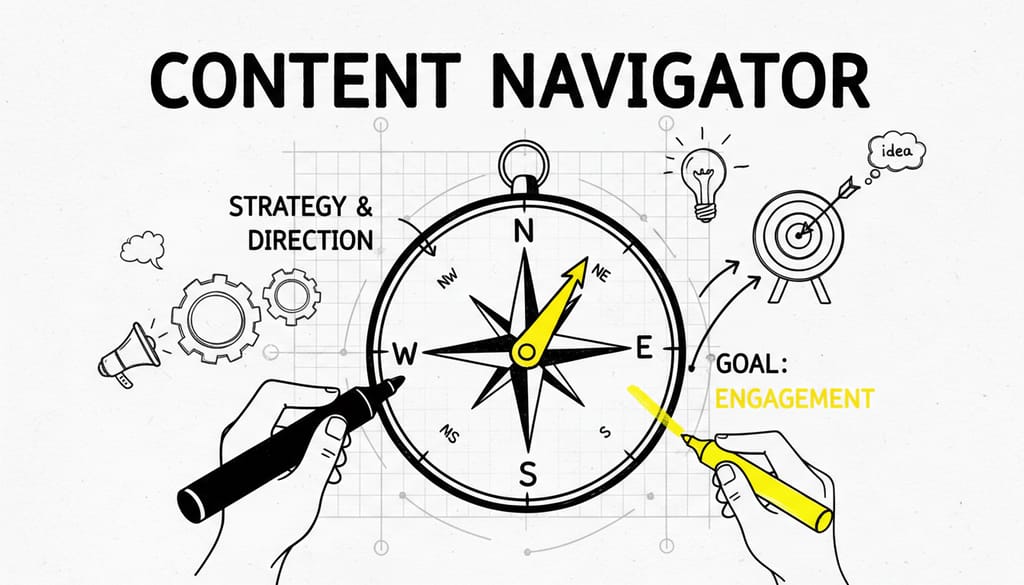
In the vast digital landscape, a solid content marketing plan acts as your North Star. It keeps your efforts aligned and focused, linking business goals with content creation. Without it, you’re simply guessing what your audience wants.
A plan ensures clarity and consistency. Knowing your audience, goals, and metrics makes your messaging more coherent and effective. Your audience recognizes your brand voice and trusts your expertise.
This consistency is crucial for building a loyal following that converts into customers. Businesses with a documented content strategy are far more likely to find their efforts effective [^1]. A strategic approach differentiates high-performing teams.
A plan also maximizes your return on investment (ROI). Content marketing is a long-term game, and an unclear strategy can be costly. A well-documented plan allocates budget effectively, prioritizes high-impact activities, and avoids wasted effort.
Finally, a plan empowers your team, streamlining workflow. It eliminates the daily scramble of “What should we post today?” by providing a content calendar and clear objectives. This forward-thinking approach yields higher-quality content and builds topic authority.
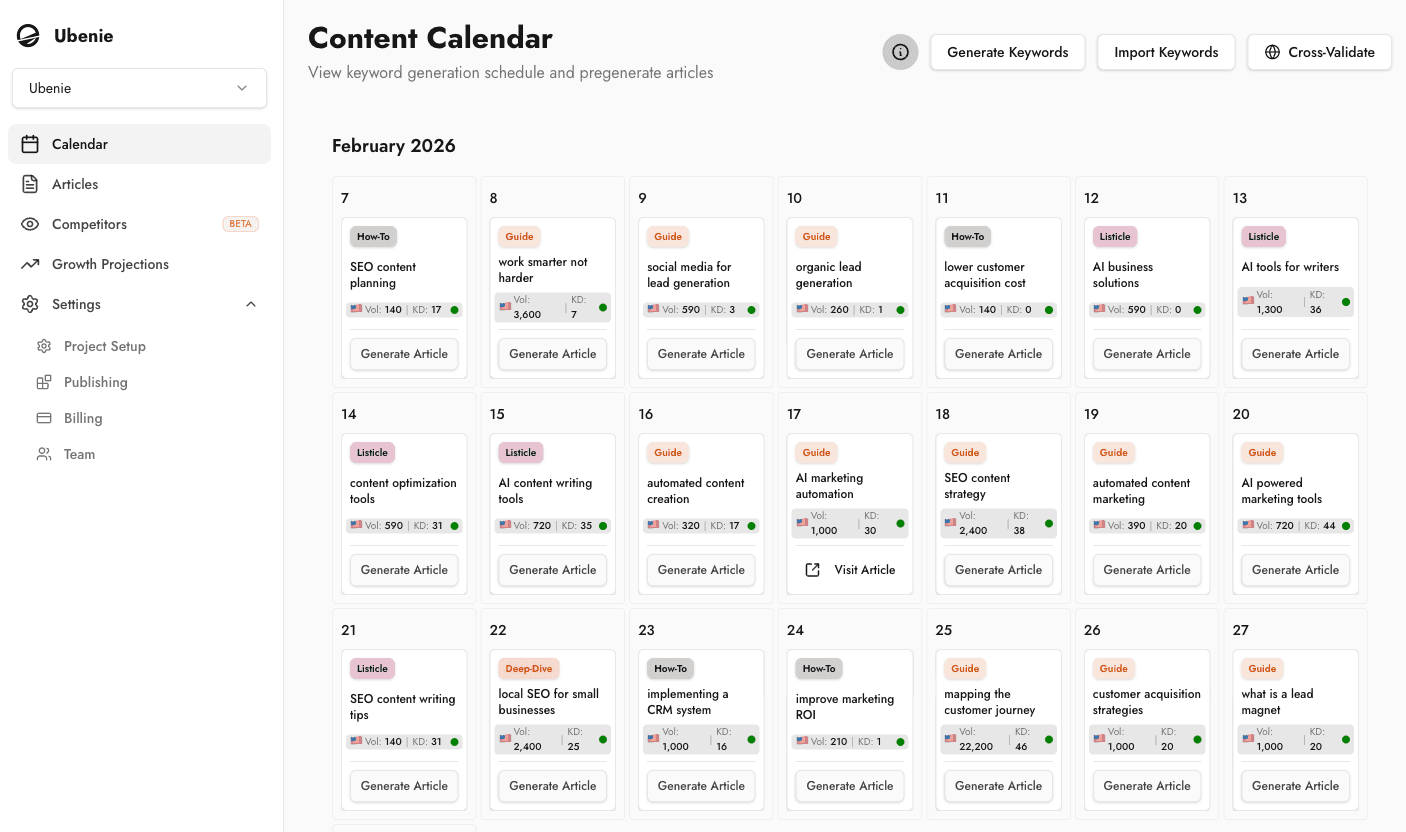
For a boutique marketing agency, Ubenie automates this planning. Instead of manual brainstorming, Ubenie's AI identifies what ideal clients, like local e-commerce stores, are searching for. It then generates a plan with low-competition keywords such as “shopify SEO tips for handmade jewelry,” transforming content into a precise tool for client attraction.
Step 1: Defining Your Foundation - Mission, Goals, and KPIs
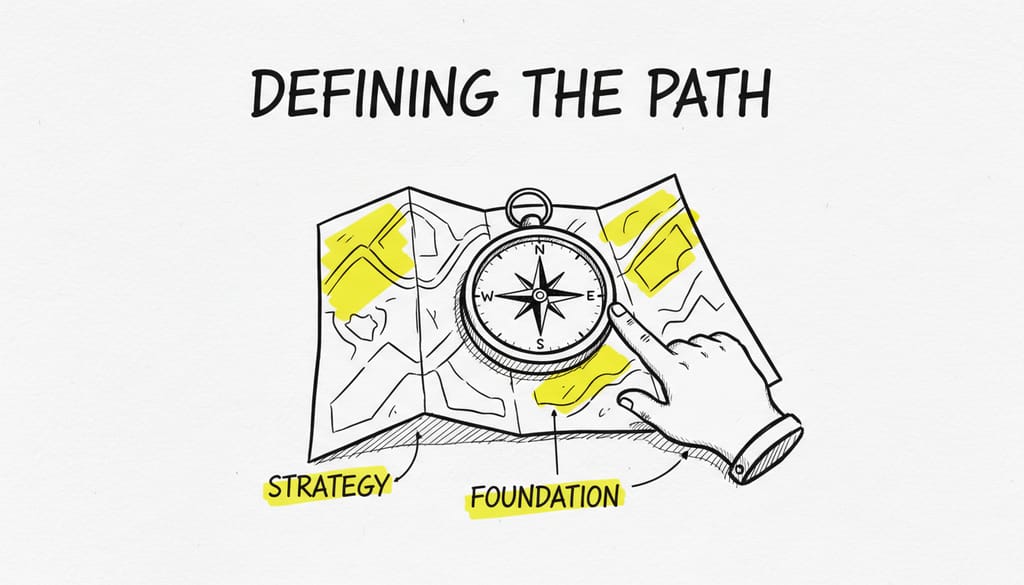
Before content creation, establish a strong foundation. This critical step defines the why behind your content, ensuring purposeful efforts aligned with your broader business strategy. Without this, your content lacks direction.
This stage involves three core components: a content mission statement, SMART goals, and Key Performance Indicators (KPIs).
Setting Your Content Mission Statement
A content mission statement is a brief declaration defining your target audience, value delivery, and desired business outcome. It’s an internal tool that keeps content focused and prevents scope creep. A great statement answers three questions:
- Who is your core audience? (e.g., “e-commerce founders struggling with inventory management”).
- What value will you provide? (e.g., actionable guides, expert interviews).
- What is the desired outcome for them? (e.g., “...so they can streamline operations and increase profitability”).
For a SaaS company providing project management software, a mission could be: “To provide project managers in fast-growing tech startups with actionable productivity tips and leadership frameworks, helping them deliver projects on time and under budget while advancing their careers.” Every content piece must serve this mission.
Establishing SMART Goals
With your mission in place, set Specific, Measurable, Achievable, Relevant, and Time-bound (SMART) goals. Vague objectives like “increase traffic” are insufficient.
- Specific: Clearly define what to achieve (e.g., “Increase organic blog traffic from non-branded keywords”).
- Measurable: Track progress (e.g., “by 25%”).
- Achievable: Ensure realism given resources (e.g., “25% in a quarter” is better than “200% in a month”).
- Relevant: Align with overall business objectives (e.g., increasing organic traffic is relevant for increasing trial sign-ups).
- Time-bound: Set a deadline (e.g., “over the next quarter (Q3)”).
Examples of SMART Content Marketing Goals:
- Generate 50 new marketing-qualified leads (MQLs) from our blog in Q4.
- Increase our email newsletter subscriber list by 1,000 new contacts via content upgrades in the next six months.
- Improve the search ranking for our top 5 commercial intent keywords to Google’s first page within 90 days.
Identifying Key Performance Indicators (KPIs)
KPIs are specific metrics tracking progress towards your SMART goals. They are tangible data points proving content effectiveness, directly correlating with your objectives.
- Brand Awareness: Organic traffic, social shares, brand mentions, backlink growth.
- Lead Generation: Conversion rate (e.g., e-book downloads), new leads, cost per lead.
- Customer Engagement: Time on page, pages per session, bounce rate, comments, newsletter open/click-through rates.
- Sales: Lead-to-customer conversion rate, content-influenced revenue, customer lifetime value (CLV).
Ubenie simplifies this foundation. During onboarding, defining your business and ideal customer allows Ubenie’s AI to translate this into a strategic mission. It automatically identifies high-potential keywords aligned with lead generation or sales, reverse-engineering the plan from desired outcomes.
Step 2: Uncovering Your Audience and Competitive Landscape
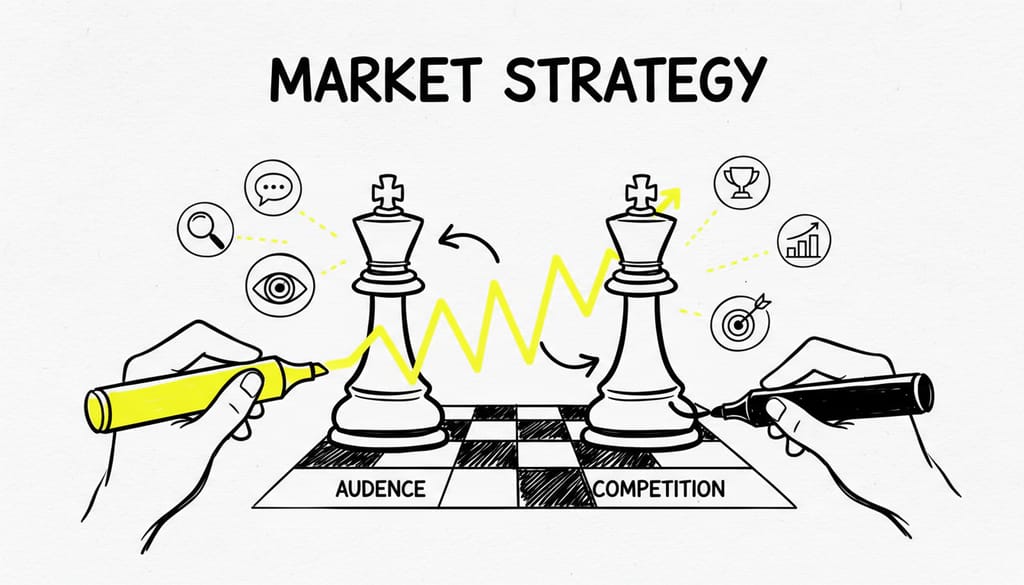
Once you know why to create content, understand who it’s for and who you’re competing against. Deep audience understanding ensures resonant content, while competitive analysis reveals opportunities to stand out. This phase is about research and empathy.
Building Detailed Buyer Personas
A buyer persona is a semi-fictional representation of your ideal customer, based on market research and existing customer data. Detailed personas go beyond demographics, diving into psychographics, motivations, and challenges. This helps create content addressing their specific pain points.
Gather information through:
- Surveys and interviews with current customers.
- Website and social media analytics (e.g., Google Analytics).
- Conversations with sales and customer support teams.
Include the following in each buyer persona profile:
- Demographics: Age, gender, location, job title, income, education.
- Goals: Primary and secondary goals; what they aim to achieve.
- Challenges: Obstacles, biggest pain points.
- Watering Holes: Where they spend time online (e.g., LinkedIn, specific blogs, forums).
- Content Preferences: Preferred formats (blog posts, videos, podcasts).
- Keywords & Phrases: Terms they use to search for solutions.
- A Real Quote: A summary capturing their attitude and core motivation.
Create 2-3 distinct personas, like “Marketing Mary” (manager at a mid-sized company) and “Startup Steve” (founder), making them feel real with names and photos.
Conducting a Competitive Analysis
Your potential customers consume competitor content. A competitive analysis helps you understand their strengths, weaknesses, and how to carve out your unique space. The goal is to identify gaps and opportunities, not to copy.
Identify Competitors: List 3-5 direct (similar product/service) and indirect (different solution to same problem) competitors.
Analyze Their Content: Examine their blogs, YouTube channels, and social media. Ask:
- What topics do they cover (top-of-funnel vs. product-focused)?
- Which content formats do they use (blogs, videos)?
- What is their tone and voice?
- What is their content quality?
- How often do they publish?
Analyze Their SEO Performance: Use tools like Semrush or Ahrefs.
- Top Keywords: Identify keywords driving traffic to their site, revealing topic ideas.
- Content Gaps: Which relevant keywords do they rank for that you don't?
- Backlink Profile: Who links to their content, revealing potential partners.
This step provides a clear picture of your target audience and the competitive landscape, invaluable for content planning.
Step 3: Mastering Your Content Core - Keywords and Topics
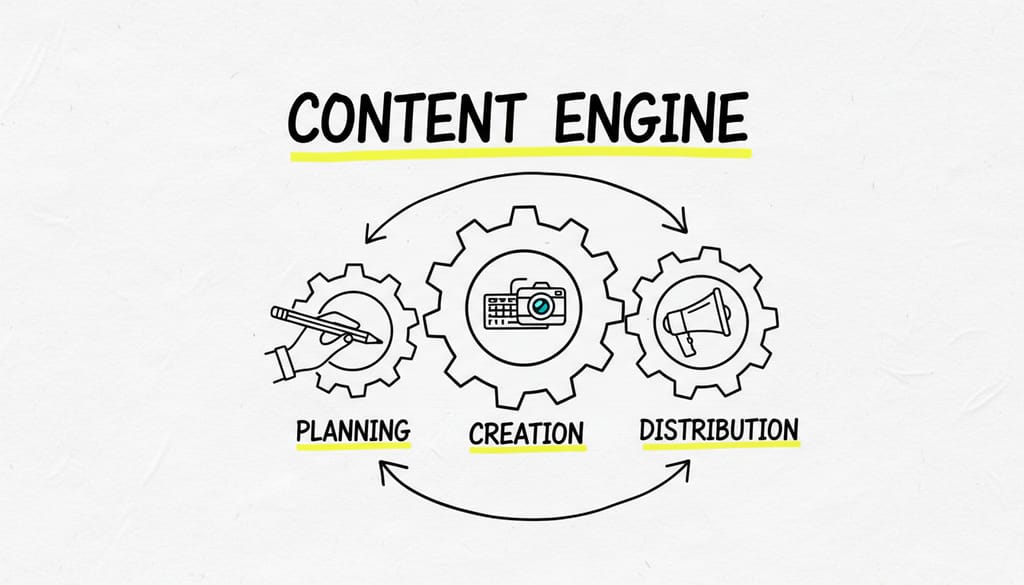
This step makes your strategy tangible. With a clear mission, goals, audience, and competition understood, you decide what to create. It's about brainstorming and selecting topics and keywords to attract your audience and achieve goals, blending creativity with data-driven analysis.
The Art and Science of Keyword Research
Keyword Research is finding phrases people enter into search engines. It's the foundation of modern SEO and content marketing, revealing what your audience seeks. Targeting these keywords creates content meeting existing demand, attracting qualified traffic.
- Seed Keywords: Broad topics related to your business (e.g., “small business accounting”).
- Long-Tail Keywords: Longer, specific phrases (3+ words) with lower search volume but higher conversion potential (e.g., “best accounting software for freelance graphic designers”).
- Keyword Difficulty: Tools like Ahrefs or Semrush estimate ranking difficulty. Focus on lower difficulty keywords to gain traction, especially as a new business.
Understanding User Intent
Beyond the keyword, understand the User Intent behind the search. What is the user truly trying to accomplish? Four main types exist:
- Informational: Seeking knowledge (e.g., “what is content marketing”).
- Navigational: Trying to reach a specific site (e.g., “Ubenie login”).
- Transactional: Ready to purchase (e.g., “buy iPhone 14”).
- Commercial Investigation: Comparing products before purchase (e.g., “Ubenie vs Jasper”).
Your content plan needs a mix targeting these intents, guiding users through their journey. Informational posts attract top-of-funnel users; comparison guides serve those closer to decision.
Structuring Content with Topic Clusters and Pillar Pages
To build authority and improve search rankings, organize content effectively using the topic cluster model:
- Pillar Page: A comprehensive, in-depth piece covering a broad topic (e.g., “The Ultimate Guide to Small Business SEO”).
- Cluster Content: Specific blog posts detailing subtopics related to the pillar (e.g., “How to Do Local SEO,” “A Beginner’s Guide to Keyword Research”).
- Internal Linking: All cluster content links back to the main pillar page, signaling authority to Google and boosting its ranking potential.
This model organizes content, improves user experience, and demonstrates expertise to search engines.
Ubenie's AI excels here. It analyzes your business, identifying high-potential, low-competition terms your ideal customers search for. It understands user intent, suggesting blog post titles designed to capture specific traffic. For example, it might identify “how to automate client onboarding for a small agency” and generate a ready-to-publish article, building topic clusters automatically.
Step 4: Structuring Your Content Creation Workflow
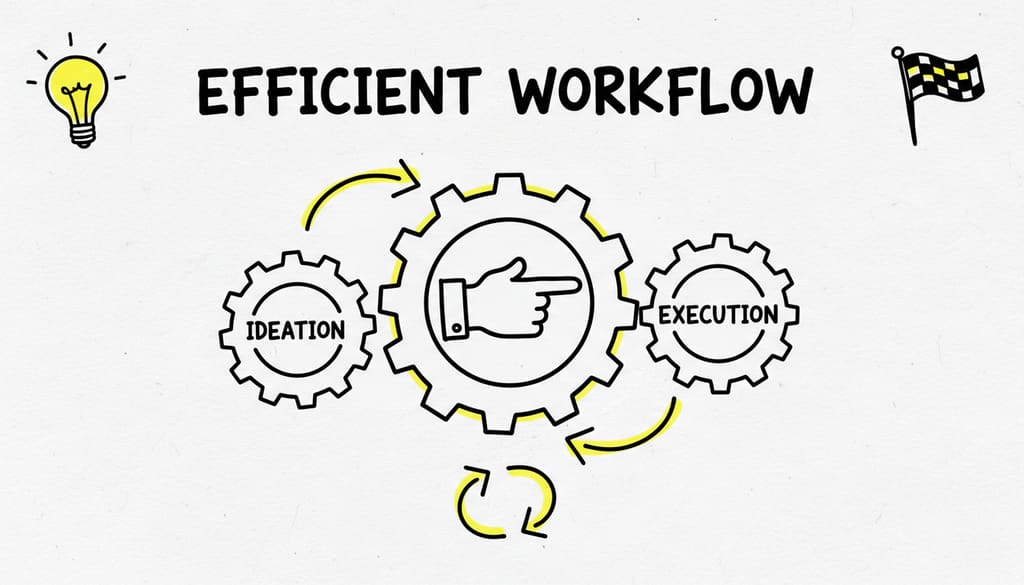
Ideas require execution. This step builds the system—the engine—that consistently turns topic ideas into high-quality, published content. A well-defined workflow prevents bottlenecks, ensures quality, and makes the process manageable. It defines the what, when, who, and how of content production.
Choosing the Right Content Formats
Your content plan shouldn't be limited to blog posts. Different audiences and topics suit various formats, based on preferences, complexity, and resources.
Common content formats include:
- Blog Posts & Articles: Excellent for SEO, in-depth explanations, thought leadership.
- Videos: Engaging for tutorials, demos, interviews; taps into YouTube audience.
- Infographics: Visualizing data, statistics, complex processes.
- E-books & Whitepapers: Ideal for lead generation, comprehensive guides.
- Case Studies: Powerful bottom-of-funnel content, social proof.
- Checklists & Templates: Practical, shareable content providing immediate value.
- Webinars: Live or recorded deep dives, direct audience interaction.
Your plan should outline a mix of formats to keep content fresh and appeal to different audience segments.
Building Your Content Calendar
A content calendar (editorial calendar) is a living document scheduling all content marketing activities. It's your single source of truth for what, when, and where content is published. It transforms strategy into an actionable schedule.
Your calendar can be a spreadsheet or project management tool (Trello, Asana, CoSchedule). At minimum, include:
- Publish Date
- Content Title / Topic
- Target Keyword
- Content Format
- Author/Creator
- Current Status
- Target Persona
- Funnel Stage
- Call to Action (CTA)
Planning at least a month ahead enables strategic alignment with campaigns and product launches, preventing last-minute rushes.
Leveraging AI for Scalable Content Creation
For many businesses, content creation is the biggest bottleneck. High-quality article writing demands significant time and expertise. AI Content Generation changes this, dramatically scaling production by turning keywords or outlines into full drafts in minutes.
AI augments human creativity, not replaces it. It handles research and first drafts, freeing your time for strategic editing, adding unique insights, and ensuring brand voice alignment. Ubenie is designed for this, generating complete, SEO-optimized blog posts based on keyword research. Articles are structured for ranking, satisfy user intent, and are delivered in a human-like tone.
Your role shifts from writer to editor—reviewing, tweaking, and approving content. This dramatically accelerates the workflow from idea to publication.
Step 5: Planning Your Distribution and Promotion Strategy
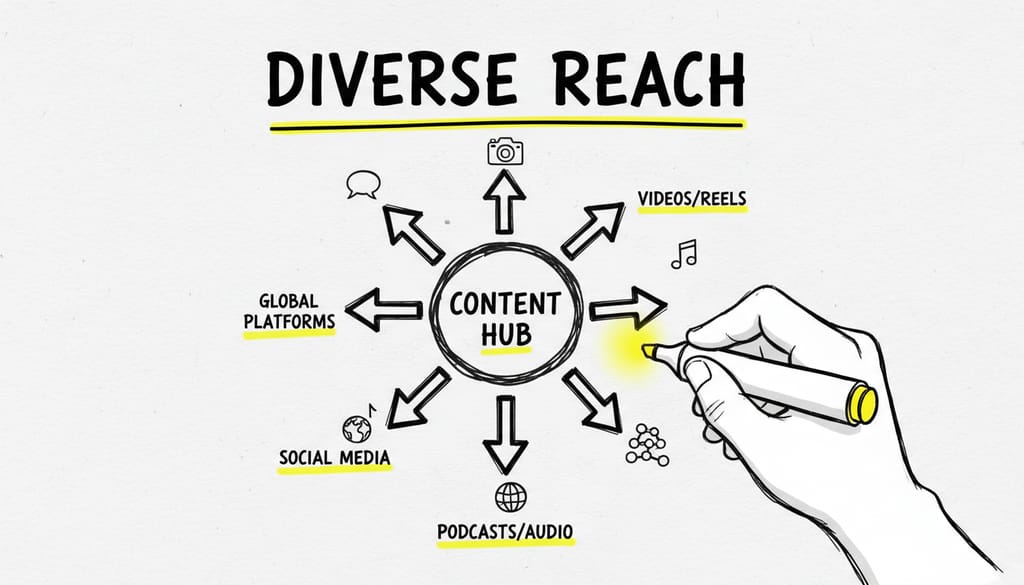
Creating exceptional content is only half the battle. In a crowded digital world, a great piece of content no one sees has zero ROI. Your content marketing plan template must include a robust distribution and promotion strategy. This ensures your content reaches your audience for maximum impact.
Your strategy should be multi-channel, leveraging owned, earned, and paid media. Content is the fuel, and digital marketing channels are the engine, as explored in Content Marketing vs Digital Marketing: What's the Difference?.
Leveraging Owned Media Channels
Owned media are channels you control, forming your content’s foundational platforms.
- Your Website/Blog: The central hub for your content; all promotion drives traffic here. Optimize for user experience and conversions.
- Email Newsletter: A valuable asset, a direct line to opted-in audiences. Promote new content and segment lists for targeted delivery.
- Social Media Profiles: Share content across LinkedIn, Twitter, Facebook, Instagram, etc. Tailor messages for each platform (e.g., visual for Instagram, discussion for LinkedIn).
Maximizing Earned Media
Earned media is word-of-mouth exposure, highly valuable due to third-party credibility.
- Search Engine Optimization (SEO): The most powerful earned media. Optimizing content earns top spots on the Search Engine Results Page (SERP) for target keywords, generating continuous organic traffic. This involves strong On-Page SEO and off-page SEO (backlinks).
- Public Relations (PR) & Outreach: Reach out to industry journalists, bloggers, and influencers. Share relevant content; mentions or links from high-authority sites drive traffic and boost SEO.
- Guest Posting: Write for reputable niche blogs, exposing your brand to new audiences and providing backlinks.
- Community Engagement: Share content in relevant online communities (Reddit, Quora). Participate genuinely, offering content as a helpful resource.
Utilizing Paid Media (Optional)
Paid media involves paying to promote content, accelerating results and reaching specific audiences quickly.
- Social Media Ads: Platforms like Facebook and LinkedIn offer powerful targeting options, placing content before your exact buyer persona.
- Pay-Per-Click (PPC) Advertising: Use Google Ads to promote content to users searching specific keywords, effective for bottom-of-the-funnel content.
- Content Discovery Platforms: Services like Outbrain and Taboola place your content on major publisher sites, reaching a broad audience.
Your plan should specify distribution channels for each content piece. A common practice is the 80/20 rule: 20% creation, 80% promotion.
Pro Tips for Executing and Refining Your Plan
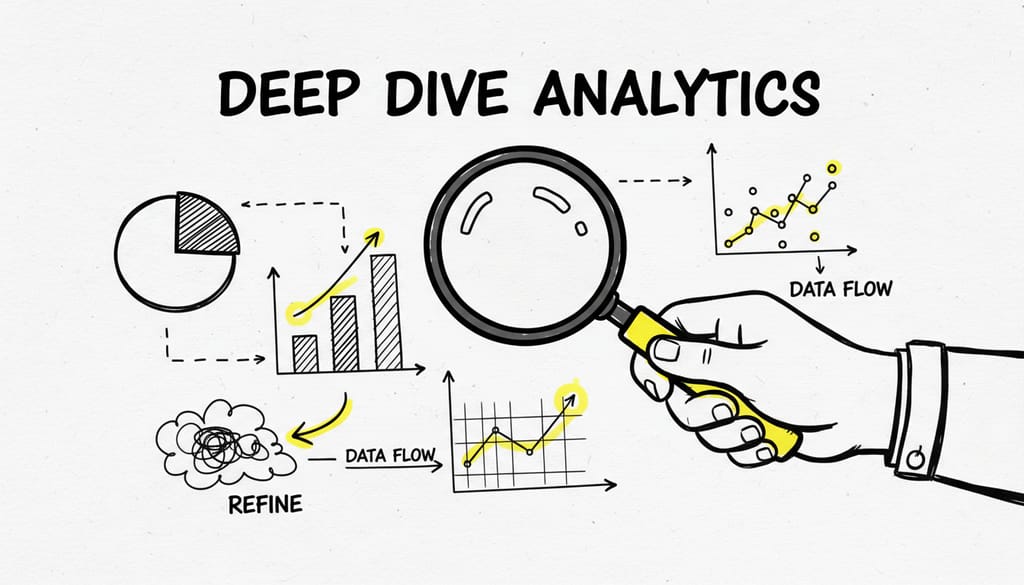
A content marketing plan is a living guide, evolving with your business, audience, and market. Successful content marketers consistently measure, learn from data, and adapt their strategy. Here are tips for long-term success.
Measure, Analyze, Act, Repeat
Data is crucial. Regularly track your KPIs (from Step 1) using tools like Google Analytics, email marketing dashboards, and social media analytics.
- Set up Dashboards: Track key KPIs weekly or monthly to spot trends.
- Look Beyond Vanity Metrics: Focus on time on page, conversion rate, and generated leads, which drive business results.
- Connect Content to Revenue: Use UTM parameters and a CRM to track content's influence on leads and sales, proving ROI.
- Act on Insights: If video drives engagement, create more. If a topic cluster generates traffic, expand it. Analyze high bounce rates for improvement.
Conduct Regular Content Audits
Periodically review all existing content to assess its health. An audit, typically annual or semi-annual, helps you:
- Identify Best Performers: Find content driving most traffic, leads, and engagement.
- Find Content to Update and Relaunch: Refresh relevant posts with new data or improved SEO.
- Discover Content to Consolidate or Prune: Combine thin articles or remove outdated, low-quality content to improve site quality.
- Spot Content Gaps: Uncover topics your audience cares about but you haven't covered.
Stay Agile and Open to Experimentation
The digital marketing landscape changes rapidly. New platforms emerge, algorithms update, and audience preferences shift. Your content plan must be flexible. Experiment with new formats, channels, or topics; allocate resources to trying new things. While some experiments may fail, successful ones can become major pillars of your strategy.
For a Ubenie user, this process is simplified. The platform provides insights into which AI-generated articles perform best. When refreshing content or filling gaps, Ubenie generates new, optimized Blog Content on specific topics. This maintains a high-performing content engine without manual analysis, keeping your plan effective and up-to-date.
Note: A content plan’s true power lies in consistent execution. A simple, realistic plan followed consistently is better than a complex plan abandoned early.
Conclusion
Building a comprehensive content marketing plan template may seem daunting, but it's the most important investment for long-term marketing success. Transitioning from random content to a structured, strategic approach transforms your channels into a predictable growth engine.
We've covered essential steps: setting a clear foundation, understanding your audience and competitors, mastering topics via keyword research, building an efficient workflow, and planning robust distribution. Each step builds a cohesive roadmap.
Remember, your content marketing plan template is a flexible guide. Start, measure results, and continuously refine based on real data. This commitment builds strong audience connections, establishes brand authority, and drives sustainable business growth.
Frequently Asked Questions
How often should I update my content marketing plan?
Your content marketing plan should be a living document. Review and make minor adjustments to your content calendar monthly or quarterly. A major strategic review and update, including personas, competitive analysis, and overarching goals, should be conducted annually. This ensures alignment with business objectives and the evolving market.
What's the difference between a content strategy and a content plan?
A content strategy defines the high-level 'why'—your core goals, target audience, and unique value. A content plan is the tactical 'how, what, and when'—detailing specific topics, formats, keywords, and schedules for executing that strategy. Your plan is the actionable roadmap that brings your strategy to life.
How long does it take to see results from content marketing?
Content marketing is a long-term investment. While initial traction might appear within a few months, it typically takes 6 to 12 months of consistent, high-quality content creation and promotion to see significant results. These include improved organic traffic, lead generation, and SEO rankings. Patience and consistency are key.
Can I create a content marketing plan with a small budget?
Absolutely. A content marketing plan is even more critical with a limited budget, ensuring every dollar and hour is spent effectively. Focus on high-quality blog content (low production cost), mastering SEO for free organic traffic, and leveraging email marketing. The plan helps prioritize the most impactful, affordable activities.
What are the most important metrics to track?
The most important metrics depend on your specific goals. For brand awareness, focus on organic traffic and social shares. For lead generation, track conversion rates on content offers and qualified leads. For sales, the ultimate metric is content-influenced revenue. It's crucial to connect your content activities to tangible business outcomes.
Tired of struggling with SEO and content marketing? Automate your traffic growth and focus on what you do best. Visit our website to discover how we can help you achieve higher search rankings and more leads.
Article created using Ubenie.