
Stepping Off the Content Treadmill: The Power of Automation
For many business owners, content marketing feels like a never-ending hamster wheel. Teams spend countless hours researching, writing, editing, and publishing, often seeing minimal returns in traffic and leads. The pressure to consistently create high-quality content is immense, pulling focus from core business activities. What if you could step off this wheel entirely? Imagine building a powerful content engine that attracts customers and grows your brand on autopilot. This is not a distant dream; it is the proven reality of learning how to automate content creation.
This case study explores how Artisan Grove, a small e-commerce business, transformed its online presence. They shifted from a manual, time-intensive approach to a fully automated content strategy. We will detail their background, the growth challenges they faced, the solution that changed everything, and the significant results achieved. This story offers a blueprint for any business owner seeking SEO growth without sacrificing time or resources.
The Background: Craft, Passion, and a Hidden Online Presence
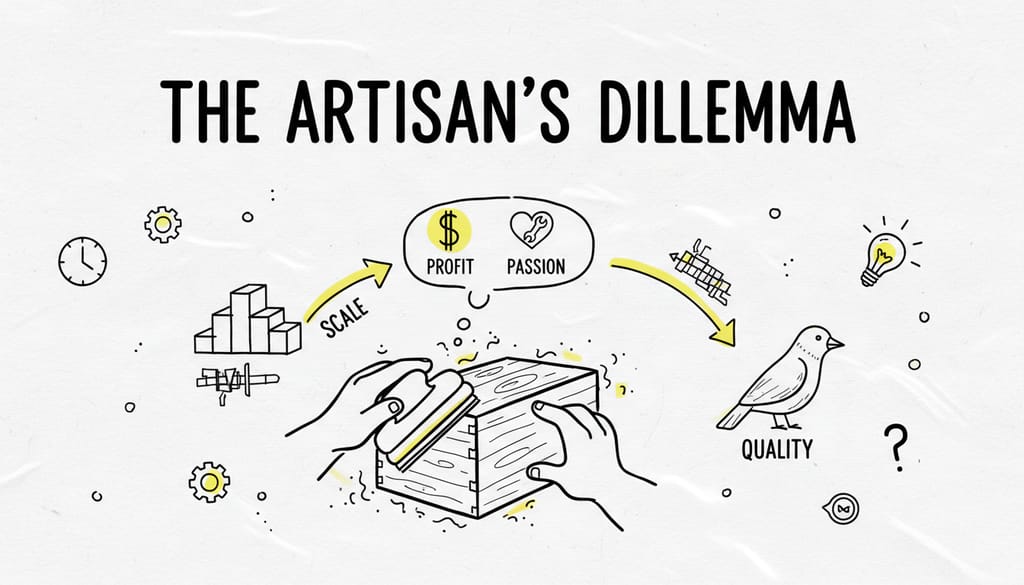
Artisan Grove was the brainchild of Clara, a passionate woodworker. She turned her hobby into a thriving business creating beautiful, handcrafted home goods. Her products, from custom cutting boards to elegant decorative bowls, were exceptional. Early sales from local markets and word-of-mouth were promising.
To reach a wider audience, Clara launched an e-commerce website on Shopify. The website looked great, but it faced a major problem: it was a ghost town. Clara knew she needed to improve her site's visibility on Google.
She had read countless articles about the importance of SEO and blogging for Traffic Generation. The idea seemed simple enough: write blog posts about topics related to woodworking, home decor, and sustainable living. The goal was to attract potential customers.
The Initial Content Grind
Clara committed to writing one blog post per week. Her topics were highly relevant, including "How to Care for Your Wooden Cutting Board," "5 Sustainable Decor Ideas for Your Home," and "The Story Behind Our Reclaimed Oak Bowls." She poured her expertise and passion into each article. This process consumed 8-10 hours every week.
Her weekly content workflow included:
Keyword Research: Trying to guess what people were searching for using free tools.
Writing & Editing: Crafting the content, checking for errors, and ensuring it reflected her brand's voice.
Formatting: Sourcing images, adding headings, and publishing on her Shopify blog.
Despite consistent effort over six months, the results were deeply discouraging. Her articles barely cracked the tenth page of Google search results. Organic traffic remained flat, and the blog generated zero sales. Clara was burning out, spending a full day's work each week on a marketing activity that produced nothing. The content wheel was spinning, but the business was stagnant. Clara, an expert artisan, was not an SEO specialist, and this knowledge gap became a critical barrier to growth.
The Challenge: Overwhelmed by Content Inefficiency
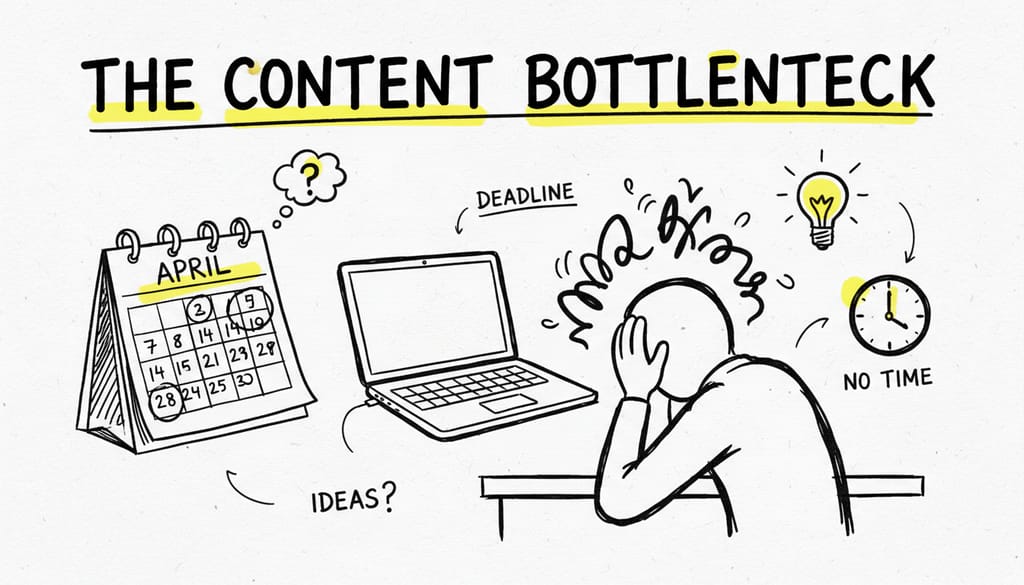
Clara’s situation perfectly illustrates the small business content dilemma. She faced a trifecta of challenges that made sustainable growth seem impossible. The core issue was not a lack of effort, but rather the absence of an efficient and effective system to convert that effort into tangible results.
First, there was the immense time commitment. The 10 hours she spent weekly on content creation were hours she couldn't dedicate to product development, customer service, or strategic planning. This time sink was not only inefficient but also costly in terms of lost opportunity. For a solopreneur, time is the most valuable asset, and hers was being spent on tasks that weren't delivering a return on investment.
Second, her lack of SEO expertise was crippling her efforts. Clara didn't understand the nuances of keyword intent, competitive analysis, or on-page optimization. She was creating good content, but it wasn't Google Optimized Content. She failed to target Low-Competition Keywords where she could realistically rank. She also couldn't identify High-Potential Keywords that her ideal customers were actively searching for. Her content was a shot in the dark, and in the competitive world of SEO, that approach rarely hits its mark. She was failing to implement fundamental SEO Best Practices that differentiate content that ranks from content that vanishes.
Finally, the cost of professional help was prohibitive. She explored hiring a freelance content writer and an SEO consultant. However, the combined monthly retainers amounted to thousands of dollars—far beyond her budget. The cost of traditional content marketing services can be substantial; according to a study by The Digital Elevator, the average cost for content marketing can range from $2,000 to $10,000+ per month. This price point puts it out of reach for many small businesses like Artisan Grove. Clara felt trapped: she couldn't afford to hire experts, but she couldn't afford to keep wasting her own time either.
The Manual Content Trap: Without a scalable system, many businesses get stuck in a cycle of creating content with no clear strategy. This often leads to burnout and stagnant traffic. The problem isn't the content itself; it's the inefficient and unoptimized process behind it.
The Solution: Harnessing Automated SEO
Frustrated and on the verge of giving up on content marketing altogether, Clara began searching for a more efficient way. Her search for terms like "how to automate content creation" and "AI content marketing tools" led her to Ubenie. The platform’s promise was exactly what she needed: an AI-powered traffic builder that could automate the entire SEO content workflow. This included everything from keyword research to writing and publishing Google-optimised blog posts.
Skeptical but hopeful, she decided to give Ubenie a try. The concept of Automated SEO was new to her. However, it directly addressed her biggest pain points: lack of time, lack of expertise, and a limited budget. Ubenie was designed as an autopilot solution, functioning as a virtual SEO expert and content team rolled into one platform. For Clara, this represented a potential game-changer. She could finally stop guessing and start implementing a data-driven strategy. Businesses looking to understand this approach further can explore Automated SEO Services: The Autopilot Solution for Business Growth for a comprehensive overview.
The Implementation: Building an Automated Content Engine
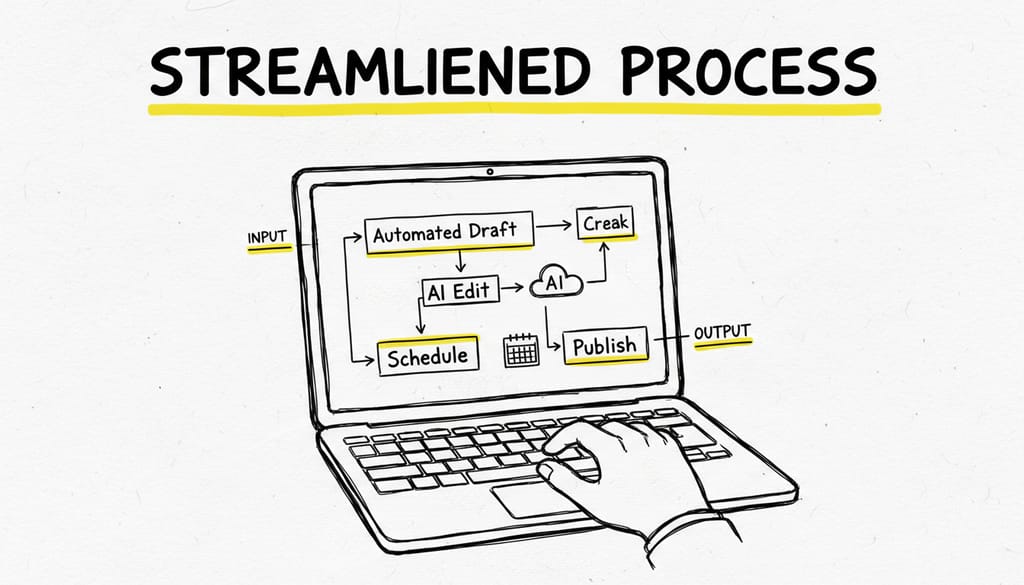
The onboarding process with Ubenie was surprisingly simple. Clara didn't need any technical skills to get started. She only had to describe her business, her products, and her target audience to the Ubenie platform. She shared details about Artisan Grove, her focus on sustainable craftsmanship, and her ideal customer—someone who values quality, handmade goods for their home.
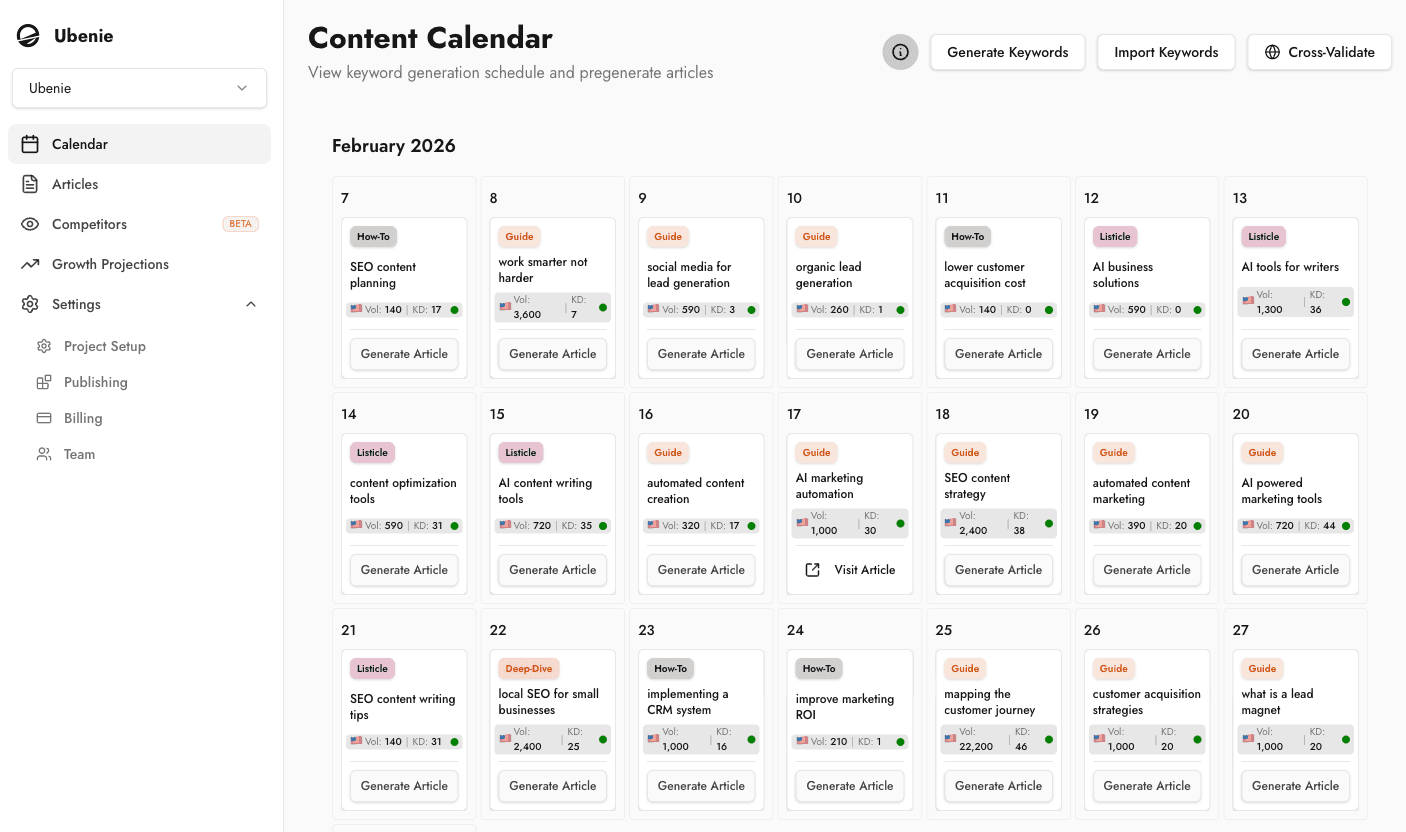
Within minutes, Ubenie’s AI got to work. It performed a competitive analysis and identified a long list of high-potential, low-competition keyword opportunities. These were tailored specifically to her niche. These weren't generic terms like "home decor"; they were highly specific phrases real customers were actively searching for, such as:
"best wood for a charcuterie board"
"how to clean a walnut cutting board"
"eco-friendly wooden kitchen utensils"
"unique handmade housewarming gifts"
These were keywords Clara would have never found on her own. The platform automatically selected the most promising ones and began generating complete, SEO-optimized blog posts around them. Each article was crafted to outperform competitors. It incorporated all the elements she had struggled with manually:
Targeted Headlines and Meta Descriptions: Designed to maximize click-through rates from Google.
Human-like Content: The articles were well-written, engaging, and read as if a human expert had crafted them. The AI captured the passion and knowledge she wanted her brand to convey.
Structured Ranking Elements: Proper use of H2s, H3s, lists, and bolding made the content easy for both users and search engines to read and understand. These Structured Ranking Elements are crucial for on-page SEO.
Internal Linking Suggestions: The platform even suggested relevant internal links to her product pages, helping to guide readers toward a purchase. She found the principles in guides like content strategy for SEO helpful in refining these.
Clara's new workflow was completely transformed. Instead of spending 10 hours writing from scratch, she now spent about 30 minutes per week reviewing, lightly editing, and scheduling the content Ubenie generated. She was no longer a writer; she was an editor and a strategist, guiding her automated content engine. She used some of the principles from guides like How to Write Website Content That Drives Traffic & Converts (A 5-Step Guide) to inform her final tweaks, ensuring the content was perfectly aligned with her brand voice.
The Results: From Limited Visibility to Exponential Growth
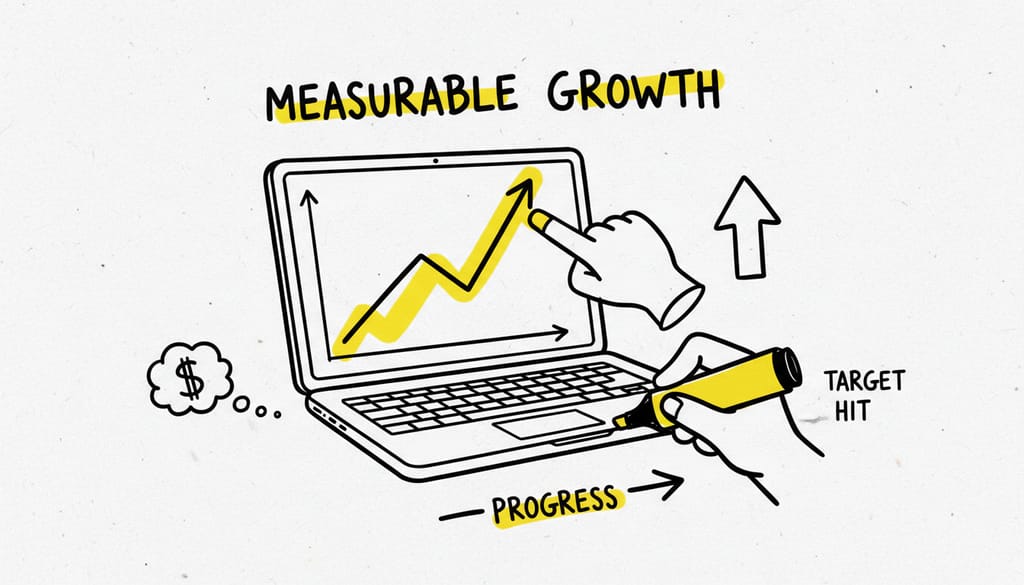
The impact of implementing Ubenie was both immediate and profound. Within the first three months, Artisan Grove's website analytics began to tell a new story. The content engine was working, and the results far exceeded Clara's expectations. The shift from manual guesswork to an automated, data-driven strategy paid off significantly.
One of the most powerful aspects of AI in marketing is its ability to process data and execute strategies at a scale and speed humans cannot match. Research highlights this, with 70% of marketers believing AI is very or critically important to their success. Clara was now experiencing this firsthand. Her automated content strategy was consistently producing high-quality, targeted articles that started to climb the search engine rankings.
Here’s a breakdown of the key performance indicators before and after Ubenie:
Metric | Before Ubenie (6-Month Average) | After Ubenie (First 6 Months) | Percentage Change |
|---|---|---|---|
Organic Website Traffic (Monthly) | 150 visitors | 4,800 visitors | +3100% |
Keywords Ranked in Top 10 | 3 | 125+ | +4066% |
Blog-Attributed Leads (Monthly) | 0 | 45 | Infinite Growth |
Time Spent on Content (Weekly) | 10 hours | 30 minutes | -95% |
Content Output (Monthly) | 4 articles | 12 articles | +200% |
The numbers speak for themselves. Monthly organic traffic skyrocketed from a trickle to a steady stream of thousands of potential customers. The site began ranking for over 100 valuable keywords, driving highly qualified visitors who were actively searching for the solutions her products provided. Most importantly, this new traffic was converting. The blog, which had previously generated zero leads, was now a primary source of new customers and sales for Artisan Grove. This kind of exponential growth is not uncommon when a business successfully implements a targeted content strategy. It is a result mirrored in other success stories, such as another Case Study: How SEO Content Creation Services Drove 312% Growth.
Beyond the metrics, the automation of content creation freed up Clara to focus on what she does best: her craft. With her marketing on autopilot, she had more time for product innovation, fulfilling orders, and engaging with her growing community of customers. The business was finally growing, and she was no longer on the verge of burnout.
Success: By automating her content creation, Clara not only increased her website traffic by over 3000% but also reclaimed over 38 hours of her time each month. This allowed her to focus on strategic business growth.
Key Takeaways: Lessons from Automated Content Success
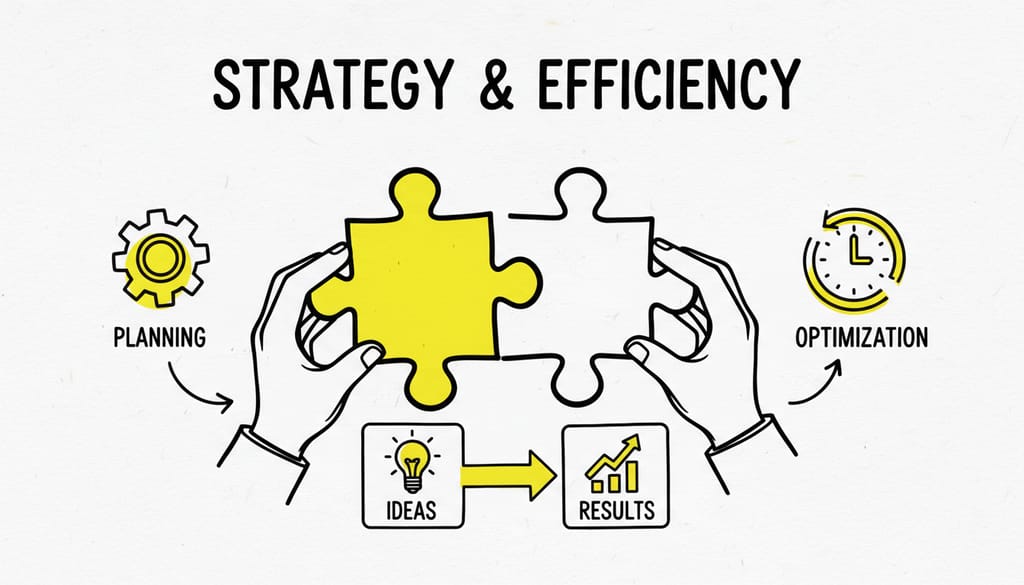
Artisan Grove's journey from obscurity to a thriving online business offers powerful lessons for any entrepreneur or marketing manager looking to leverage content. The transition to an automated system wasn't just about adopting a new tool; it was about embracing a new philosophy for growth.
1. Consistency is Non-Negotiable, and Automation Guarantees It.
One of the biggest reasons Clara's initial efforts failed was inconsistency, born from burnout. SEO rewards consistency. Search engines favor websites that regularly publish fresh, relevant content. Manually keeping up that pace is incredibly difficult for a small team. Automation removes the human bottleneck, ensuring a steady stream of content goes live and building topical authority and momentum over time.
2. Expertise Is Crucial, But You Don't Have to Be the Expert.
Clara is an expert woodworker, not an SEO analyst. Her mistake was thinking she had to become one. Modern tools can provide the expertise you lack. By leveraging an Automated SEO platform like Ubenie, she effectively "hired" an AI-powered expert that understood keyword research, competitive analysis, and on-page optimization better than she ever could. The lesson is to focus on your core genius and automate the rest.
3. Quality and Quantity Are Not Mutually Exclusive.
A common fear with AI-generated content is a drop in quality. However, Clara's experience shows that the opposite can be true. The AI produced high-quality, Human-like Content that was not only readable and engaging but also perfectly structured for search engines. By handling the heavy lifting of research and drafting, the AI enabled her to publish more high-quality content than she ever could manually. She could focus her limited time on adding her unique brand voice and insights, elevating the content rather than building it from scratch.
4. The Right Keywords Are More Important Than a Large Volume of Content.
Before Ubenie, Clara was writing about topics she thought were relevant. After, she was writing about topics the data proved were relevant. The platform's ability to uncover Low-Competition Keywords with high search intent was the true engine of her growth. Publishing 100 articles on the wrong keywords will yield nothing, while publishing 10 articles on the right ones can transform a business.
5. Focus on Being a Business Owner, Not Just a Content Creator.
The ultimate takeaway is about leverage. By automating a critical but time-consuming task, Clara freed herself to work on her business instead of just in it. She could think about new product lines, partnerships, and customer experience because she wasn't bogged down by the weekly content grind. This is the true promise when you automate content creation: it's not just about getting more traffic; it's about reclaiming your time to build a better business.
Conclusion: The Future of Content Marketing is Automated
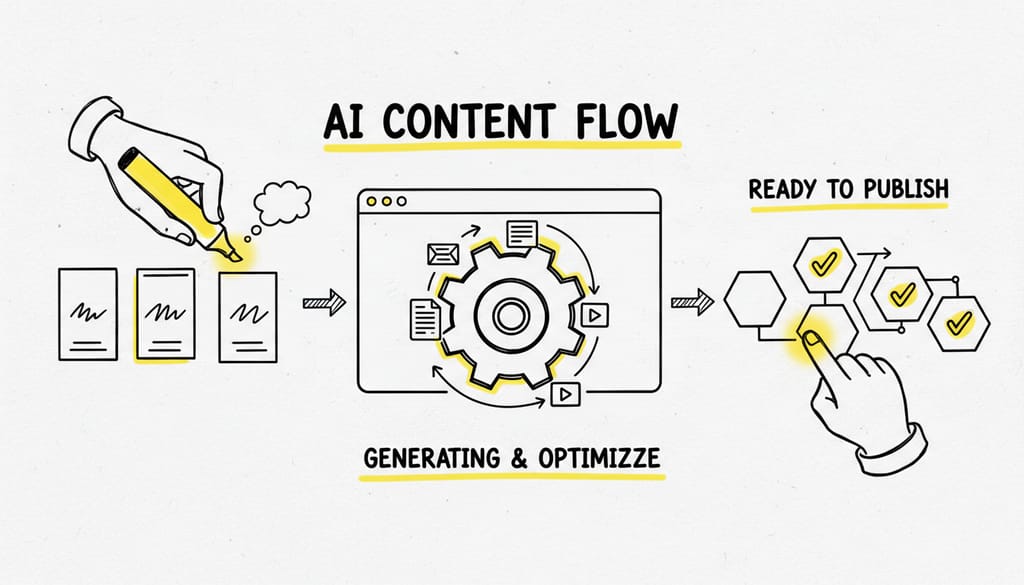
Clara's story with Artisan Grove is a powerful testament to the transformative potential of automating content creation. She started in a position familiar to countless business owners: overworked, under-resourced, and invisible online. Her passion for her craft was undeniable, but her manual approach to content marketing was a recipe for burnout and failure. By embracing an automated solution, she didn't just find a shortcut; she found a smarter, more sustainable path to growth.
The journey from 150 monthly visitors to nearly 5,000 wasn't magic. It was the result of a strategic shift from manual effort to an automated, data-driven system. This system allowed her to consistently publish high-quality, perfectly optimized content targeting the right keywords. All this happened while reclaiming 95% of the time she previously spent on the content treadmill. Artisan Grove’s success demonstrates that you don’t need a massive budget or a dedicated marketing team to win at SEO. You need the right strategy and the right tools to execute it efficiently.
For any business feeling trapped in the content creation cycle, this case study should serve as a clear signpost. The future of content marketing isn't about working harder; it's about working smarter. By learning to automate content creation, you can build a predictable engine for traffic and lead generation, freeing you to focus on what truly matters: running and growing your business.
Frequently Asked Questions
Can automated content really rank on Google?
Yes, absolutely. Google's primary goal is to provide users with high-quality, relevant answers to their queries. Modern AI content generation platforms, like Ubenie, are designed to create Google Optimized Content that is well-researched, comprehensive, and structured according to SEO Best Practices. When content effectively satisfies user intent and is technically sound, it has strong potential to rank well.
Is AI-generated content considered spam?
No, high-quality AI-generated content is not considered spam. Google's John Mueller has clarified that the focus is on the quality and helpfulness of the content, not its origin. As long as the content provides value to the user and doesn't aim to manipulate search rankings, it aligns with Google's guidelines. The key is to use AI as a tool to create genuinely helpful articles, not low-quality, keyword-stuffed pages.
How much human oversight is needed to automate content creation?
While the goal is automation, some human oversight is highly recommended. The best approach involves using AI to handle 80-90% of the work—like keyword research, outlining, and drafting—and having a human review, edit, and add unique brand insights. This ensures the final product is not only SEO-friendly but also perfectly aligned with your brand's voice and expertise. In this case study, Clara spent about 30 minutes per week in this review role.
What kind of businesses can benefit from automating content creation?
Virtually any business that relies on organic traffic can benefit. This includes small businesses, e-commerce stores, startups, marketing agencies, and solopreneurs. If content marketing is part of your strategy but you lack the time, budget, or in-house expertise to execute it consistently and effectively, automation can provide the leverage you need to compete and grow.
How long does it take to see results from automated SEO content?
SEO is a long-term strategy, and results aren't instantaneous. However, because automation allows for greater consistency and quality at scale, you can often see results faster than with sporadic manual efforts. Typically, you can expect to see initial positive signals—like keyword rankings and traffic increases—within 3 to 6 months. Momentum builds significantly over time as your site's authority grows.
Tired of struggling with SEO and content marketing? Automate your traffic growth and focus on what you do best. Visit our website to discover how we can help you achieve higher search rankings and more leads.
Article created using Ubenie.