
The Imperative of Strategic Competitive Analysis in SEO
A recent industry report indicates that 70% of marketers find competitive analysis a critical factor in shaping their SEO strategy, yet only 40% feel confident in their current processes. In the crowded digital marketplace, simply creating content is insufficient for success. You must understand your competitors' actions, their effective strategies, and precisely where you can gain an advantage. This defines the core of competitive analysis in SEO. It focuses on learning from their successes and failures to build a smarter, more effective strategy for your business.
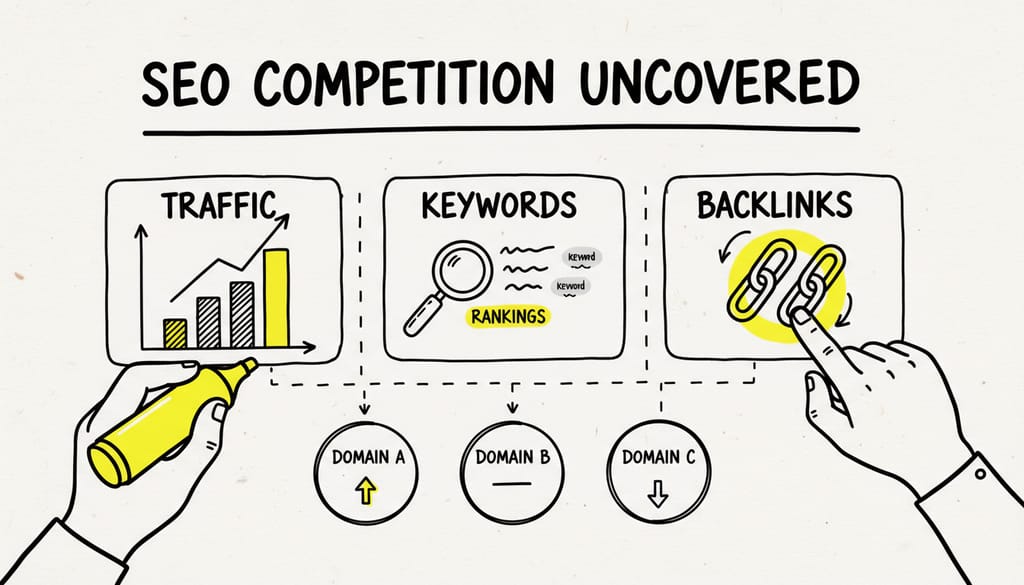
For small business owners and marketing managers, manually sifting through competitor websites, backlinks, and keywords proves daunting. This process is time-consuming, demanding a sharp eye and extensive data. Fortunately, you do not need to undertake this alone. A powerful suite of SEO tools for competitive analysis can automate this process, delivering actionable insights directly to you. These tools provide a glimpse behind your competitors' strategies, revealing their ranking keywords, traffic-driving content, and valuable backlink profiles.
By leveraging this crucial data, you can identify strategic gaps, discover untapped keyword opportunities, and craft content designed to outperform competitors on the Search Engine Results Page (SERP). This guide explores the seven best SEO tools for competitive analysis. It breaks down their key features, ideal use cases, and how they empower you to climb rankings and capture more organic traffic.
Semrush: The All-in-One Platform for Competitive SEO
When considering comprehensive SEO platforms, Semrush is often the first name that comes to mind. It functions as a true Swiss Army knife for digital marketers. The platform offers a vast array of tools, covering everything from keyword research to social media management. For competitive analysis, however, it stands out as particularly formidable. Semrush allows you to gain a 360-degree view of your competitor’s entire digital footprint.
Imagine typing any competitor's domain and instantly viewing their estimated monthly traffic. You would also see their top organic keywords, main organic competitors, and full backlink profile. This is merely the starting point for its capabilities. The platform transforms complex data into easy-to-understand reports and graphs, making it accessible even for those who are not seasoned SEO experts.
Deep Dive into Semrush's Competitive Analysis Tools
Semrush's strength lies in its interconnected toolkit. Insights from one tool can seamlessly fuel your strategy in another. Here are the core features you will use for analyzing the competition:
Domain Overview: This acts as your mission control, offering a high-level snapshot of any domain's online presence. You will find their Authority Score, organic search traffic, paid search traffic, and the total number of backlinks. It serves as the perfect tool for a quick health check on a competitor.
Organic Research: This tool enables a deeper investigation into a competitor's organic search performance. You can view every single keyword they rank for within Google's top 100 results. Crucially, you can filter this data to identify their top traffic-driving keywords, new keywords they have recently ranked for, and those they have lost. This information is invaluable for understanding their content focus and strategic shifts.
Keyword Gap: This is arguably one of the most powerful competitive analysis features available. The Keyword Gap tool facilitates the simultaneous comparison of your domain against up to four competitors. It highlights keywords your competitors rank for but you do not ('Missing' keywords). It also points out keywords where all parties rank, but your competitors rank higher ('Weak' keywords). This feature is a goldmine for strategic Keyword Research, directly indicating content you need to create or optimize.
Backlink Gap: Similar to the Keyword Gap tool, this feature analyzes backlink profiles. You can compare your domain to those of competitors and discover websites that link to them but not to you. This provides a ready-made list of high-potential outreach targets for your link-building campaigns.
Product Example in Action: Consider running a small e-commerce store specializing in handmade leather wallets. You identify a major competitor in your niche. By utilizing the Keyword Gap tool in Semrush, you input your domain and theirs. The tool reveals they rank on page one for "best minimalist wallet for travel," a term you had not previously considered. You observe they have a detailed blog post on this specific topic. This insight provides a clear directive: create a superior, more comprehensive piece of content specifically targeting that exact keyword to capture a portion of their traffic.
Semrush represents an investment. However, for businesses serious about growth, the depth of its competitive data provides a clear Return on Investment (ROI). It achieves this by eliminating guesswork and focusing your efforts on proven strategies.
Ahrefs: Unrivaled Insights into Competitor Backlink Strategies
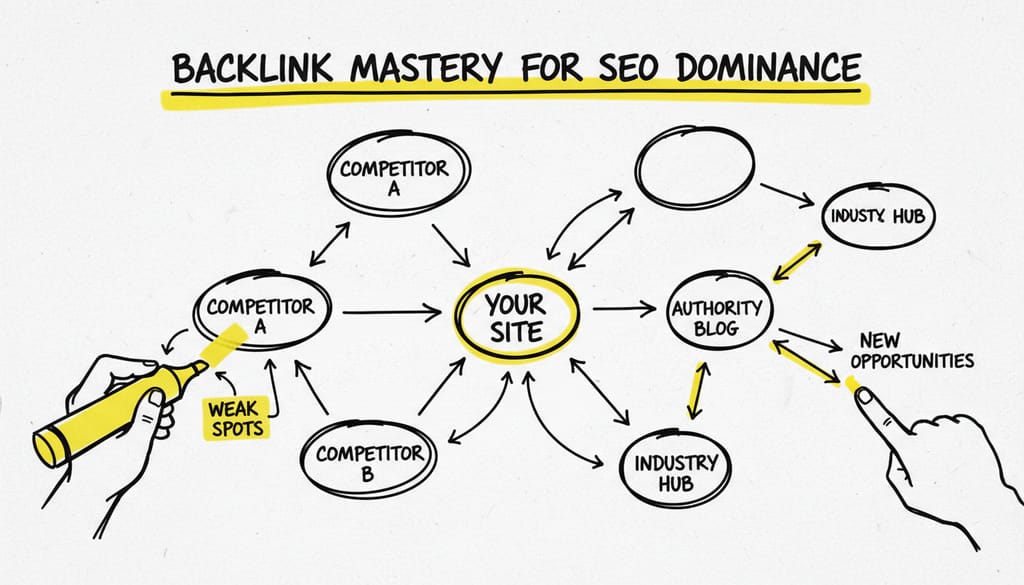
If Semrush is considered the Swiss Army knife, then Ahrefs is akin to a master swordsmith's blade. It is incredibly sharp and powerful, particularly for its core purpose: backlink analysis. While Ahrefs has evolved into a comprehensive SEO suite that rivals Semrush, its origins and primary strength lie in its massive backlink index. This index is recognized as one of the largest and most accurate globally. Backlinks remain a critical factor in search engine Ranking, and Ahrefs offers unparalleled insight into this essential area.
Understanding a competitor's backlink profile is like reviewing their digital resume. It reveals which websites vouch for their authority and what type of content successfully attracts valuable links. Ahrefs' crawler is second only to Google's in terms of activity, meaning it discovers and indexes new links with incredible speed. This provides you with the most up-to-date picture of your competitors' link-building activities.
Uncovering Competitor Strategies with Ahrefs
While its backlink data is legendary, Ahrefs offers a full suite of tools that excel at competitive analysis:
Site Explorer: This serves as the flagship tool. Plug in any URL, and Site Explorer provides a deep dive into its organic traffic, backlink profile, and paid keywords. You can view a domain's Ahrefs Rank (AR), Domain Rating (DR), total number of referring domains, and estimated monthly organic visitors. A key feature is the "Top Pages" report, which shows you which of your competitor's pages generate the most organic traffic. This helps you identify their most successful content pillars.
Content Gap: Similar to Semrush's Keyword Gap, Ahrefs' Content Gap tool identifies keywords that your competitors rank for but you do not. This constitutes a fundamental part of any competitive content strategy, helping you fill the voids in your own content plan and address topics your audience clearly finds interesting.
Keywords Explorer: While primarily a keyword research tool, its competitive analysis capabilities are top-notch. When analyzing a keyword, Ahrefs presents the current SERP overview. This includes the DR and backlink profile of every top-ranking page. This feature enables you to instantly assess the competition and understand the effort required to rank for a specific term.
Product Example in Action: Suppose you lead a B2B SaaS company offering project management software. Using Site Explorer, you analyze a key competitor. Navigating to the "Top Pages" report, you discover that their blog post titled "10 Project Management Methodologies Explained" drives 20% of their total organic traffic. Upon clicking this page, you observe it has backlinks from 50 different domains. This provides two key insights: 1) This topic is highly valuable for your audience, and 2) To compete effectively, you must create a piece of content that is not only superior but also supported by a robust link-building effort.
Ahrefs is a premium tool favored by SEO professionals for its data quality and user-friendly interface. For businesses where link building and content marketing are central to their strategy, Ahrefs proves an indispensable asset.
Moz Pro: Building Authority Through Strategic Competitive Intelligence
Moz Pro holds a special place in the SEO industry. As one of the original players, Moz has been instrumental in educating marketers about SEO. This is evident through its popular Whiteboard Friday series and comprehensive blog. The platform itself reflects this educational focus, offering powerful tools alongside clear explanations and actionable recommendations.
One of Moz's most famous contributions is the concept of Domain Authority (DA). This score, ranging from 1-100, predicts a website's ranking potential. While a proprietary metric, it has become an industry standard for quickly gauging a site's overall authority. For competitive analysis, this allows you to quickly sort and prioritize competitors.
Leveraging Moz Pro for Competitive Insights
Moz Pro offers a robust set of tools specifically designed to help you analyze and outperform the competition:
Keyword Explorer: Moz's keyword tool excels at understanding the competitive landscape of a specific SERP. Its "Keyword Difficulty" score helps you gauge the effort required to rank. The SERP Analysis feature breaks down the top 10 results, showing their DA and Page Authority (PA). This helps you identify keywords that are realistically within your reach.
Link Explorer: Featuring a massive link index, Moz's Link Explorer is a powerful tool for backlink analysis. A standout feature is "Link Intersect." Here, you can enter your domain and several competitors to discover sites that are linking to them but not to you. This provides a direct roadmap for your link-building outreach.
True Competitor: Moz removes the guesswork from identifying your rivals. Its True Competitor tool analyzes the SERPs for your target keywords and identifies the domains that most frequently appear alongside yours. You might even uncover competitors you were previously unaware of.
Product Example in Action: A local bakery aims to improve its online visibility. Using Moz Pro's True Competitor tool, they discover that, in addition to other local bakeries, a popular local food blogger's website is a major competitor for keywords like "best cupcakes in [City]". They then utilize Link Explorer's Link Intersect feature and find that several local news sites and event directories link to the blogger but not to their bakery. This provides them with a clear list of websites to contact for features or potential partnerships.
Moz Pro is an excellent choice for businesses seeking a powerful toolset combined with industry-leading educational resources. It proves particularly strong for those who wish to understand the 'why' behind the data.
SpyFu: Uncovering Competitor Keyword and Ad Spend History
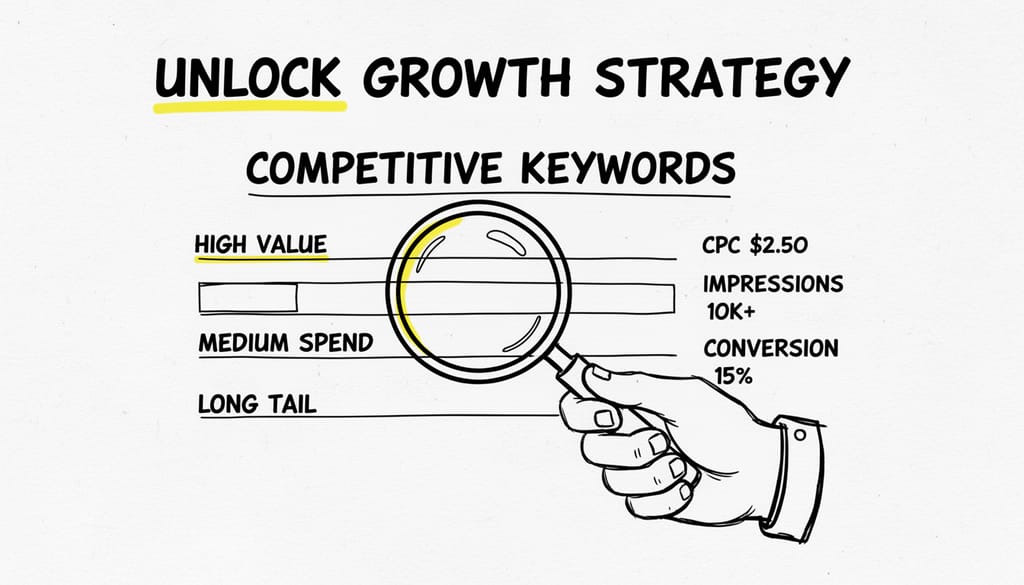
As its name suggests, SpyFu is entirely focused on digital espionage. Its core purpose is to reveal the search marketing secret formulas of your most successful competitors. Where SpyFu truly shines is its deep well of historical data. The platform has meticulously collected SERP data for over 15 years, allowing you to travel back in time and observe a competitor's keyword strategy as it evolved.
This historical context is invaluable. You can see which keywords a competitor has consistently targeted over the years and which ones they have abandoned. You can also track how their ad copy has changed. This is especially powerful for understanding not just their current actions but also the journey they undertook to reach their position. It helps differentiate between their long-term strategic pillars and their short-term testing efforts.
Using SpyFu for Tactical Espionage
SpyFu's features are laser-focused on competitive intelligence for both SEO and PPC:
SEO Research: Enter a competitor's domain to unleash a treasure trove of data. This includes their total number of organic keywords, estimated monthly SEO clicks, and a list of their most profitable keywords. The "Kombat" feature is a standout, providing a Venn diagram of your and your competitors' keyword universes to instantly spot crucial keyword gaps.
PPC Research: While our primary focus is SEO, a competitor's PPC strategy offers massive clues about what effectively converts. SpyFu shows you every keyword a competitor has ever purchased on Google Ads, every ad variation they have run, and their estimated spending. Keywords they consistently spend money on are almost certainly high-converting, providing you with proven terms to target in your organic content strategy. This helps you better understand User Intent by observing which terms are valuable enough for them to pay for.
SEO Keyword Ranking History: This serves as SpyFu's secret weapon. For any keyword and competitor, you can view a chart of their ranking position over time. Did they suddenly jump to page one? Did they slowly climb over years? This historical view helps you realistically assess the effort required to compete for valuable terms.
Product Example in Action: A startup is preparing to enter a crowded market. They use SpyFu to analyze their top three competitors. They observe that while all three rank for broad, high-volume keywords, one competitor has consistently ranked for a set of long-tail, purchase-intent keywords for the past five years. PPC research further reveals that this competitor bids heavily on these same terms. This indicates these keywords are highly profitable. The startup can now build its initial content strategy around similar long-tail keywords to attract high-intent customers, thereby avoiding a direct and costly battle for broader terms initially.
SpyFu is an incredibly powerful and often more affordable option. It is ideal for businesses primarily focused on keyword and PPC competitive intelligence.
Similarweb: Gaining a Holistic View of Competitor Digital Presence

While most SEO tools for competitive analysis concentrate on the search landscape, Similarweb adopts a much broader perspective. It is a market intelligence platform that provides insights into a company's entire digital presence, extending beyond just its organic search performance. It helps you understand the sources of a competitor's website traffic, their audience's engagement levels, and their overall digital strategy.
This represents competitive analysis on a macro level. Instead of solely examining keywords, you are analyzing channels. Is your competitor receiving most of their traffic from social media, direct visits, referrals, or search? Understanding this mix helps you grasp the bigger picture and identify strategic opportunities beyond traditional SEO. For small businesses, this can be crucial for effectively allocating limited marketing resources, a challenge often discussed in guides on Affordable SEO for Small Business: DIY vs. Agency vs. AI.
Gaining a Holistic View with Similarweb
Similarweb's platform offers unique insights not found in traditional SEO tools:
Traffic & Engagement Metrics: View a competitor's total monthly visits, bounce rate, average visit duration, and pages per visit. These engagement metrics help you gauge the quality of their website experience and content.
Marketing Channels: This is a key feature, breaking down a website's traffic sources into categories such as Direct, Email, Referral, Social, Organic Search, Paid Search, and Display Ads. If a competitor is generating 40% of their traffic from Pinterest, you have just uncovered a crucial part of their strategy that you might be overlooking.
Audience Demographics & Interests: Understand precisely who your competitor's audience is. Similarweb provides data on their age, gender, and other websites they frequently visit. This information can help you refine your customer personas and content targeting.
Referrals: See the top websites sending traffic to your competitors. This can reveal strategic partnerships, PR placements, or affiliate relationships that are driving their growth.
Product Example in Action: A direct-to-consumer fashion brand utilizes Similarweb to analyze a fast-growing competitor. They notice that while their own SEO efforts are stronger, the competitor receives a substantial amount of referral traffic from a handful of fashion blogs. This insight prompts them to launch their own blogger outreach program, thereby opening up a new traffic channel they had previously overlooked.
Similarweb provides the essential context that other SEO tools might miss. It helps you understand not just how your competitors are succeeding in search, but how they are winning online as a whole.
BuzzSumo: Decoding Competitor Content Strategy and Engagement

Great rankings are fundamentally built on great content. However, how do you determine what content will genuinely resonate with your audience and attract shares and links? BuzzSumo provides the answer. It is a content-focused platform that helps you analyze which content performs best across any given topic or for any competitor.
Instead of solely focusing on search traffic, BuzzSumo tracks social shares, engagement, and backlinks. This helps you understand what content is not just ranking, but also generating significant buzz. For competitive analysis, it allows you to deconstruct a competitor's content strategy piece by piece. This process identifies their most successful articles and uncovers the formula behind their widespread success.
Reverse-Engineering Success with BuzzSumo
BuzzSumo's features are specifically designed to uncover content opportunities and emerging trends:
Content Analyzer: This forms the core of the platform. Enter a competitor's domain to view their most-shared content across platforms like Facebook, Twitter, Pinterest, and Reddit. You can filter by date, content type (article, infographic, video), and more. This reveals which topics and formats resonate most powerfully with their audience.
Topic Explorer: If your goal is to generate new content ideas, you can search for a topic and view the most popular articles related to it. This is excellent for discovering proven content formats and headlines that you can adapt for your own Blog Content.
Question Analyzer: This feature meticulously scours forums like Quora and Reddit to find the real questions people are asking about your topic. By examining questions related to a competitor's brand or products, you can identify critical pain points and content gaps that you can effectively address.
Product Example in Action: A financial planning company plans to launch a blog. They use BuzzSumo to analyze the blogs of three leading competitors. They discover that while articles about retirement planning consistently receive shares, infographics comparing different investment options consistently go viral on LinkedIn and Twitter. This data-driven insight allows them to focus their initial content efforts on creating visually appealing infographics. This format is more likely to generate quick engagement and brand awareness.
BuzzSumo helps you move beyond merely technical SEO. It encourages a focus on the human element of content marketing, ensuring that what you create is precisely what your audience truly wants to read and enthusiastically share.
Ubenie: Automating Competitive Analysis and Content Generation with AI
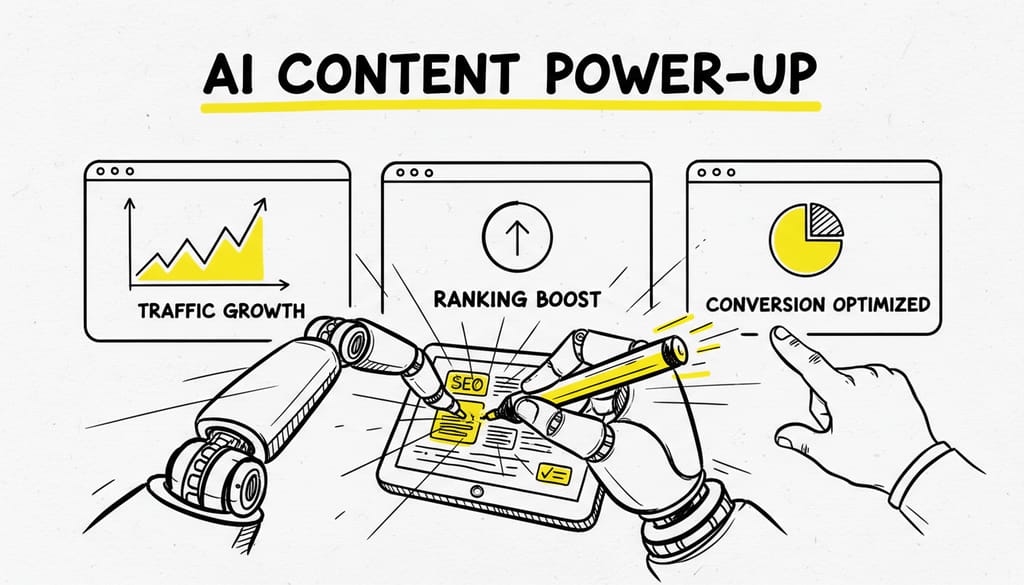
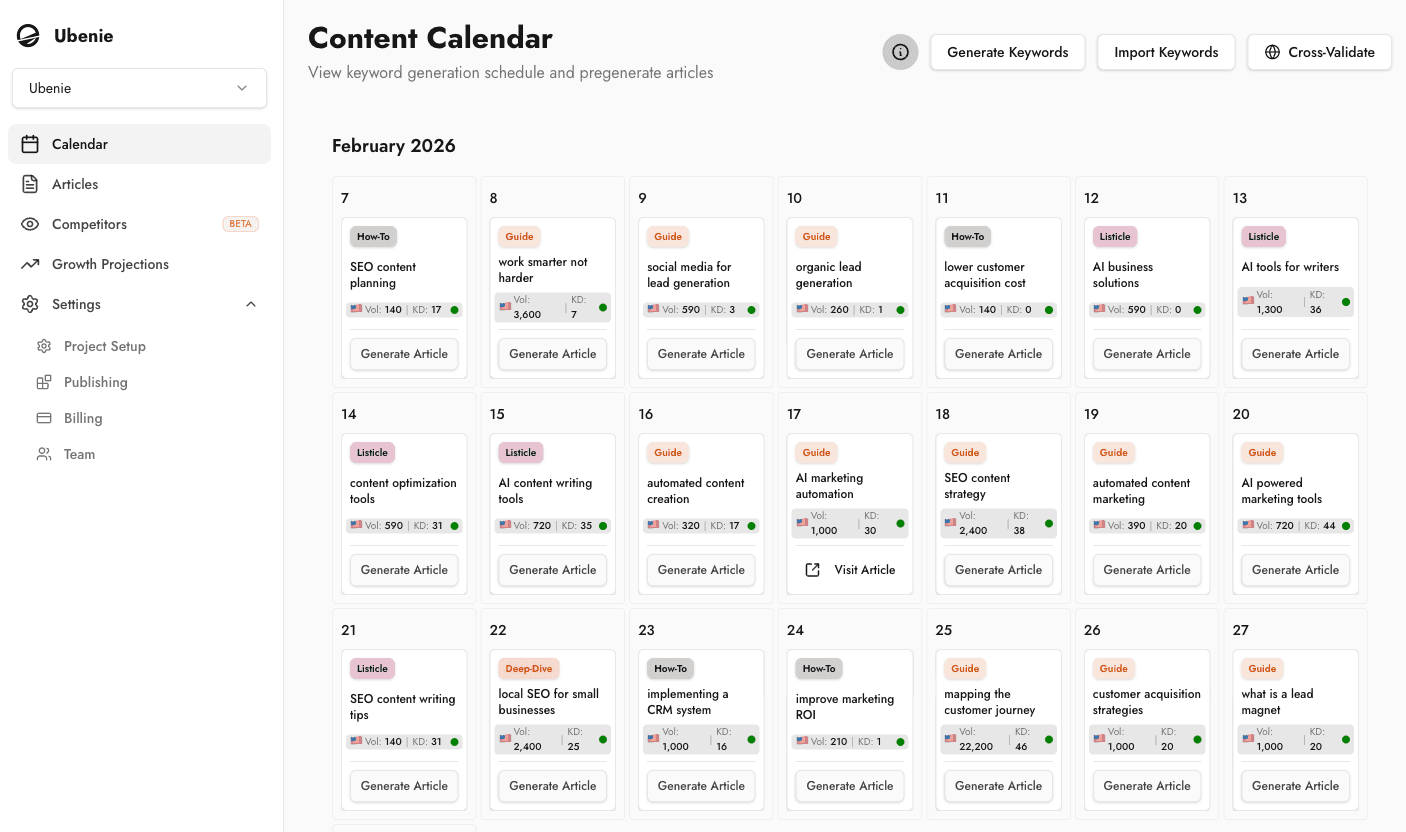
While the aforementioned SEO tools for competitive analysis are powerful for manual insights, they still require you to connect the dots and execute the strategy. For busy small business owners and lean marketing teams, this often represents the biggest hurdle. This is precisely where a new category of AI-powered tools is transforming the game. Ubenie is a platform that does not just provide competitive data; it automates the entire process of analysis and content creation.
Ubenie is meticulously designed as a traffic builder that operates on autopilot. It begins by understanding your specific business. Then, it leverages AI to conduct competitive analysis seamlessly behind the scenes. It continuously scans the digital landscape to identify high-potential, low-competition keywords that your ideal customers are actively searching for. These are often the same keywords your larger competitors might be overlooking. This approach is part of a wider industry trend; industry analysis suggests that Automation can handle up to 80% of routine SEO tasks, according to insights compiled by Forbes.
From Analysis to Action, Automatically
Ubenie's workflow internalizes the core principles of competitive analysis to deliver results without requiring manual effort:
Automated Keyword Opportunity Analysis: Ubenie's AI performs the work of a tool like Semrush's Keyword Gap automatically. It constantly scours the SERPs to uncover keyword opportunities where you possess a realistic chance to rank, effectively performing the competitive On-Page SEO analysis for you.
AI Content Generation: This is where Ubenie truly distinguishes itself. Once a high-potential keyword is identified, the platform utilizes this competitive insight for AI Content Generation. It does not simply write an article; it crafts a comprehensive, SEO-optimized blog post specifically designed to outperform the existing top-ranking content for that keyword. It meticulously analyzes the structure, depth, and user intent of the top results and aims to create something superior.
Streamlined Workflow: The generated content is delivered directly to your dashboard. It is ready for a quick review and immediate scheduling. You gain the benefit of a data-driven, competitive content strategy without spending countless hours immersed in spreadsheets and complex analytics tools.
For many small businesses, exploring 7 Smart & Affordable SEO Services That Actually Work can serve as an excellent starting point. Platforms like Ubenie represent the next evolution of these services. By powerfully leveraging AI, it becomes possible to achieve significant growth, establishing it as one of the most 7 Affordable SEO Services for Small Business Growth.
Product Example in Action: A local plumber signs up for Ubenie. They clearly describe their business and service area. Ubenie's AI then meticulously analyzes local competitors and SERPs, identifying the keyword "emergency boiler repair [City Name]" as an underserved, high-intent opportunity. The platform automatically generates a detailed blog post titled "What to Do When Your Boiler Breaks: An Emergency Guide for [City Name] Homeowners." This article is meticulously structured to answer all related user questions, optimized for local SEO, and is ready to be published in just a few clicks. The plumber gains a high-ranking piece of content without ever having to perform the analysis or write a single word themselves.
Comparison: Choosing the Right Tool for Your Needs
With so many excellent options available, how do you make your choice? The right SEO tools for competitive analysis depend entirely on your budget, specific goals, and how hands-on you wish to be. Here’s a quick comparison to help you make an informed decision:
Tool | Best For | Key Feature | Price Point |
|---|---|---|---|
Semrush | All-in-one SEO & Marketing | Keyword Gap Tool | $$$ |
Ahrefs | Backlink Analysis & Content | Site Explorer (Top Pages) | $$$ |
Moz Pro | SEO Education & Core Metrics | Link Intersect | $$ |
SpyFu | Keyword & PPC History | Historical Ranking Data | $$ |
Similarweb | Holistic Market Intelligence | Marketing Channel Analysis | $$$$ |
BuzzSumo | Content Strategy & Ideation | Content Analyzer | $$ |
Ubenie | Automated Growth & Execution | AI Content Generation | $ |
Note: Price points are relative designations. '$' indicates a more accessible price point tailored for small businesses, while '$$$$' represents an enterprise-level investment. Always consult the official websites for the most current and accurate pricing details.
Conclusion: Turn Insights into Action
In the intensely competitive world of SEO, knowledge unequivocally equals power. The SEO tools for competitive analysis we have explored empower you to look over your competitors' shoulders. They allow you to understand their strategic playbook and precisely identify opportunities to outmaneuver them. Whether you require the deep-dive analytics of an all-in-one suite like Semrush or Ahrefs, the historical data of SpyFu, or the content-centric insights of BuzzSumo, there is a tool perfectly suited to your specific needs.
However, the ultimate objective of competitive analysis extends beyond merely collecting data; it is about driving decisive action. For many small businesses, the most significant challenge lies in bridging the gap between valuable insight and effective execution. This is precisely why the rise of AI-powered platforms like Ubenie is so significant. They democratize competitive analysis, making it possible for anyone to leverage sophisticated SEO strategies and generate high-performing content without requiring a dedicated team of experts.
Whichever path you ultimately choose, integrate competitive analysis as a regular part of your marketing rhythm. The digital landscape is constantly evolving, and staying acutely aware of your competitors' moves is the key to building a sustainable, long-term advantage in the SERPs.
Frequently Asked Questions
What is the most important metric in SEO competitive analysis?
There is no single most important metric. A holistic analysis examines a combination of critical factors. These include organic traffic estimates to gauge overall reach, keyword rankings to understand content focus, the quality and quantity of their backlink profile to assess authority, and the performance of their top content to understand what resonates with their audience. Each provides a piece of the strategic puzzle.
How often should I conduct a competitive analysis?
It is best practice to perform a deep-dive competitive analysis on a quarterly basis. This informs your upcoming strategic planning. However, you should also conduct lighter, regular check-ins—perhaps monthly or even weekly—on your top 1-3 competitors. This helps monitor any significant changes in their keyword rankings or content strategy.
Can I do competitive analysis for free?
Yes, you can certainly perform a basic competitive analysis using various free tools. You can utilize Google itself by searching for your target keywords in incognito mode to observe who ranks. Free versions of premium tools and platforms like Ubersuggest also provide limited data on competitor keywords and top pages. However, the depth of data and strategic insights offered by paid tools are significantly more powerful and comprehensive.
What's the difference between competitor analysis and keyword research?
Keyword research is the systematic process of discovering the terms and phrases your target audience uses to search for information online. Competitor analysis, conversely, adds a crucial strategic layer. It involves meticulously examining the specific keywords your competitors are successfully ranking for. This process identifies proven opportunities and strategic gaps that you can effectively exploit for your own advantage.
How can AI help with competitive analysis?
AI excels at processing massive datasets far more quickly and efficiently than human analysts can. In competitive analysis, AI can rapidly identify complex patterns in competitor strategies, uncover subtle keyword gaps across thousands of terms, analyze the sentiment of their brand mentions, and even predict which content formats are most likely to succeed based on extensive historical data. This automation empowers faster, more data-driven decision-making.
Tired of struggling with SEO and content marketing? Automate your traffic growth and focus on what you do best. Visit our website to discover how we can help you achieve higher search rankings and more leads.
Article created using *Ubenie*.