
The Digital Edge: Why Small Businesses Need SEO Now
"93% of online experiences begin with a search engine. For small businesses, this means being invisible on Google is like having a shop with no sign." This striking reality underpins the necessity of Search Engine Optimization (SEO). It's the essential process of making your website attractive to search engines, connecting you with customers actively seeking your products or services. Crucially, significant impact doesn't require a massive budget or a dedicated team. This guide empowers ambitious small business owners to harness online presence and convert search traffic into tangible growth.
What to Know Before You Start Your SEO Journey
Before diving into technicalities, understand the landscape of SEO for small business. Unlike large corporations, your strength lies in being nimble, authentic, and connected to your local community and niche audience. SEO is a long-term strategy, building a sustainable source of leads and customers by signaling credibility, relevance, and trustworthiness to search engines like Google. Every optimization, content piece, and earned link contributes to your digital reputation.
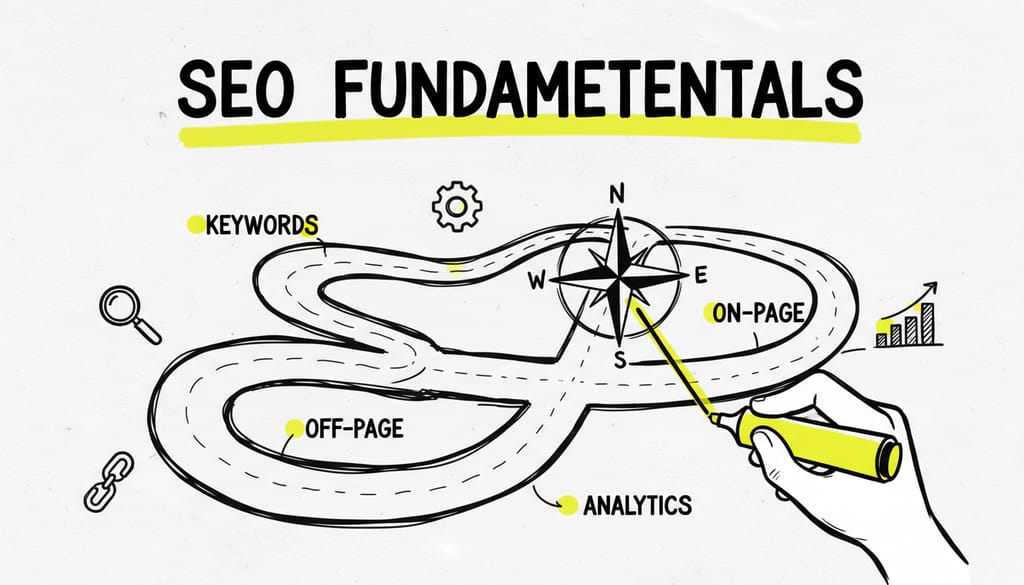
At its core, SEO for small business breaks down into three main pillars:
On-Page SEO: Optimizing website content and structure, including keywords, high-quality content, and HTML tags (title, meta descriptions).
Off-Page SEO: Actions outside your website, primarily building backlinks from reputable sites to signal authority.
Technical SEO: Ensuring search engines can crawl and index your site effectively, covering site speed, mobile-friendliness, and security (HTTPS).
Your goal isn't to compete with national brands for every keyword. It's to dominate your specific niche and locality. Focus on the right audience with the right message to carve out a profitable space in search results.
Prerequisites for Success
Before implementing strategies, ensure these fundamentals are in place for a solid SEO foundation.
A Functional Website: Your digital storefront must be professional, easy to navigate, and clearly state your offerings.
Clear Target Audience: Understand their pain points and questions to create resonant content and keywords.
Defined Business Goals: Goals (e.g., more calls, online sales, foot traffic) dictate your strategy and success measurement.
Access to Basic Tools: Utilize free tools like Google Analytics and Google Search Console for invaluable performance data.
SEO is a marathon, not a sprint. It often takes 3-6 months for meaningful results. Consistent effort compounds into significant growth over time.
Getting Started 1: Mastering Local SEO and Google Business Profile
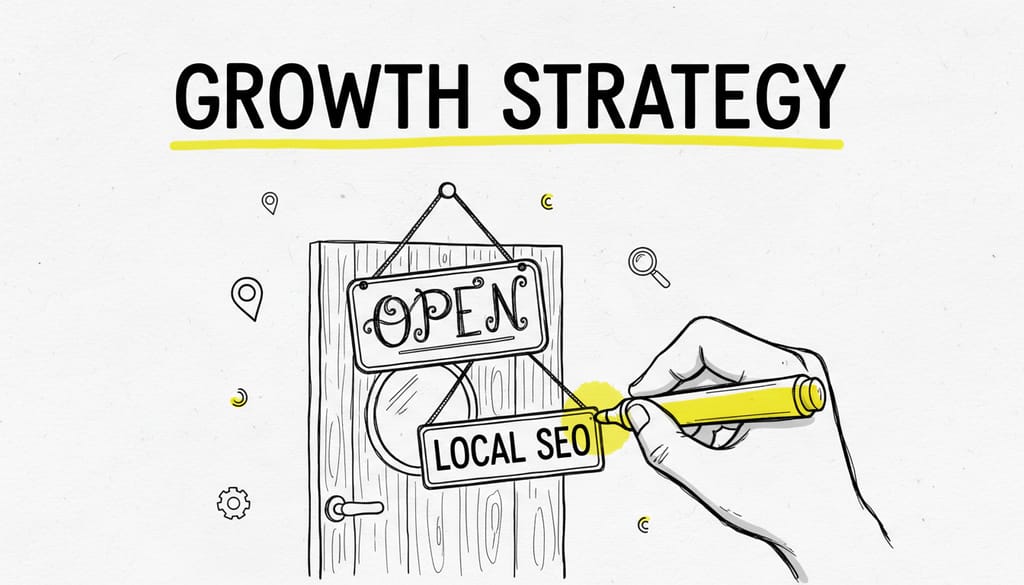
For most small businesses, local SEO is the most important starting point. It optimizes your online presence to attract business from relevant local searches. When someone searches for "best coffee near me" or "plumber in [Your City]," you want to be visible. The cornerstone of local SEO is your Google Business Profile (GBP), a free tool managing your business appearance on Google Search and Maps.
Your GBP listing often forms the first customer interaction. An optimized profile dramatically increases visibility, calls, and foot traffic. According to recent small business SEO statistics, 46% of all Google searches seek local information. Tapping into this is crucial.
How to Optimize Your Google Business Profile
Claiming your profile is just the beginning. Complete and continuously update it.
Complete Every Section: Provide all information—services, products, accessibility, hours—for Google to understand and trust your business.
Choose the Right Categories: Select primary and secondary categories specifically describing your core business and services.
Write a Compelling Business Description: Use 750 characters to highlight what makes your business special. Include keywords naturally, focusing on human readability and solving customer problems.
Upload High-Quality Photos and Videos: Photos of your storefront, team, and products boost engagement. Businesses with photos receive 42% more driving directions requests and 35% more website clicks.
Encourage and Respond to Reviews: Reviews are a major local ranking factor. Ask happy customers for reviews and respond to all feedback to show engagement.
Use the Questions & Answers Feature: Proactively populate this section with common questions and answers to control narrative and provide upfront value.
Publish Google Posts: Share updates, offers, and events directly in your GBP listing to keep it fresh.
Optimizing your GBP offers the highest ROI activity for your SEO for small business efforts, directly impacting visibility in the coveted "Map Pack."
Getting Started 2: Foundational On-Page SEO
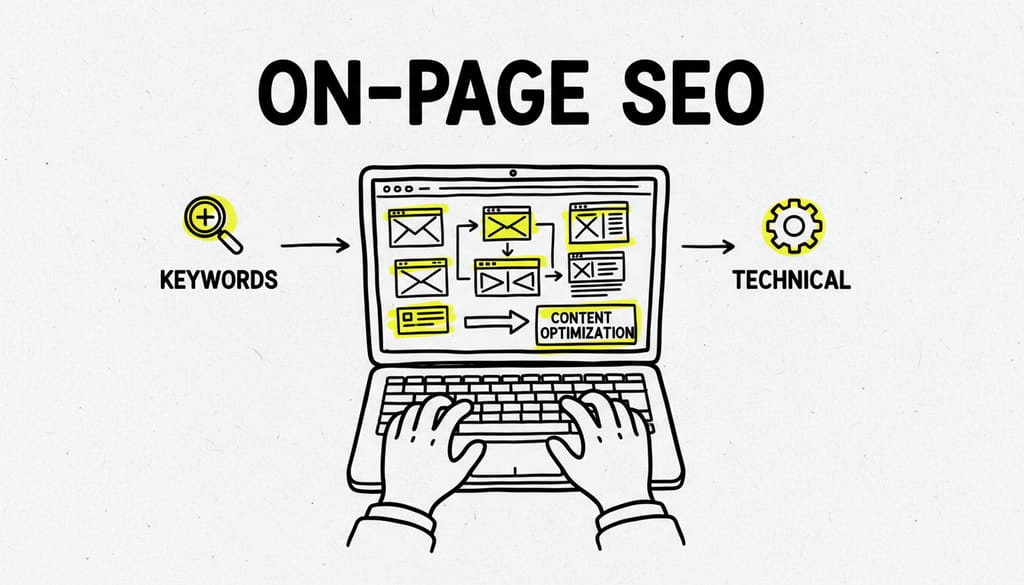
Once your local presence is solid, focus on your website. On-page SEO optimizes individual web pages for higher rankings and relevant traffic. It tells Google your content's topic. Every page should have a clear purpose and be optimized for a specific keyword or topic.
Core On-Page SEO Elements
Focus on these elements for every key page, like your homepage and service pages.
Title Tags: The clickable headline in search results. Keep it concise (under 60 characters), include your primary keyword, and make it compelling.
Meta Descriptions: Short blurbs (around 150-160 characters) under your title tag. While not a direct ranking factor, a well-written meta description acts as ad copy, enticing clicks. Include your keyword and a clear call to action.
Header Tags (H1, H2, H3): Structure content for readers and search engines. Use
<h1>for the main title, and<h2>,<h3>for subheadings, creating a logical hierarchy. Your primary keyword should ideally be in your H1.URL Structure: URLs should be short, descriptive, and readable, e.g.,
yourwebsite.com/services/emergency-plumbing.Image Alt Text: Describe images for search engines and visually impaired users. Include relevant keywords naturally.
High-Quality Content: This is paramount. Content must be original, valuable, and satisfy user intent. Google aims to satisfy users, and your content should do that best.
Ubenie helps automate this. It doesn't just write text; it crafts Optimized Headlines and meta descriptions, structures articles with proper H2s and H3s, and naturally places keywords. This ensures every piece of content is fundamentally sound from an on-page SEO perspective, removing guesswork for busy business owners.
Getting Started 3: Strategic Keyword Research for Small Business

Keyword research discovers phrases your target customers use when searching for your products or services. It's the foundation of any successful SEO strategy, dictating content creation. Ranking for the wrong keywords brings traffic that doesn't convert.
As a small business, avoid broad, high-volume keywords. Focus on specific, long-tail keywords indicating stronger purchase intent. These are often low-competition keywords larger companies overlook, offering a chance to rank and win.
How to Find the Right Keywords
Brainstorm Seed Keywords: List main topics related to your business, e.g., "birthday cake," "wedding cupcakes."
Think Like Your Customer: What questions or problems do they have? Instead of "custom cakes," they might search "dinosaur birthday cake for 5 year old boy." These high-potential keywords are specific and show clear intent.
Use Keyword Research Tools: Free options include Google Keyword Planner (requires Google Ads account) for search volume and ideas. Google Search itself provides "People also ask" and "Related searches." AnswerThePublic helps find question-based keywords.
Analyze Competitors: Examine local competitors' websites for keywords in title tags and content. This competitive analysis reveals missed opportunities.
Platforms like Ubenie are powerful traffic builders by automating this. Ubenie's AI analyzes your business and industry to uncover low-competition, high-potential keywords. It replaces manual research, providing a content plan built around keywords you can realistically rank for, driving qualified traffic.
Getting Started 4: Creating High-Quality, Rank-Worthy Content

Content fuels your SEO engine. Without valuable, relevant content, you have nothing to rank. For small businesses, content marketing establishes authority, builds trust, and answers customer questions. A well-written blog post attracts new customers for years.
Your content strategy should align with keyword research; each target keyword needs a corresponding content piece. This ensures you create content people actually search for.
Ideas for Small Business Content
Answer Common Customer Questions: Turn frequently asked questions into detailed blog posts. This is a simple, effective strategy.
How-To Guides and Tutorials: Share your expertise. A landscaper could write "How to Prepare Your Lawn for Winter."
Case Studies and Success Stories: Showcase your best work, detailing problems solved and results achieved. This builds social proof and trust.
Local Event Recaps or Guides: Connect with your community by writing about local happenings or creating guides, e.g., "Best Dog-Friendly Parks in [Your City]."
Comparisons and "Best Of" Lists: Help customers make decisions. An electronics store could compare popular TV models.
Quality over quantity is key. One amazing, in-depth article per month is better than four mediocre ones weekly. Aim to create the best resource on a topic. This satisfies users and naturally attracts backlinks. For more, see this complete guide to content marketing for small business.
Getting Started 5: Technical SEO Basics Every Owner Should Know
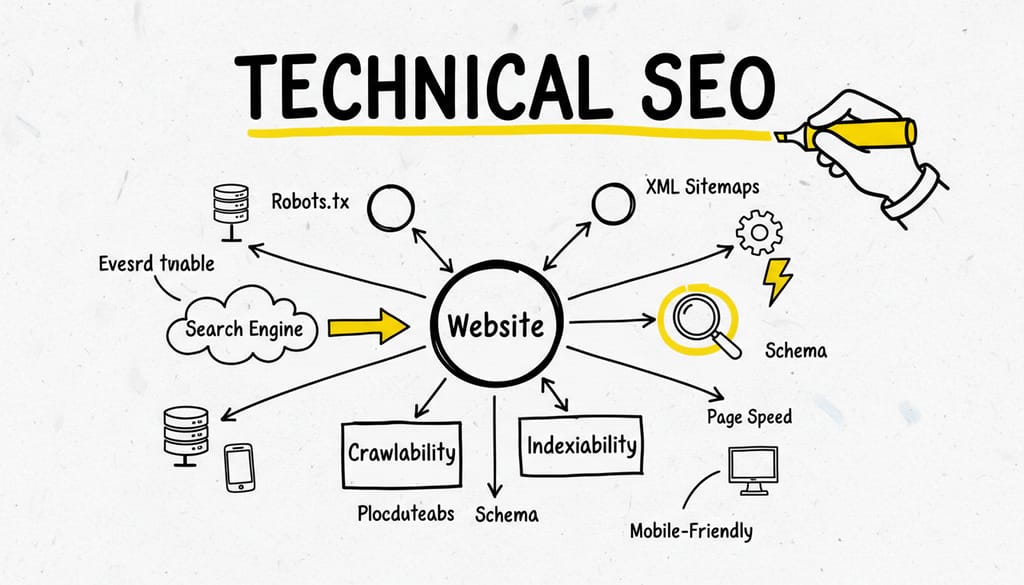
Technical SEO can seem daunting, but the basics are manageable. Its goal is ensuring search engines find, crawl, and index your website without issues. If Google can't access your site, even excellent content won't rank.
Key Technical SEO Checkpoints
Mobile-Friendliness: Over 60% of searches are mobile. Your website must function well on smartphones, as Google uses mobile-first indexing. Check your site with Google's Mobile-Friendly Test.
Site Speed: Page load time is a critical ranking factor and user experience element. Slow sites frustrate visitors. Use Google PageSpeed Insights to analyze and improve speed, often by optimizing images.
HTTPS Security: Your URL should start with
httpsfor security (SSL certificate). This encrypts data, indicating trust to users and search engines; Google confirms it as a ranking signal.Simple Site Structure: Navigation should be logical and intuitive. Users and search engines should find any page within three clicks from the homepage. A clear structure distributes authority via internal linking.
Internal Linking: Linking from one page to another on your site helps Google understand page relationships, establishes hierarchy, and keeps users engaged. For example, link a blog post about "choosing a bike helmet" to your helmet product page.
Modern website builders like Shopify or Squarespace handle many technical aspects. However, awareness is important. When considering solutions, explore DIY, agency, or AI options. Learn more about affordable SEO for small business: DIY vs. agency vs. AI.
Getting Started 6: Building Authority with Backlinks and Citations
Off-page SEO builds website authority, primarily through backlinks. A backlink from another website to yours acts as Google's vote of confidence. A reputable site linking to yours signals trustworthiness.
Not all backlinks are equal. A link from a major industry publication holds more value than one from a low-quality directory. Aim for high-quality, relevant links.
Simple Link Building Strategies for Small Businesses
Link building can be challenging, but these strategies work well:
Local Business Directories: List your business consistently in major online directories (Yelp, Yellow Pages) and industry-specific sites. These citations verify your Name, Address, Phone (NAP), crucial for local SEO.
Local Partnerships: Partner with non-competing local businesses to exchange website links as recommended partners.
Sponsor Local Events or Charities: Sponsorship often earns a link back to your site, building community goodwill and valuable links.
Create Link-Worthy Content: Amazing, in-depth content naturally attracts backlinks as others see it as a valuable resource. This is the most sustainable long-term strategy.
Unlinked Brand Mentions: Set up Google Alerts for your business name. Politely ask sites mentioning you without linking to consider adding one.
Building a strong backlink profile requires time and consistent effort, focusing on relationships and value. Many affordable SEO services for small business growth can help, but these foundational tactics make a big difference.
Common SEO Mistakes Small Businesses Make (And How to Avoid Them)
Navigating SEO for the first time has pitfalls. Being aware saves time, frustration, and wasted effort. Avoiding these common errors accelerates your journey to Google's first page.
Keyword Stuffing: Cramming keywords unnaturally into content makes it unreadable and risks Google penalties. Write for humans first.
Ignoring Title Tags and Meta Descriptions: Leaving these elements as defaults is a missed opportunity. Customize them for each page to boost click-through rates.
Having Unrealistic Expectations: Ranking #1 for competitive keywords in a week is unlikely. SEO is a long-term investment; focus on consistent progress.
Not Having a Mobile-Friendly Website: This is mandatory. A site difficult to use on a phone loses customers and harms rankings.
Focusing on Too Many Keywords: Better to rank well for a few highly relevant, specific keywords than spread efforts thin across many broad terms.
Never Updating Your Website: A static site signals outdatedness. Regularly adding new content and refreshing old posts keeps your site fresh and relevant.
Be wary of anyone promising guaranteed #1 rankings. True SEO is earned through quality and consistency, not tricks. Such offers often lead to spammy tactics and penalties.
Next Steps: Measuring Success and Scaling Your SEO
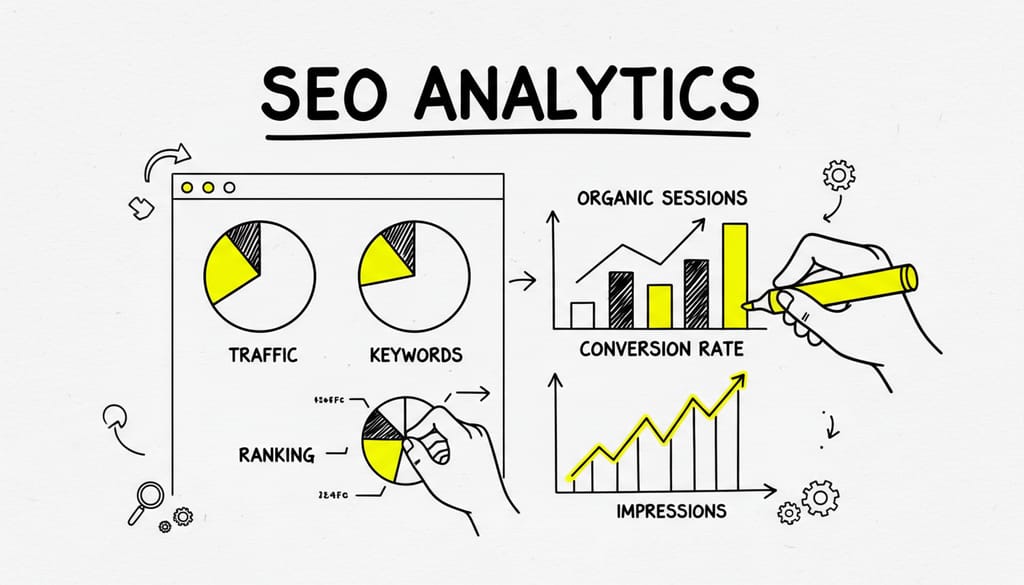
After implementing foundational SEO, your work continues. SEO is an ongoing process of implementation, measurement, and refinement. Track progress using tools like Google Analytics and Google Search Console.
Key Metrics to Track
Organic Traffic (Google Analytics): Monitor visitors from search engines; aim for a steady increase.
Keyword Rankings (Google Search Console): See keywords your site ranks for, average position, and clicks. This directly shows SEO progress.
Conversions (Google Analytics): Traffic is good, but conversions (form submissions, calls, sales) matter most. Track these to see organic visitors becoming leads or customers.
Click-Through Rate (CTR) (Google Search Console): Percentage of searchers clicking your result. A low CTR suggests uncompelling title tags and meta descriptions.
Scaling Your Efforts
As you succeed, scale your efforts:
Expanding Content: Target more keywords, create deeper content, and maintain a consistent blogging schedule.
Refining On-Page SEO: Re-optimize older pages with updated information or new keywords.
Proactive Link Building: Dedicate time to relationships and earning high-quality backlinks.
Managing the entire content workflow—from keyword research to writing, editing, and publishing—can become a full-time job for growing small businesses. This is where automation tools like Ubenie excel. By handling research and content generation, Ubenie scales your SEO for small business efforts without increasing workload, freeing you to focus on serving new customers.
Conclusion
SEO for small business might seem monumental, but breaking it into manageable steps makes it achievable and rewarding. Focus on fundamentals: mastering local SEO with your Google Business Profile, conducting smart keyword research, creating valuable content, and ensuring technical site health. These build a powerful engine for sustainable growth. Your greatest advantages are niche expertise and community connection; lean into them. SEO isn't about outspending large competitors, but outsmarting them with focus, consistency, and a genuine desire to serve. Start today; your future customers are searching.
Frequently Asked Questions
How long does it take for SEO to work for a small business?
While some optimizations, like Google Business Profile updates, show results in weeks, a comprehensive SEO strategy typically takes 3 to 6 months for significant improvements in traffic and rankings. SEO is a long-term investment, with consistent effort yielding compounding results over time.
Can I do SEO on my own for my small business?
Absolutely. Many small business owners successfully manage their own SEO by focusing on the fundamentals. It requires commitment and consistent effort, but tools and platforms are making it more accessible. Automated solutions, like Ubenie, can bridge the gap for those with limited time.
What is the most important part of SEO for a local business?
For a local business with a physical location or service area, optimizing your Google Business Profile (GBP) is most critical. A fully completed and active GBP rapidly increases visibility in local search results and the Google Maps "Map Pack," which drives substantial local traffic.
How much should a small business spend on SEO?
There's no single answer, as costs vary widely based on goals and market competitiveness. Small businesses might spend from a few hundred to a few thousand dollars monthly. It's best viewed as an investment, as SEO offers one of the highest returns among marketing channels.
Do I need to be a technical expert to do SEO?
No, you don't need to be a web developer for basic SEO. Modern website platforms and tools simplify many technical aspects. Understanding core concepts like mobile-friendliness, site speed, and HTTPS is sufficient for most business owners to start and make a meaningful impact.
Tired of struggling with SEO and content marketing? Automate your traffic growth and focus on what you do best. Visit our website to discover how we can help you achieve higher search rankings and more leads.
Article created using Ubenie.